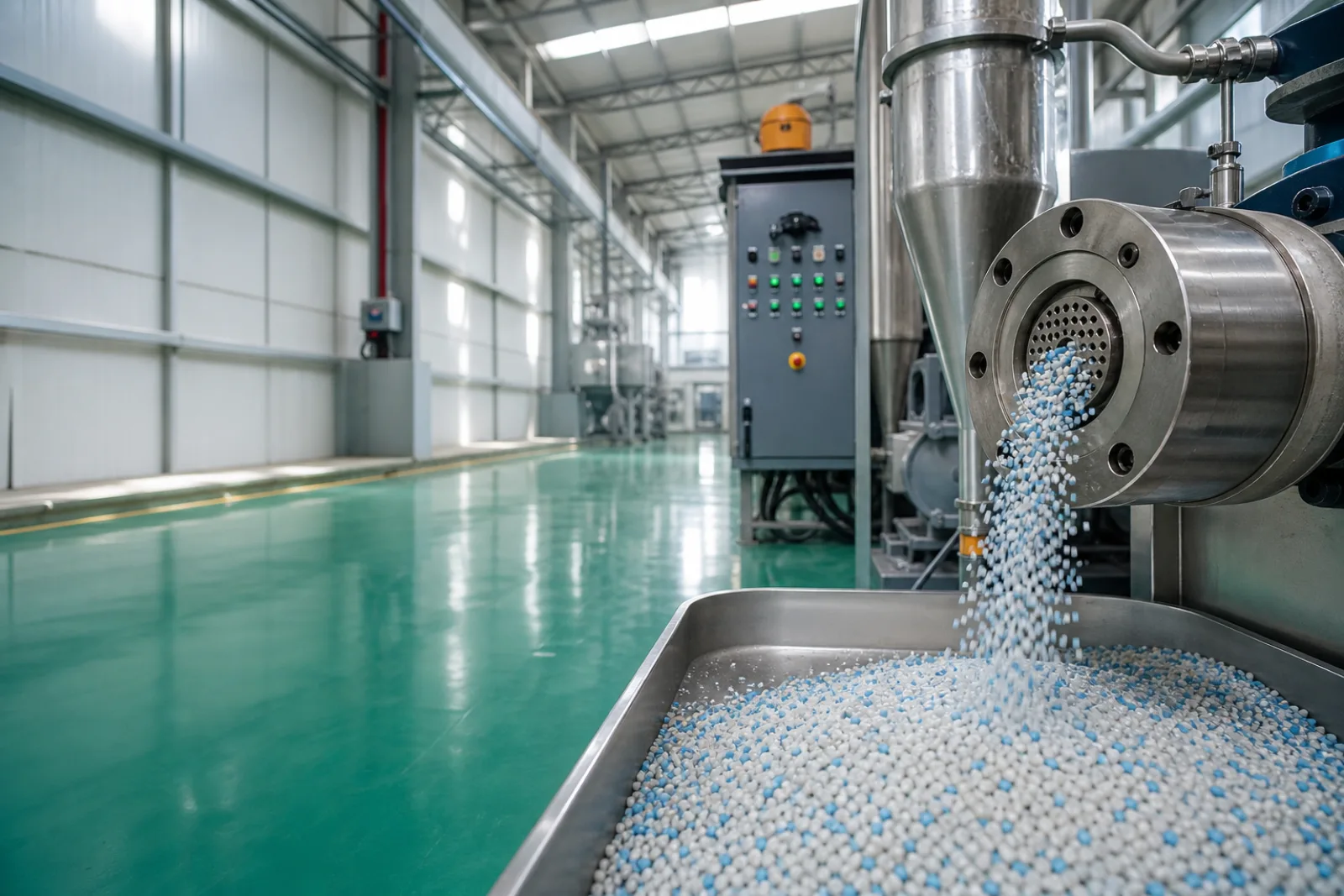
Recycled plastic pellets leaving the die face of a SUHUI pelletizing line
Knowledge base

Plastic Recycling Industry News

Material and market news for the plastic recycling industry — which plastics can be recycled and how, how PET, HDPE and PP feedstock quality is changing, and what recycled-content targets mean for recyclers planning new capacity. Background reading for the investment decision that comes before the plastic recycling machine specification.

16 Guides & explainers PET / HDPE / PP / PVC Materials covered 20+ Years of line-building experience
27 Aug
Industry News | SUHUI Machinery

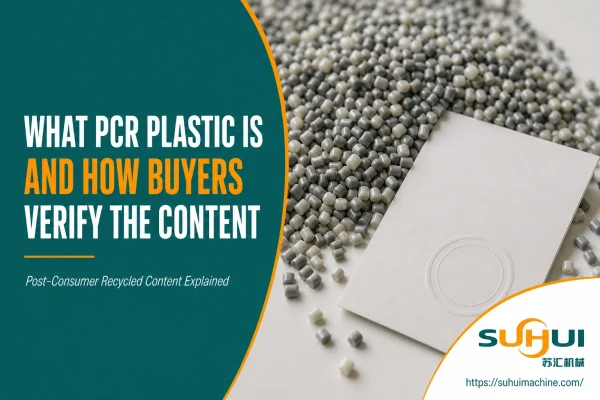
What PCR Plastic Is and How Buyers Verify the Content

PCR plastic has moved from a marketing preference to a purchasing specification, but a recycled content percentage on a datasheet is a claim rather than a measurement. This article covers what post-consumer recycled plastic is and how it differs from post-industrial, the three forces now driving demand, the chain of custody models that produce a verified percentage, the records each link in the supply chain has to keep, why two loads at the same percentage behave differently in a moulding machine, and what a recycling line has to be capable of to supply the same specification twice.

Read More
26 Aug
Industry News | SUHUI Machinery

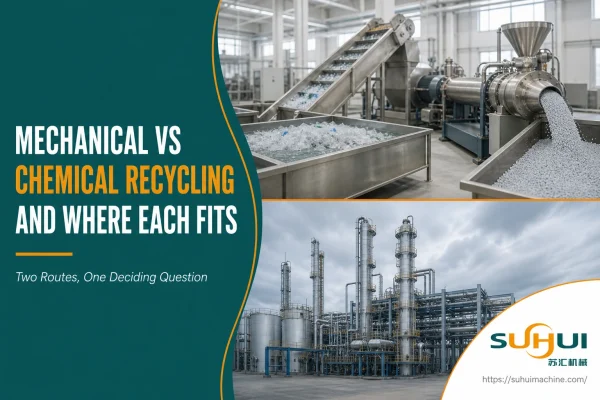
Mechanical vs Chemical Recycling and Where Each One Fits

Chemical recycling breaks a polymer back into monomers or feedstock oils and rebuilds it. Mechanical recycling leaves the chain intact and removes everything around it. This article compares the two on engineering grounds — the three chemical technologies and what each accepts, which material streams suit which route, what quality of output each can deliver, and why the scale threshold rather than the chemistry decides what actually gets built.

Read More
What is recycling blog cover showing recovered plastic returning to a pipe and profile extrusion production line 25 Aug
Industry News | SUHUI Machinery

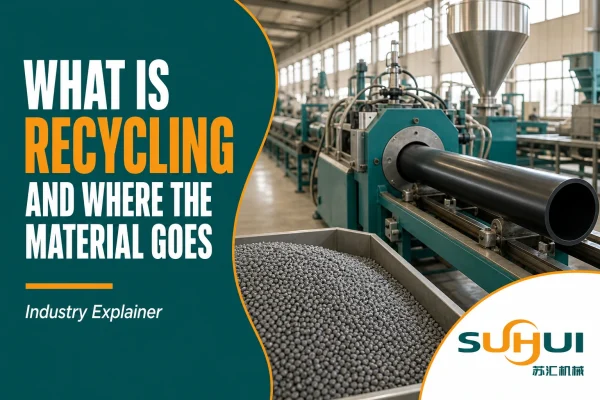
What Is Recycling and Where the Material Actually Goes

Recycling is usually explained as a process — collect, sort, reprocess. That explanation stops one step short of the part that decides whether any of it mattered. Material is only recycled once a manufacturer buys the recovered output and runs it through a production line. This article follows the destination rather than the process, covering closed and open loops, downcycling, the realistic ceiling for each of the six common plastics, where recovered polymer re-enters pipe and profile production, what gets rejected and why, and the four forces that decide whether a recycling project pays for itself.

Read More
24 Aug
Industry News | SUHUI Machinery

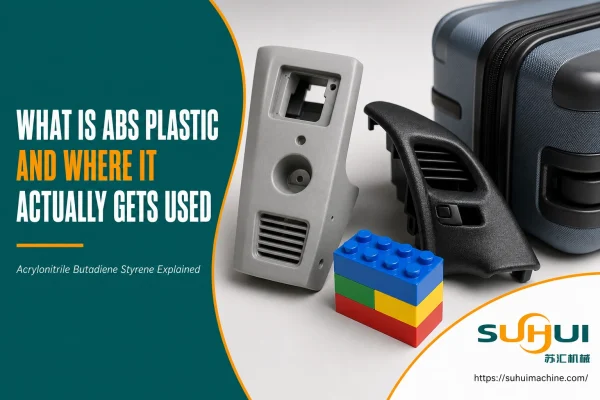
What Is ABS Plastic and Where It Actually Gets Used

ABS plastic is acrylonitrile butadiene styrene, a thermoplastic terpolymer in which butadiene rubber particles are dispersed through a rigid styrene-acrylonitrile matrix. This article explains what each monomer contributes, why changing the ratio produces five grade families that are not interchangeable, where ABS beats both cheaper and more expensive alternatives, how it compares with HIPS and PC-ABS, what it demands during processing, and why the density it shares with HIPS is the reason recovered ABS is specified by its source rather than by a wash specification.

Read More
23 Aug
Industry News | SUHUI Machinery

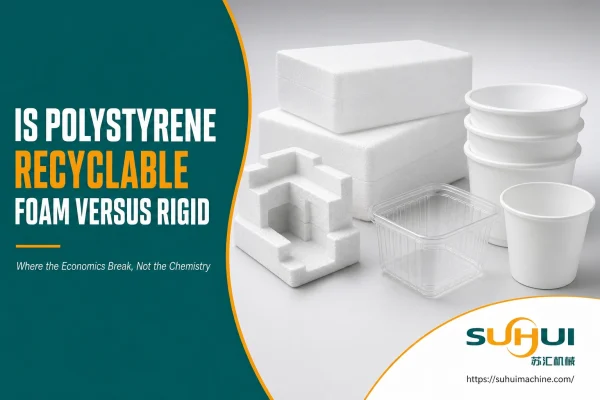
Is Polystyrene Recyclable and Why Most of It Is Not

Polystyrene is recyclable in the laboratory sense and mostly is not recycled in practice, and the two forms fail for entirely different reasons. Foam is roughly 95 to 98 per cent air, so a full trailer carries around a tonne of polymer against a vehicle able to take twenty times that, and freight cost overwhelms the material value before any machine is switched on. Rigid polystyrene has no such problem and fails instead on collection volume and stream consistency. This article separates the two, explains what densification involves and which supplier category provides it, and covers what happens to solid polystyrene on an ordinary rigid plastic line.

Read More
23 Aug
Industry News | SUHUI Machinery

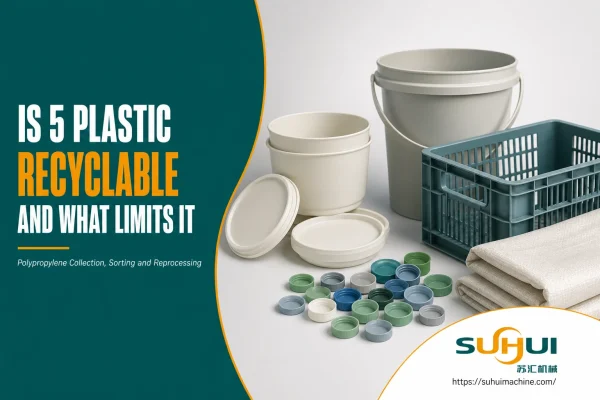
Is 5 Plastic Recyclable and Where PP Actually Goes

Number 5 plastic is polypropylene and it is fully recyclable as a material, yet its recovery rate still trails PET and HDPE. This article explains why the gap is on the collection side rather than the technical side, covering the four collection factors that hold PP back, the density band it shares with polyethylene that no float-sink tank can resolve, why multi-material packaging design is the other half of the problem, how rigid, woven and film PP streams each need a different front end feeding a common pelletizing stage, and what colour and odour do to the grade of the finished pellet.

Read More

Find a Guide by Material

Jump straight to the articles that cover the polymer you actually run.

Browse by Topic

Done reading? Jump from theory to the equipment itself.

Not Sure Which Line Fits Your Material?

Send us the plastic you run and the output you need. A SUHUI engineer will map a line configuration and a budget range — no catalogue spam.

Talk to a SUHUI Engineer