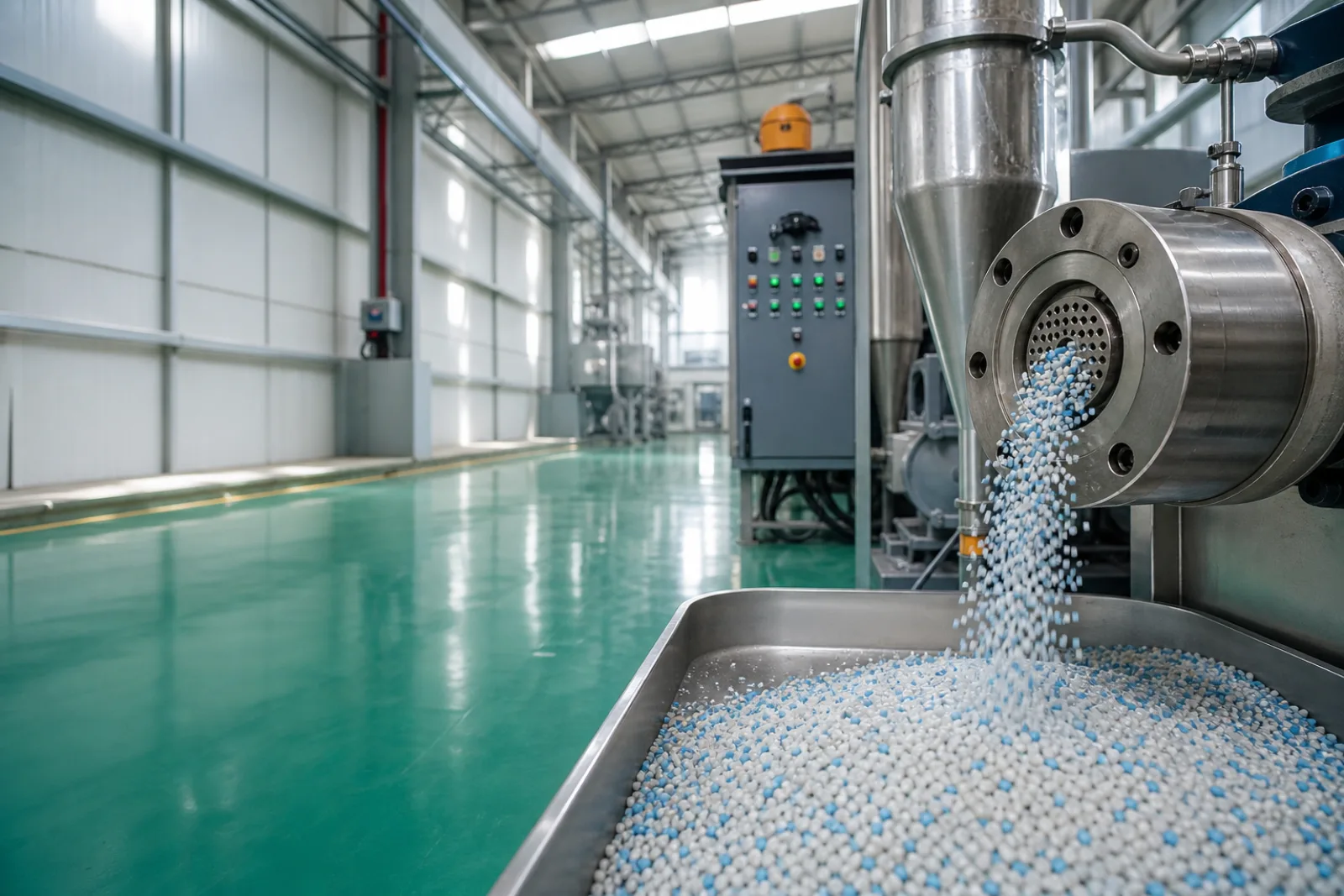
Recycled plastic pellets leaving the die face of a SUHUI pelletizing line
Knowledge base

Plastic Recycling & Extrusion Technology

Plastic recycling technology explained at the level an engineer specifying a line actually needs — screw geometry and twin-screw compounding, friction washing and float-sink separation, melt filtration, pelletizing methods and downstream vacuum calibration. Each article goes into the process decisions that change output quality, pellet consistency and running cost, rather than describing what a machine looks like. Understanding the plastic recycling technology behind a route is what makes a quotation comparable; if you are still choosing between routes, start from the plastic recycling machine guide or the plastic extrusion machine guide.

16 Guides & explainers PET / HDPE / PP / PVC Materials covered 20+ Years of line-building experience
27 Aug
Technology | SUHUI Machinery

How Washing Lines Recycle Plastic Bottles Into Flake

A used PET bottle is polymer plus about seven things that are not polymer, and every stage of a washing line exists to remove one of them. This article reads the line backwards from the contamination — what is being taken off at each point, what controls whether the removal works, what the failure looks like downstream, why the float-sink tank cannot remove PVC, why water chemistry is a live process variable, and where a tonne of bale loses weight before it becomes flake.

Read More
26 Aug
Technology | SUHUI Machinery

What Polymer Recycling Covers Beyond the Common Six

Polymer recycling covers the materials the commodity resin codes leave out — polycarbonate, polyamide, acetal, PBT, thermoplastic elastomers, reinforced compounds and multilayer structures. Almost all of it is recovered through closed industrial channels rather than household collection. This article covers what each engineering thermoplastic fails at, why glass fibre changes the machine rather than just the recipe, why drying is a chemical requirement for condensation polymers, and the four adjustments an engineering polymer stream forces on a line.

Read More
26 Aug
Technology | SUHUI Machinery

How Mechanical Recycling Works Line by Line

Mechanical recycling recovers plastic without changing its chemistry — sorting, size reduction, washing, density separation, dewatering and drying, and pelletizing. This article walks the six stages in the order the material meets them, and for each one answers what physically leaves the stream, which single variable decides whether the stage works, and which materials force you to reinforce it.

Read More
25 Aug
Technology | SUHUI Machinery

What rPET Is and How Its Grades Are Defined

rPET is recycled polyethylene terephthalate, but that expansion tells a buyer almost nothing. Two lots both correctly described as rPET can differ more from each other in intrinsic viscosity, colour and permitted end use than either differs from virgin resin. This guide treats rPET as a graded resin with a route attached, covering where it sits between washed flake and finished product, why intrinsic viscosity is the number the grade hangs off, what the bottle, fibre and sheet routes each demand, why food grade is a separate stream rather than a higher tier, and how solid state polymerization rebuilds the viscosity that recycling removes.

Read More
25 Aug
Technology | SUHUI Machinery

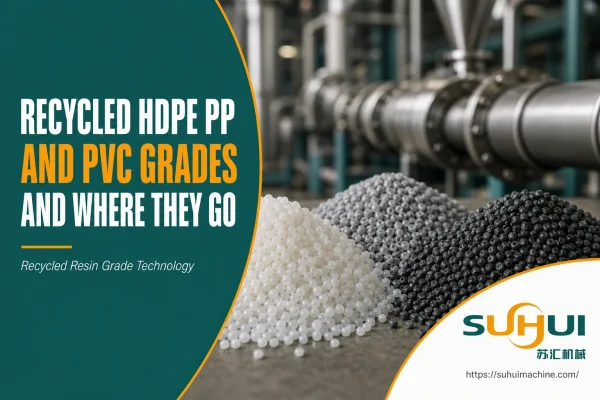
Recycled HDPE, PP and PVC Grades and Where They Get Used

Recycled HDPE, recycled PP and recycled PVC get discussed as if each were one material with one price. On a production floor they behave as three separate grade ladders, and two lots of the same polymer can sit four rungs apart. This guide names the grade tiers for each of the three, names the extrusion line that takes each tier, explains why that material cannot climb higher, and traces the closed loop from scrap bale through washing and pelletizing back to a pipe or profile die. It also sets out what actually caps a recycled content ratio, which is the product standard rather than the resin.

Read More
24 Aug
Technology | SUHUI Machinery

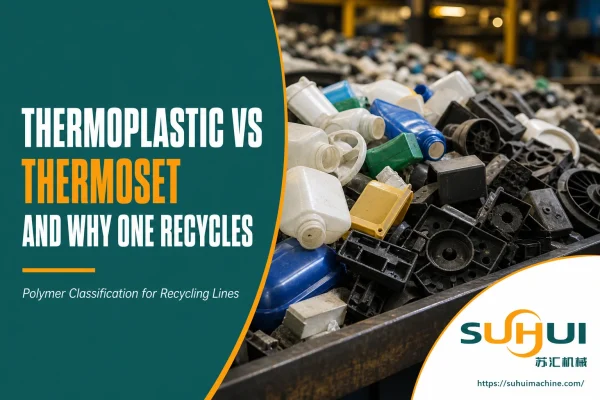
Thermoplastic vs Thermoset and Why Only One Can Be Recycled

The thermoplastic vs thermoset distinction is about chemical bonding rather than hardness or heat resistance. Thermoplastics are separate chains that heat can make flow; thermosets are one crosslinked network that heat can only destroy. This article covers what crosslinking does at the molecular level, the six thermoset families that reach a plastics recycling plant, what unmelted thermoset does to a pelletizing line, where it can still be caught, and what thermoset waste can realistically be turned into instead.

Read More

Find a Guide by Material

Jump straight to the articles that cover the polymer you actually run.

Browse by Topic

Done reading? Jump from theory to the equipment itself.

Not Sure Which Line Fits Your Material?

Send us the plastic you run and the output you need. A SUHUI engineer will map a line configuration and a budget range — no catalogue spam.

Talk to a SUHUI Engineer