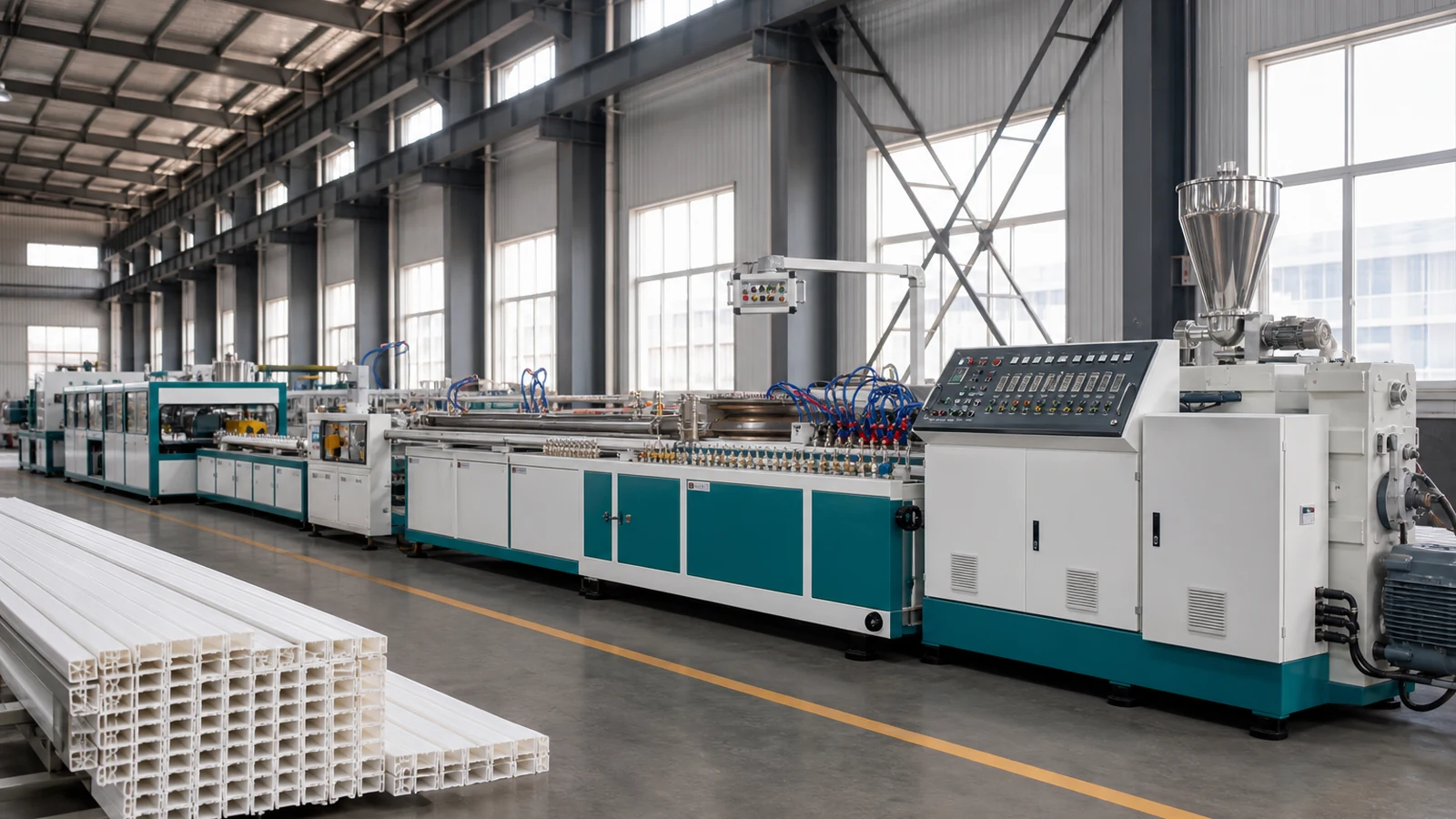
A PVC profile extrusion line produces PVC window, door and construction profiles through extrusion, die forming, calibration, cooling, haul-off and cutting.
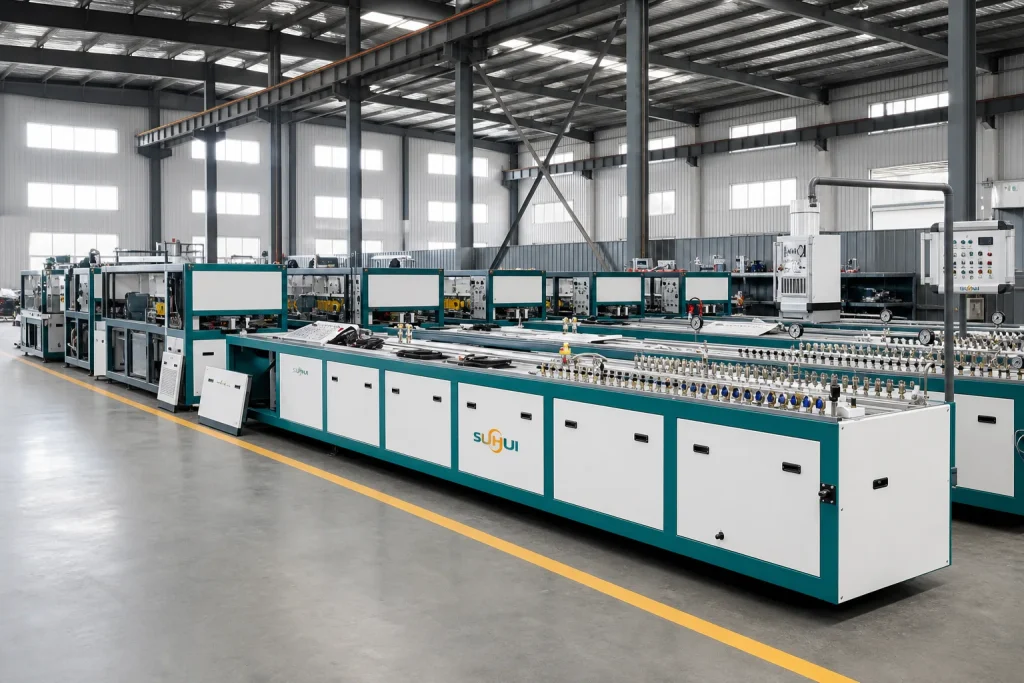
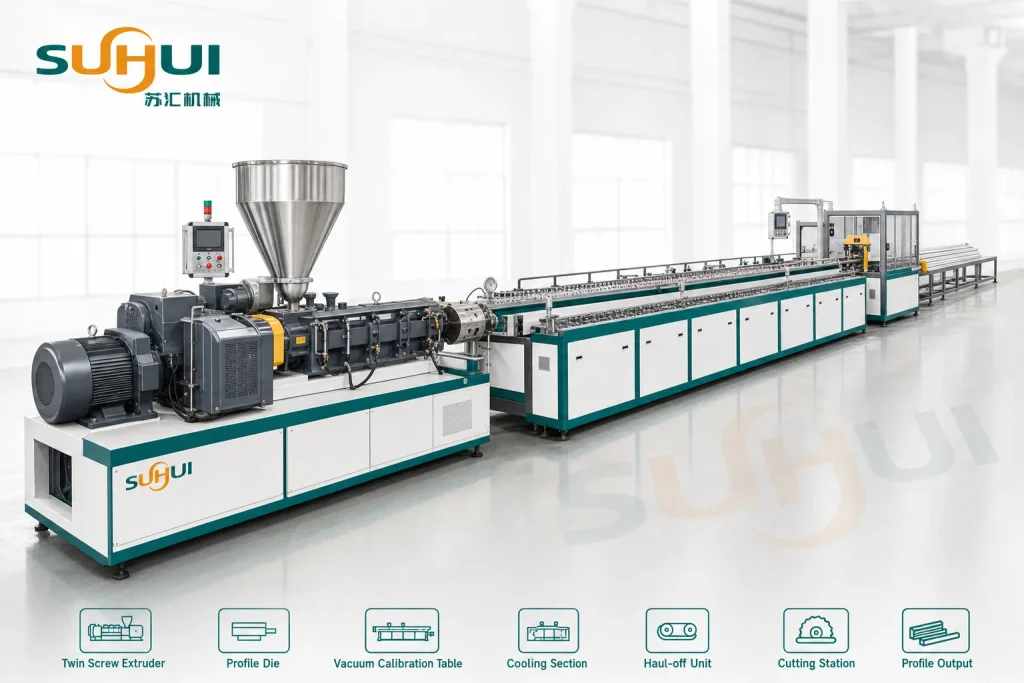
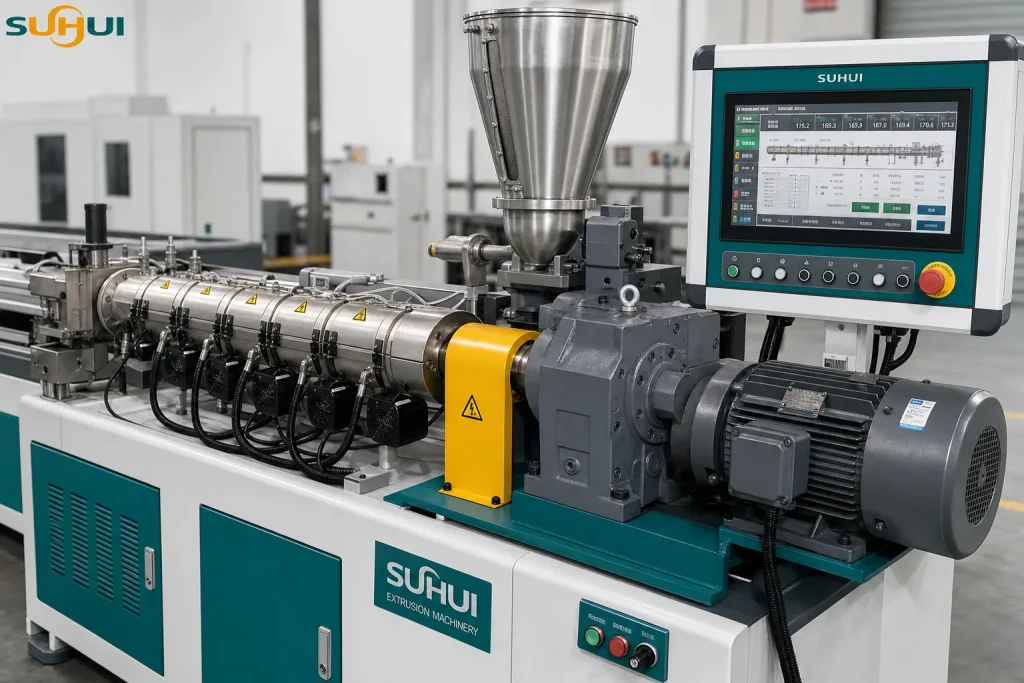
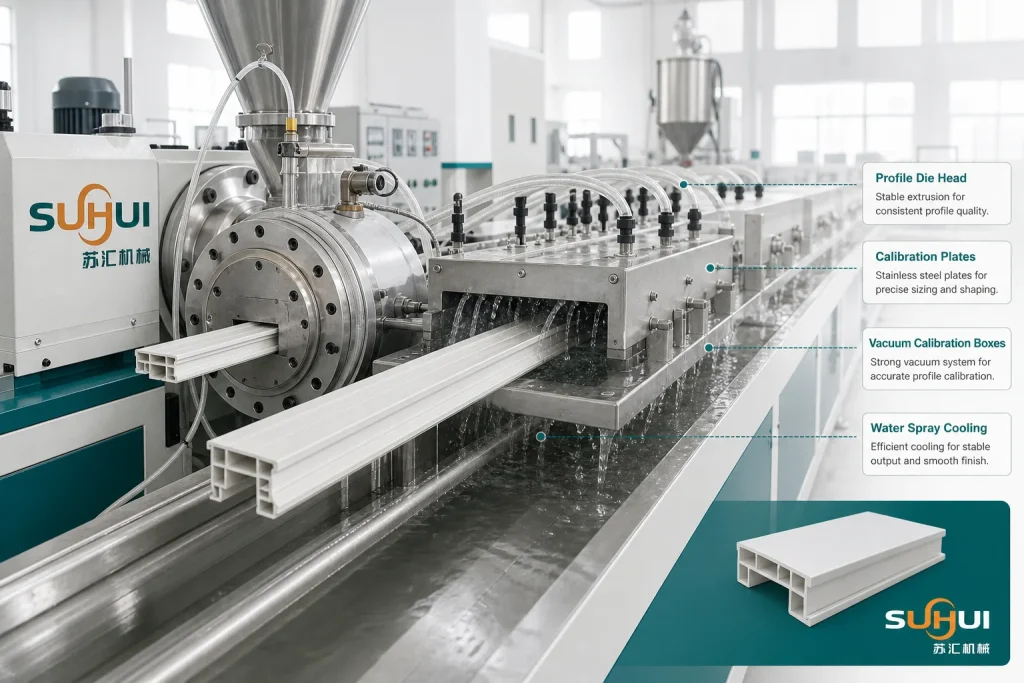
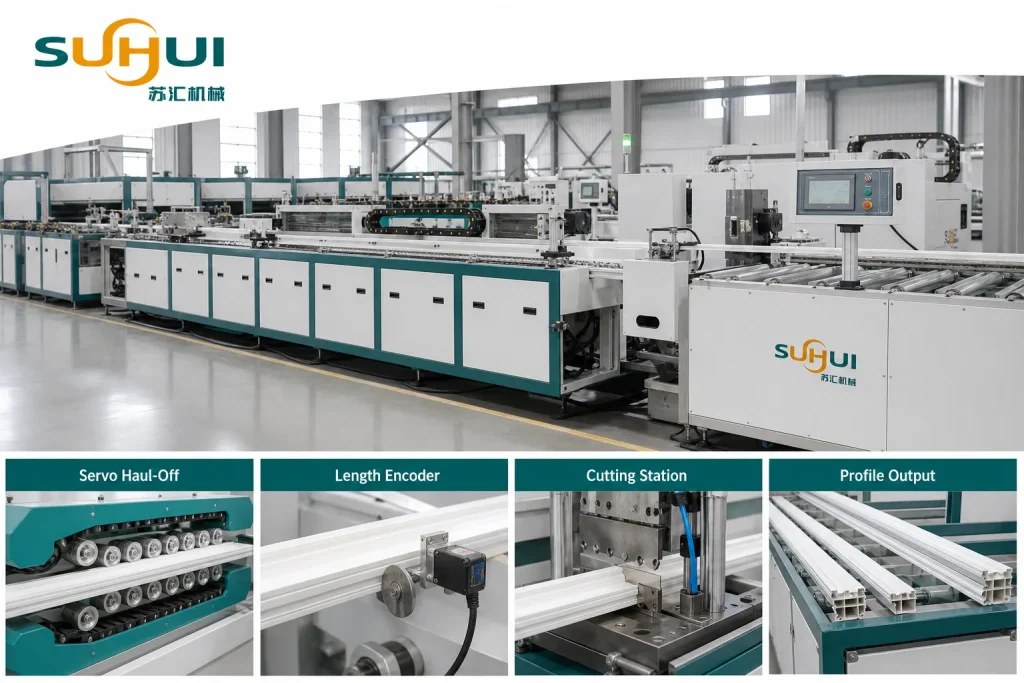
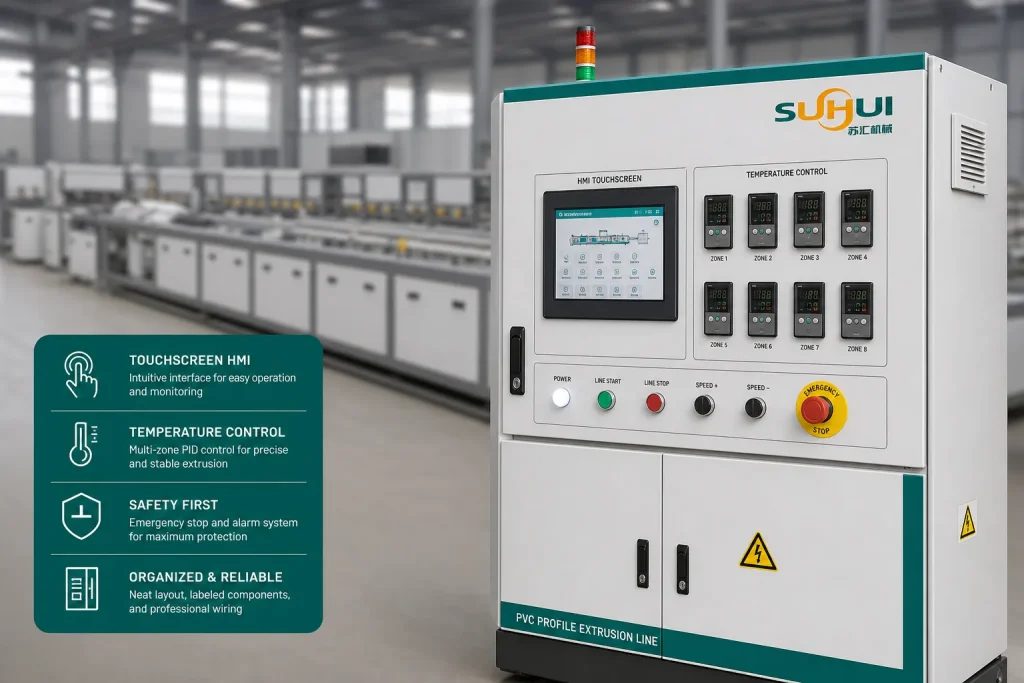
The SUHUI PVC profile extrusion line produces rigid uPVC and flexible PVC profiles for window frames, door profiles, cable conduits, decorative trims, structural sections and custom industrial profiles. The complete line integrates material mixing, twin-screw extrusion, custom profile die forming, vacuum calibration, cooling, servo haul-off, precision cutting, stacking and PLC automation.
The SUHUI PVC profile extrusion line is designed to produce rigid uPVC and flexible PVC profiles for construction, electrical, furniture, and industrial applications. It processes PVC compounds into precision-shaped window frames, door profiles, cable conduits, decorative trims, structural sections, and custom plastic profiles.
As a PVC profile extrusion machine, the line combines controlled twin-screw plasticizing, custom profile die forming, vacuum calibration, water cooling, servo haul-off, and automatic cutting. This helps profile manufacturers maintain stable dimensions, consistent surface finish, and repeatable profile geometry across different PVC formulations.
For window and door profile factories, conduit manufacturers, and custom profile producers, SUHUI can configure the PVC profile production line according to profile shape, PVC formulation, die design, calibration length, output requirement, and downstream cutting or stacking method.
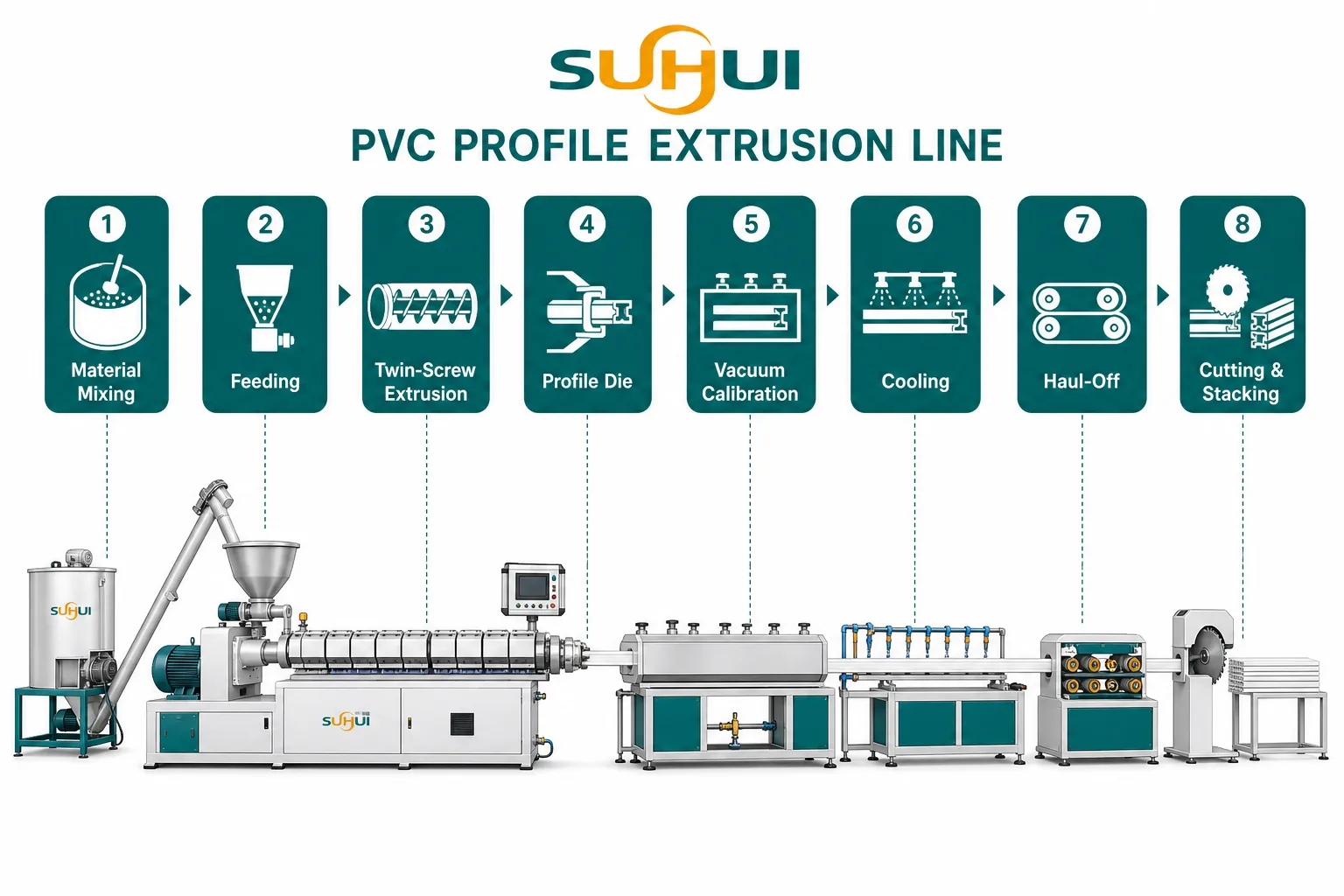
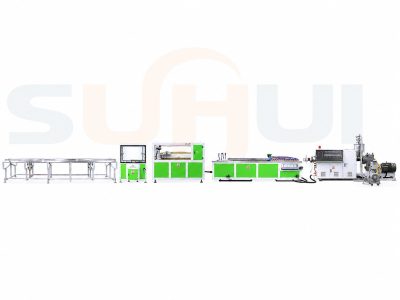
PVC profile extrusion workflow from material preparation and twin-screw extrusion to vacuum calibration, cooling, haul-off, cutting, and stacking.
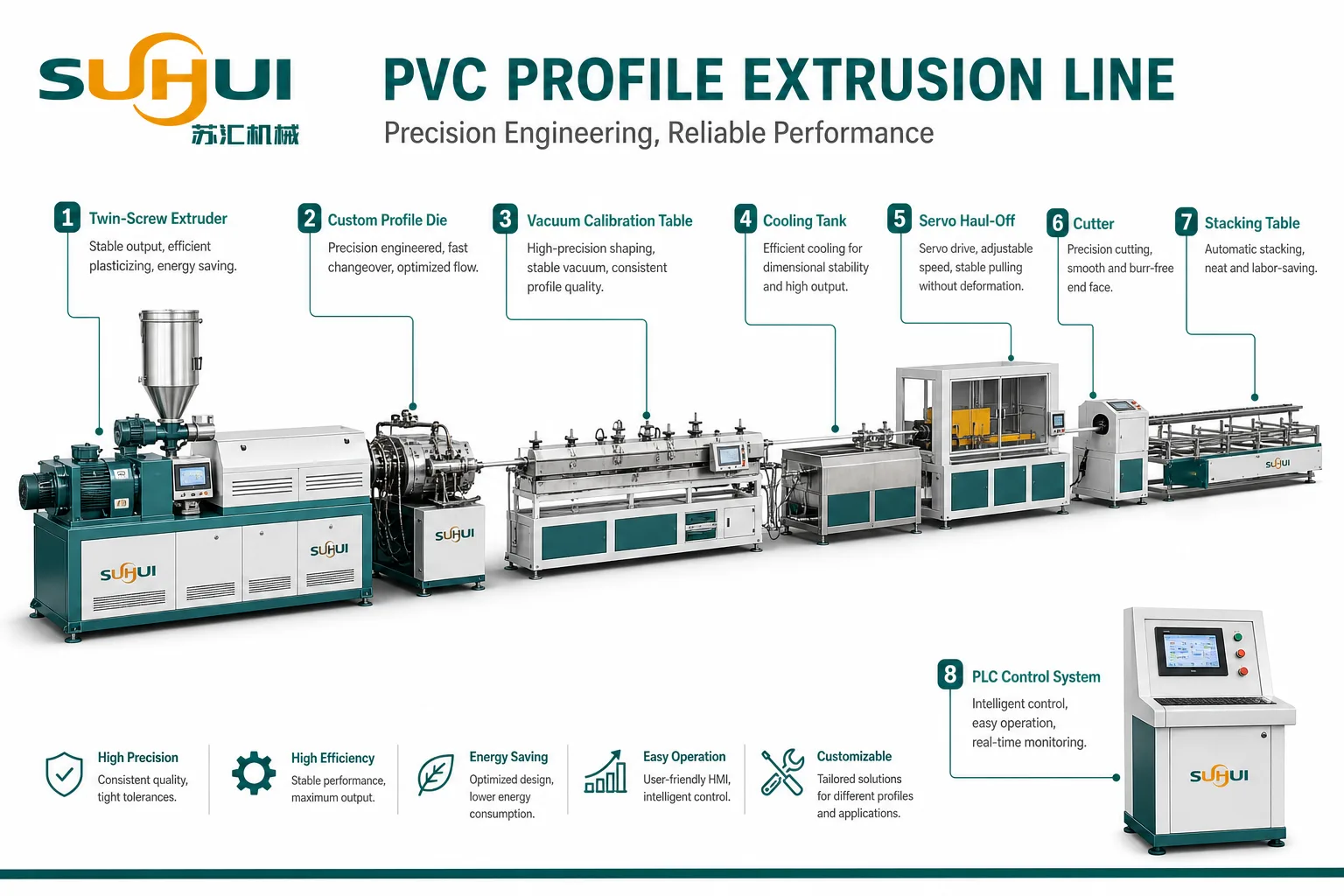
Main components of a PVC profile extrusion line, including extruder, profile die, calibration table, cooling, haul-off, cutting, stacking, and PLC control.
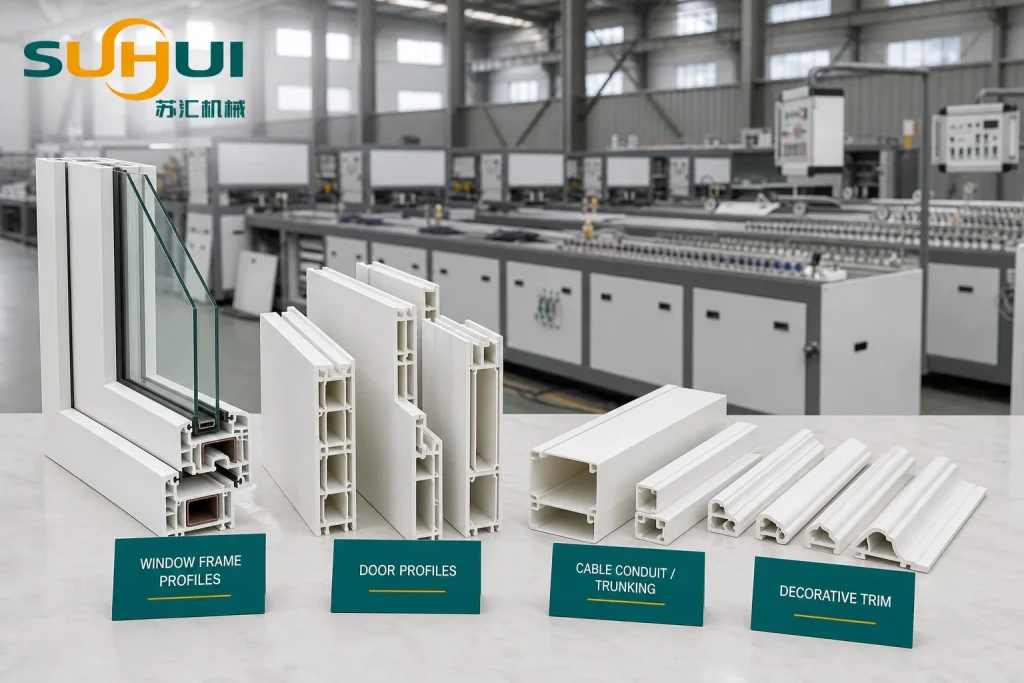
The SUHUI PVC profile extrusion line can produce many rigid and flexible PVC profile types. Common outputs include uPVC window profiles, door profiles, cable conduit and trunking, decorative trims, corner guards, furniture profiles, structural sections, and custom industrial profiles.
Profile shape is determined by the custom die and calibration tooling. Before manufacturing the line, SUHUI engineers confirm the drawing, wall thickness, cross-section complexity, target surface finish, PVC formulation, and required cutting length so the equipment can be matched to the final profile application.
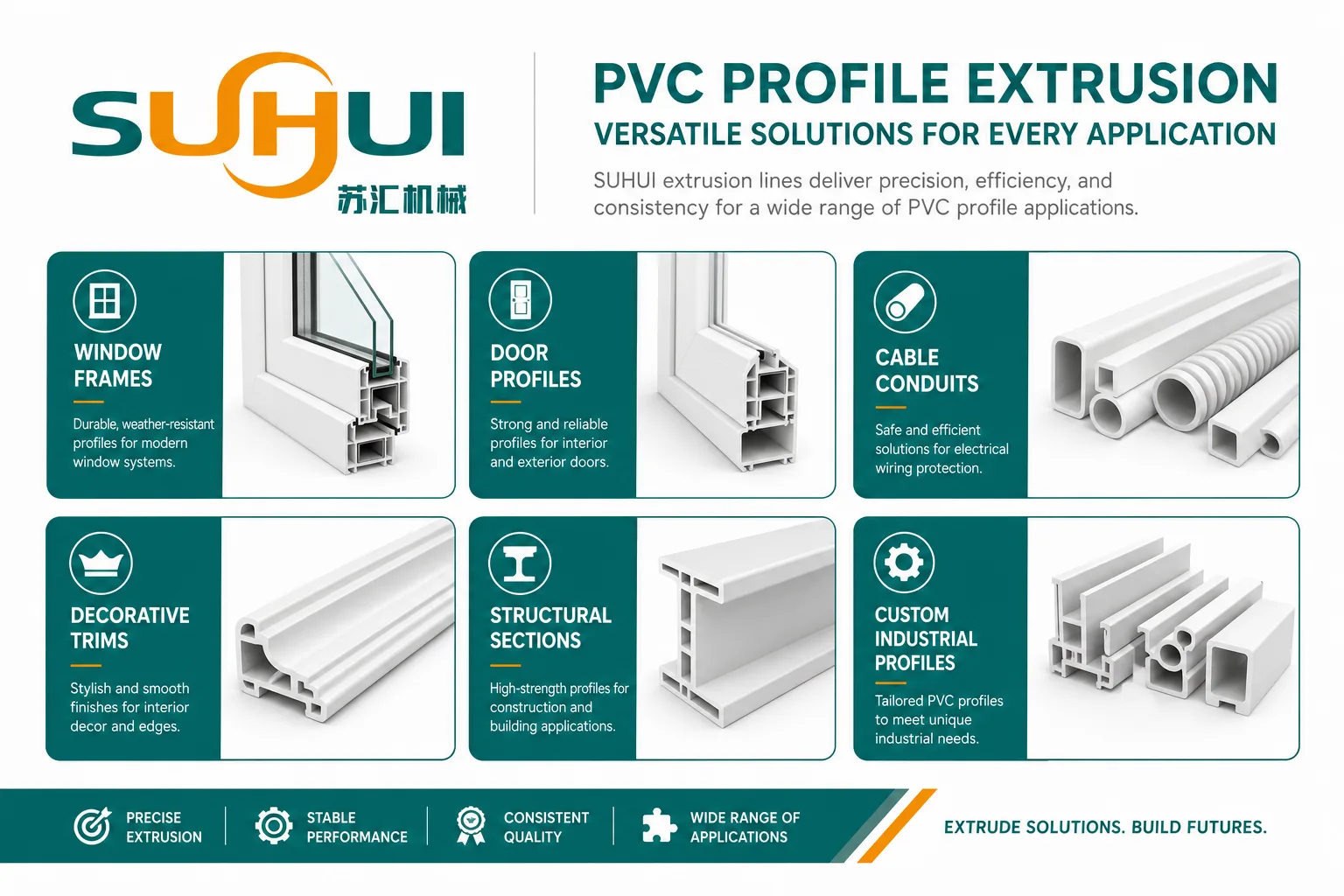
PVC profile extrusion supports window frames, door profiles, cable conduits, decorative trims, structural sections, and custom industrial profiles.
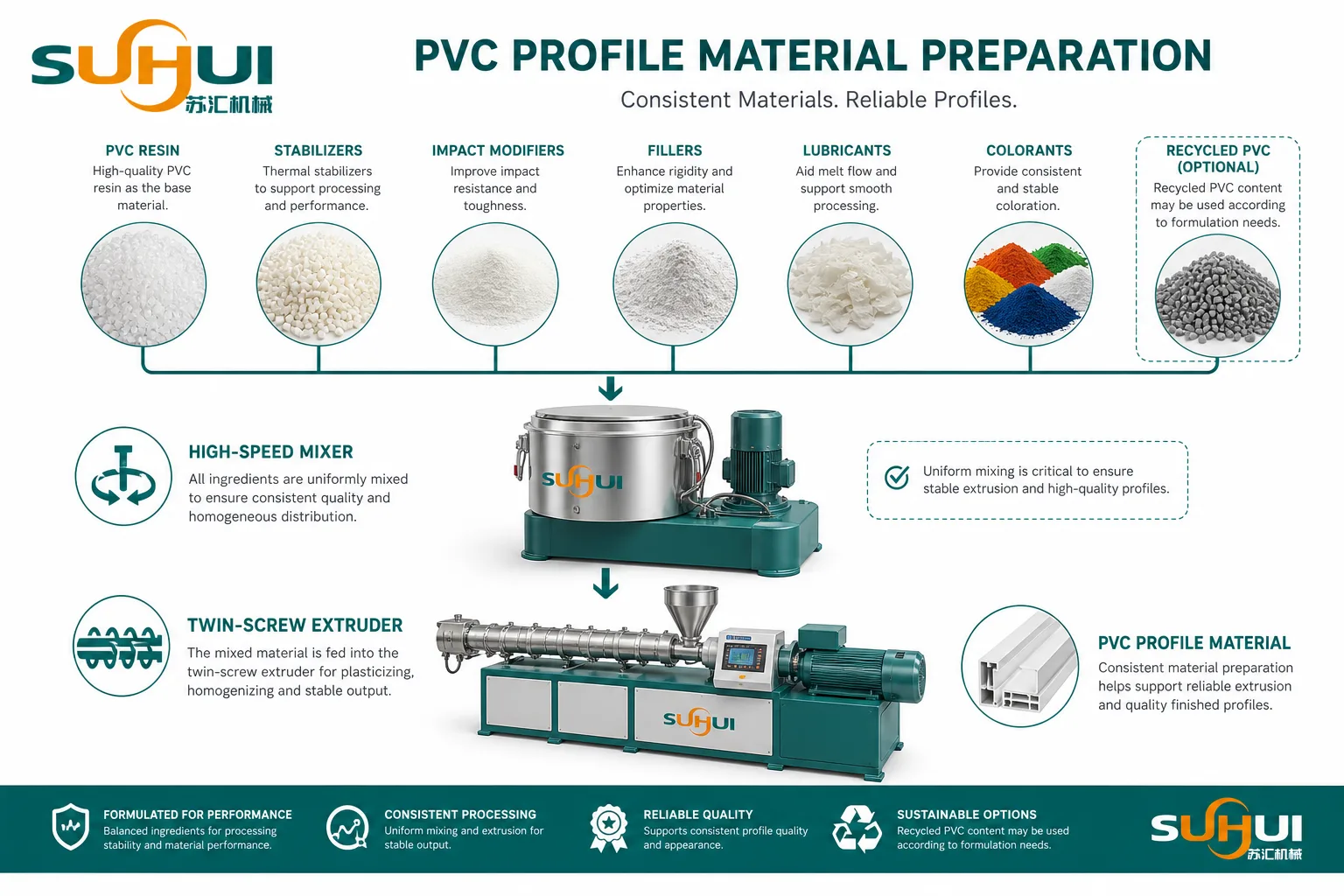
PVC profile material preparation starts with a stable dry blend before twin-screw extrusion and profile forming.
Vacuum calibration is one of the most important sections in PVC profile extrusion. After the profile exits the die, it is still soft and can deform easily. The calibration table uses vacuum plates, cooling water, and profile-specific tooling to hold the target cross-section while the PVC material solidifies.
For window and door profiles, calibration design affects outer dimensions, wall thickness, corner definition, straightness, and surface appearance. For conduit, trim, and custom industrial profiles, calibration length and cooling capacity should be matched to profile size, line speed, and PVC formulation.
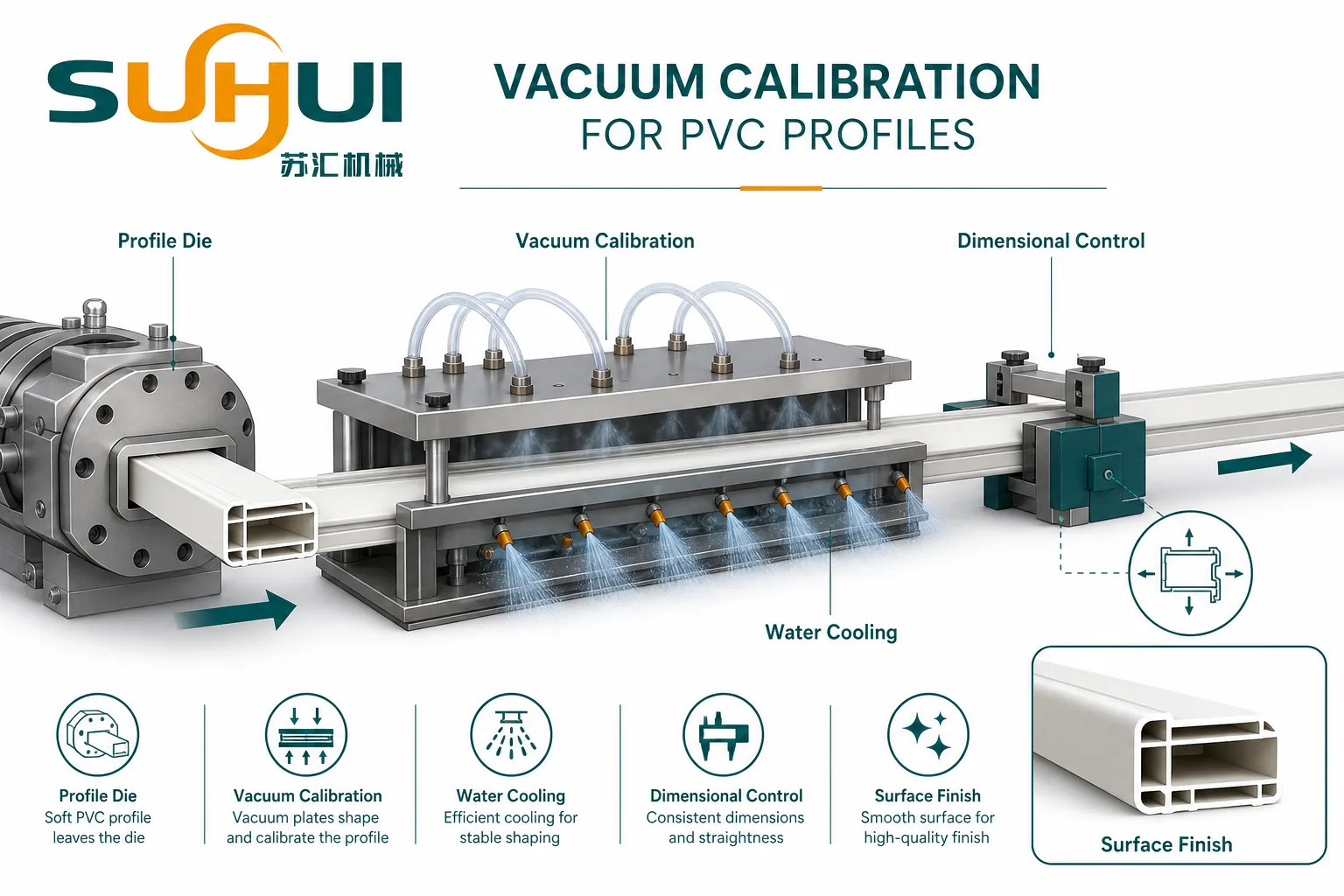
Vacuum calibration helps hold PVC profile dimensions while cooling stabilizes the final profile shape.
Choosing a PVC profile extrusion line starts with the profile drawing and end-use requirements. A window profile line, cable conduit line, decorative trim line, and custom industrial profile line may need different extruder size, die structure, calibration length, haul-off force, cutting method, and automation setup.
Important project details include profile type, PVC formulation, lead-free stabilizer requirement, recycled PVC content, expected output, available workshop space, cooling water conditions, cutting length, and packaging method. Confirming these details early helps avoid mismatch between the PVC profile extruder, die, calibration system, and downstream equipment.
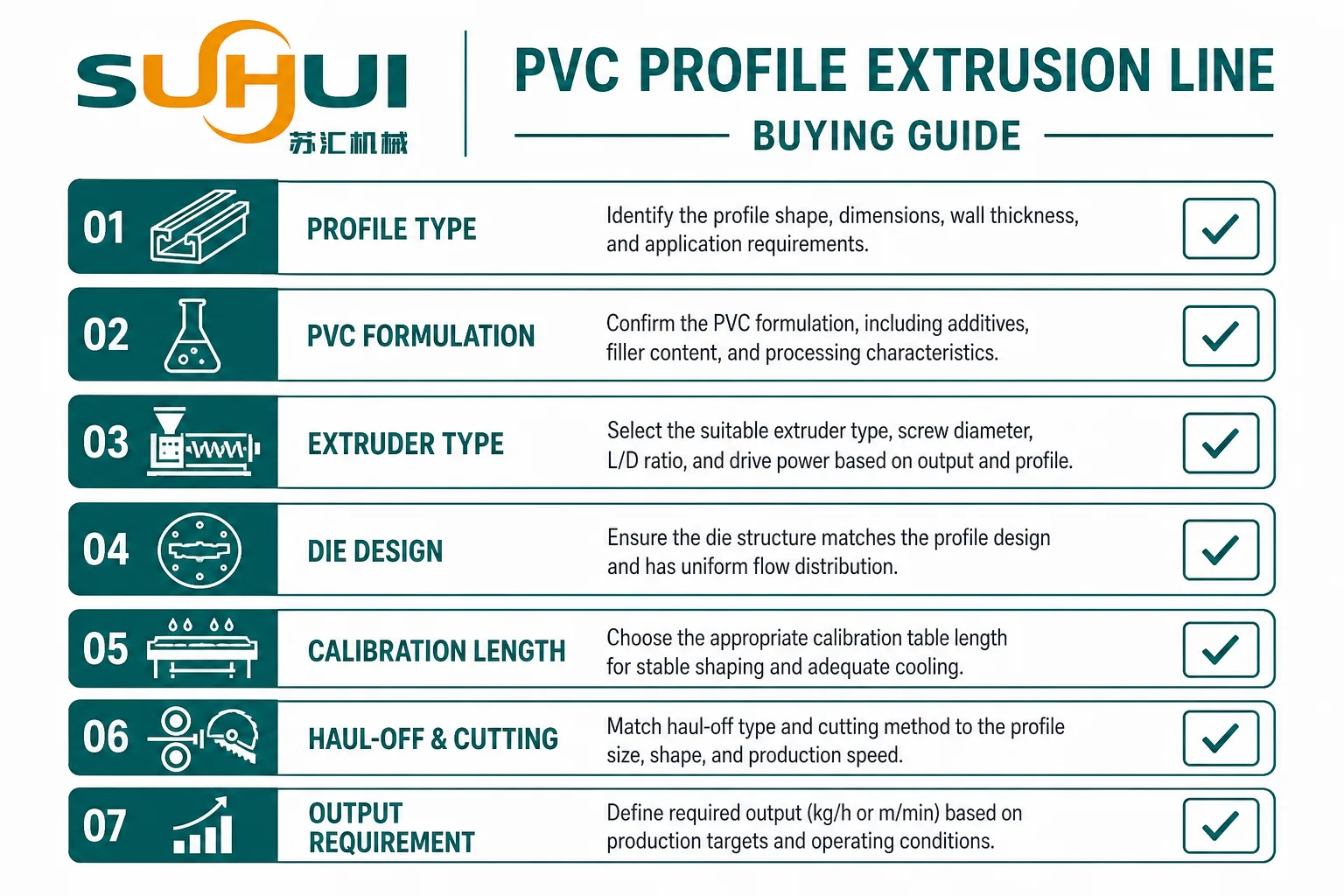
Key factors for choosing a PVC profile extrusion line include profile type, formulation, extruder type, die design, calibration, haul-off, cutting, and output requirements.
A PVC profile extrusion line is a production system that melts and shapes PVC compound through a profile die, then uses vacuum calibration, cooling, haul-off, cutting, and stacking to produce continuous PVC profiles such as window frames, door profiles, cable conduits, trims, and custom sections.
The line can produce rigid uPVC and flexible PVC profiles including window frames, door profiles, cable conduits and trunking, decorative trims, corner guards, structural sections, furniture profiles, and custom industrial profiles. The final shape depends on the die and calibration tooling.
Conical twin-screw extruders are commonly used for heat-sensitive rigid uPVC profiles that need stable plasticizing and controlled shear. Parallel twin-screw extruders can be selected for higher output or specific modified PVC formulations. SUHUI recommends the configuration based on formulation and profile requirements.
The vacuum calibration table draws the soft extruded profile against precision calibration plates while water cooling solidifies the shape. This helps control cross-section dimensions, wall thickness, straightness, and surface finish before the profile reaches haul-off and cutting.
Yes. The line can be configured for calcium-zinc and other lead-free stabilizer systems. Processing conditions such as temperature control, screw design, die flow, and cooling should be matched to the selected PVC formulation.
Yes, recycled PVC regrind or pellets can be blended into the formulation when the final product application allows it. The usable proportion depends on profile type, mechanical requirements, surface requirements, color stability, and customer quality standards.
Cutting options include planetary saw cutting, router cutting, and servo-driven flying cutting. The best option depends on profile shape, wall thickness, hardness, cutting angle, required length accuracy, and whether continuous cutting is needed.
Tell us your material type, condition, required capacity and target output. Photos or videos help.
SUHUI reviews the feeding method, process route and machine configuration for your material.
You receive an equipment list and quotation, with capacity, layout, voltage and automation matched to the project.
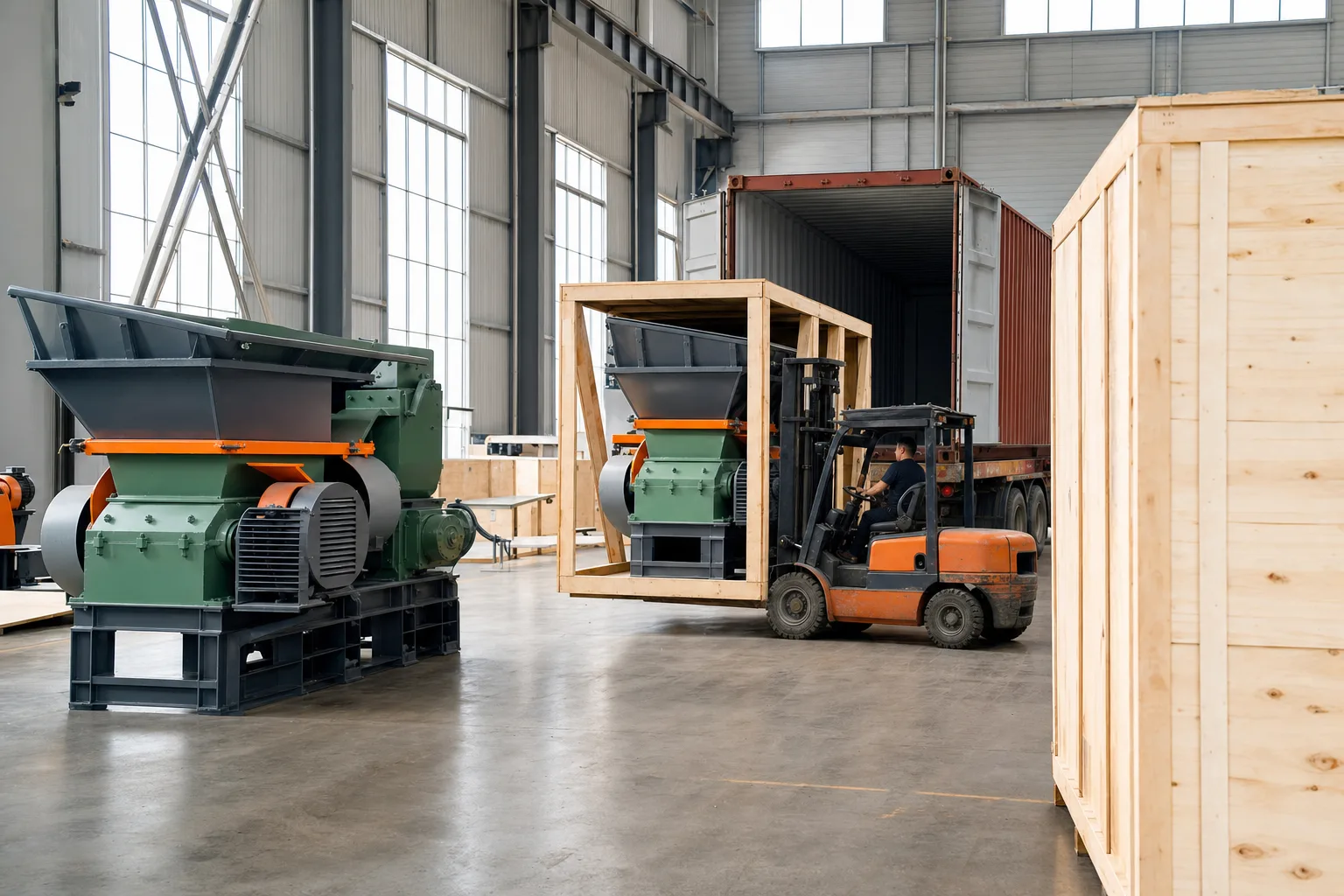
Production, testing, export packing and installation guidance through to commissioning.
To receive a more accurate recommendation, please include your material type, target product size, output requirement, line speed expectation, available workshop space, voltage and destination country in the message.
SUHUI plastic PP profile extrusion line produces polypropylene cable ducts, structural sections, custom technical profiles, tubes, and channels with stable extrusion, vacuum calibration, servo-driven haul-off, and automatic cutting.
The SUHUI PC light tube production line is specially designed for extruding polycarbonate (PC) tubes, PC profiles, and transparent LED lamp diffuser covers, including single-color and dual-color LED lampshades. It is also fully compatible with PMMA (acrylic) materials, making it suitable for a wide range of high-transparency lighting and optical profile applications.