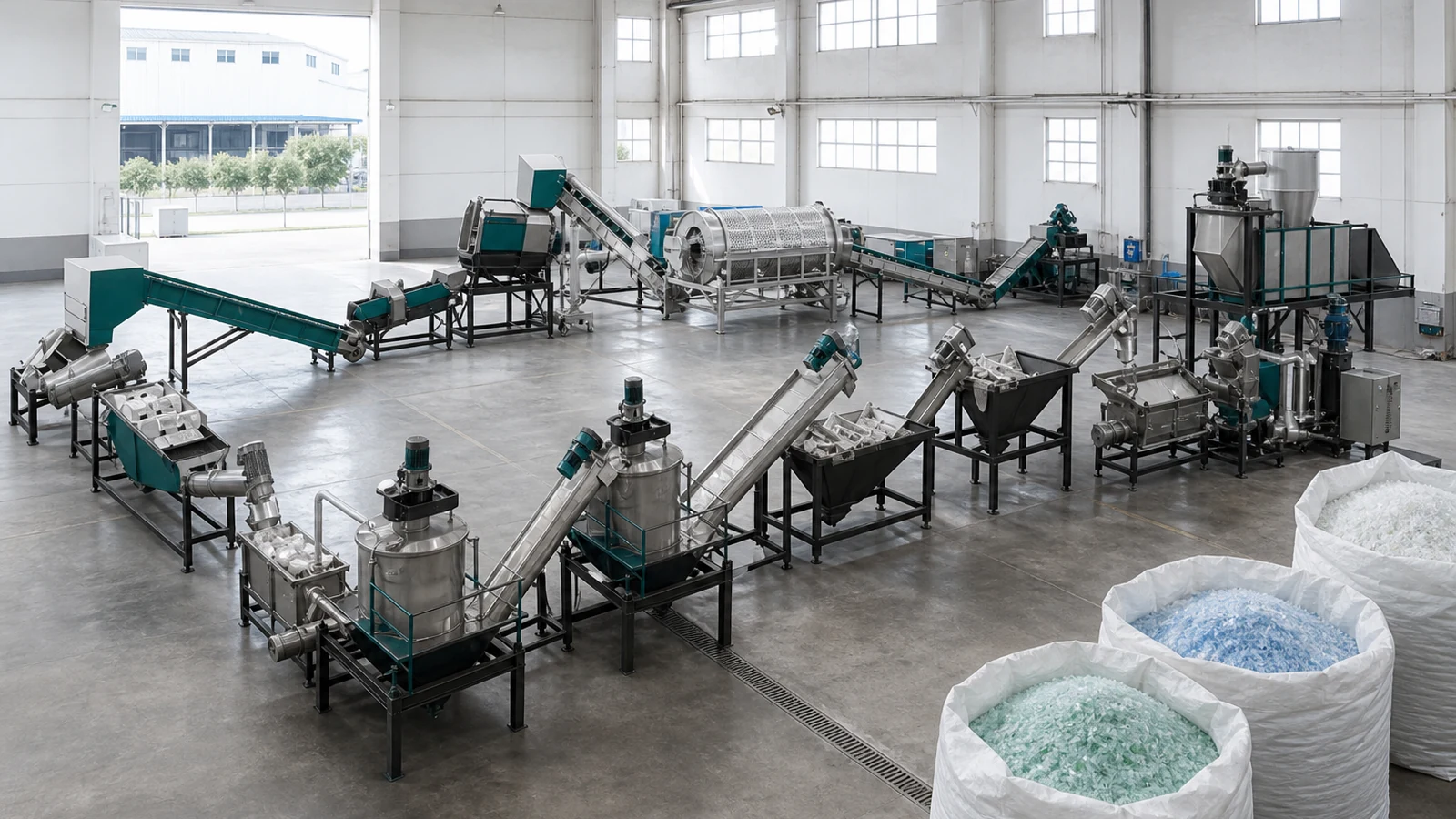
A PET bottle sorting washing line separates, washes and dries post-consumer PET bottles into clean PET flakes for downstream pelletizing, fiber production or sheet applications.
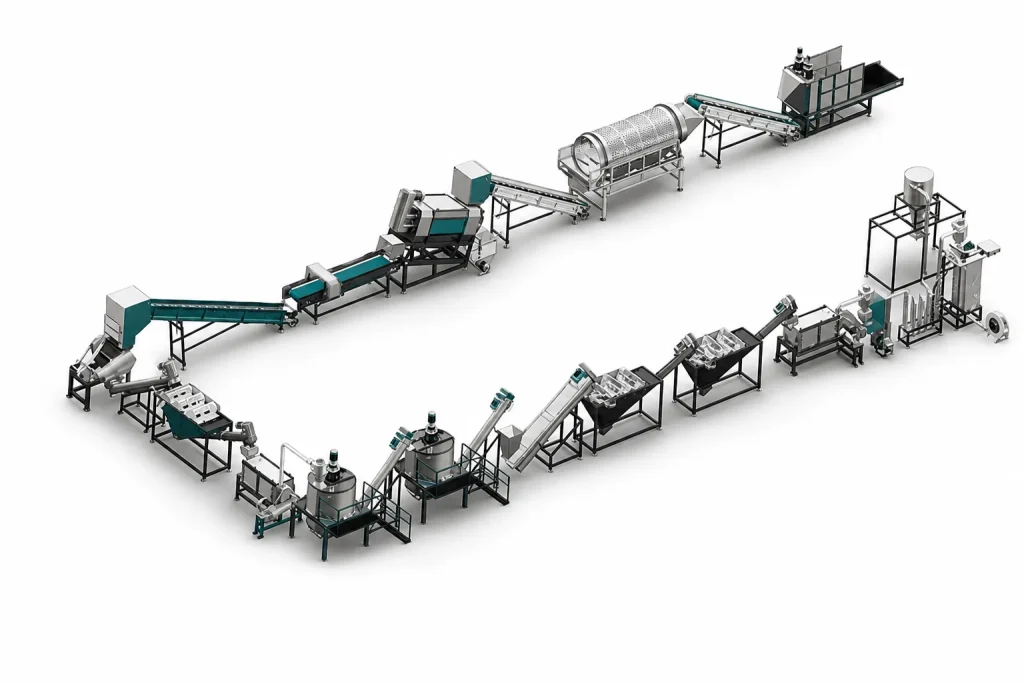
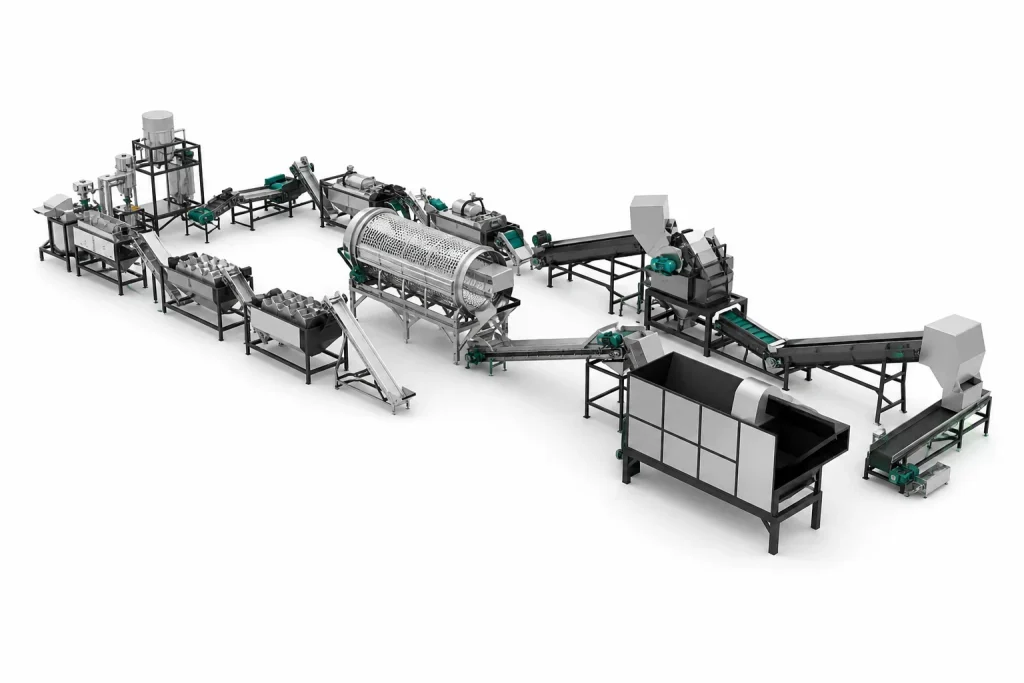
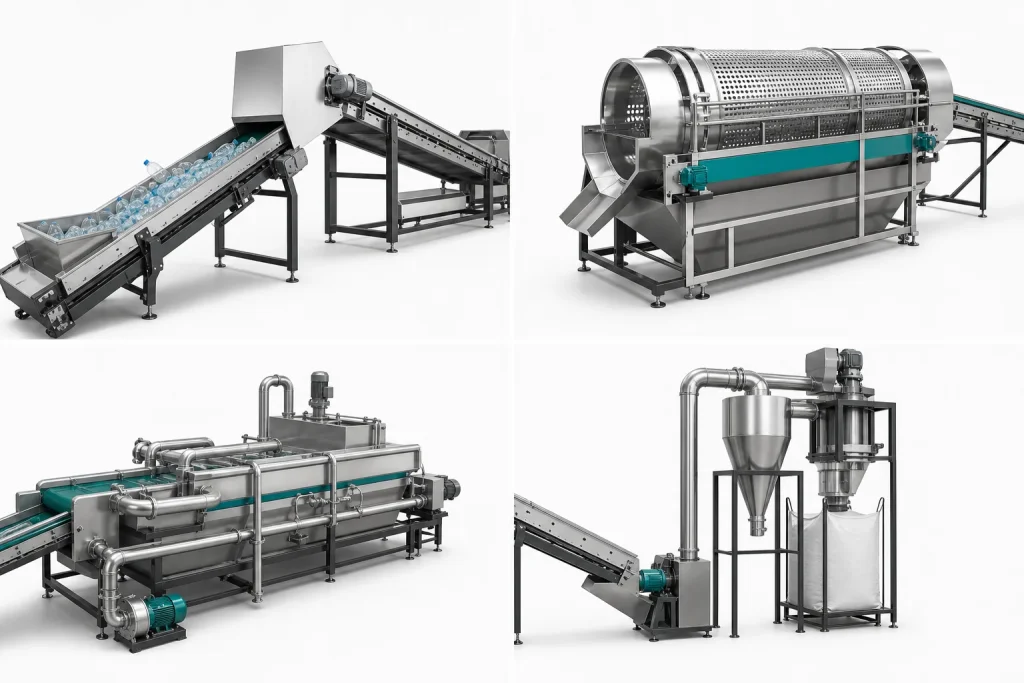
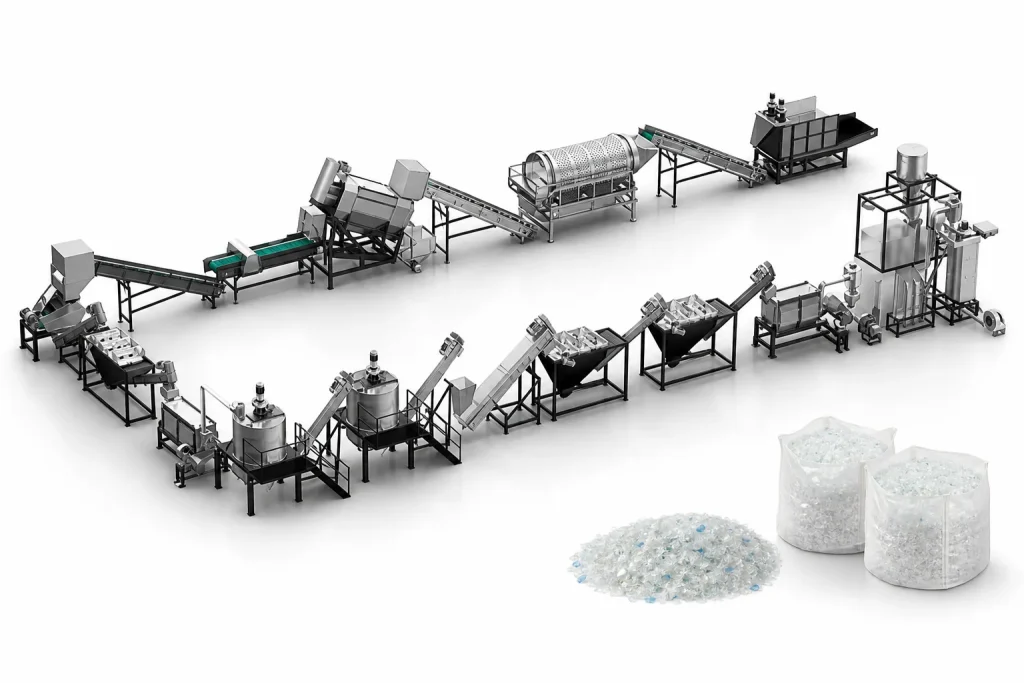
The SUHUI PET bottle sorting washing line recycles post-consumer PET bottle bales into clean PET flakes through bale breaking, optical sorting, label removal, crushing, hot alkaline washing, float-sink separation, drying and flake optical sorting. Standard configurations support 500-3,000 kg/h input capacity.
The SUHUI PET bottle sorting washing line is engineered to recycle post-consumer PET bottles into high-purity flakes for use in food-grade packaging, polyester fiber, and textile applications. It integrates advanced automated sorting, multi-stage hot washing, and precision drying technologies to efficiently process mixed, contaminated PET bottle bales.
The system systematically eliminates all major contaminant types, including sleeve labels, PP/PE caps, adhesives, organic residues, non-PET plastics, ferrous and non-ferrous metals, PVC bottles, and glass, to produce clean PET flakes that meet FDA and EU food-contact recycled material standards. The washing line supports input capacities from 500 to 3,000 kg/h, making it suitable for small recycling facilities through to industrial-scale bottle-to-bottle recycling operations.
SUHUI’s closed-loop water recycling system minimizes fresh water consumption and wastewater output, while automated optical sorting at both the bottle and flake stages ensures high output purity and color segregation.
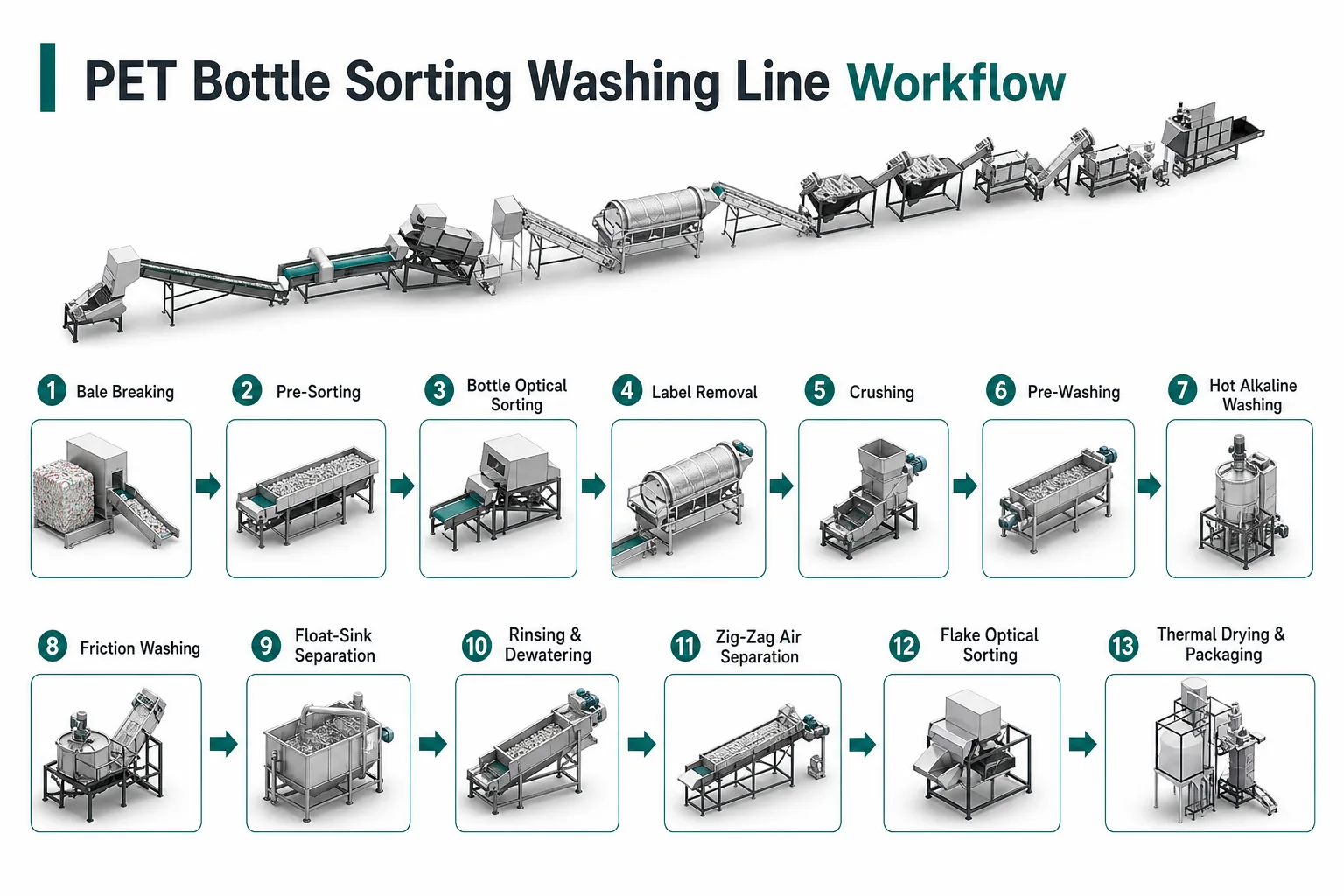
PET bottle sorting washing line workflow from bale breaking, sorting and washing to clean dried PET flake output.
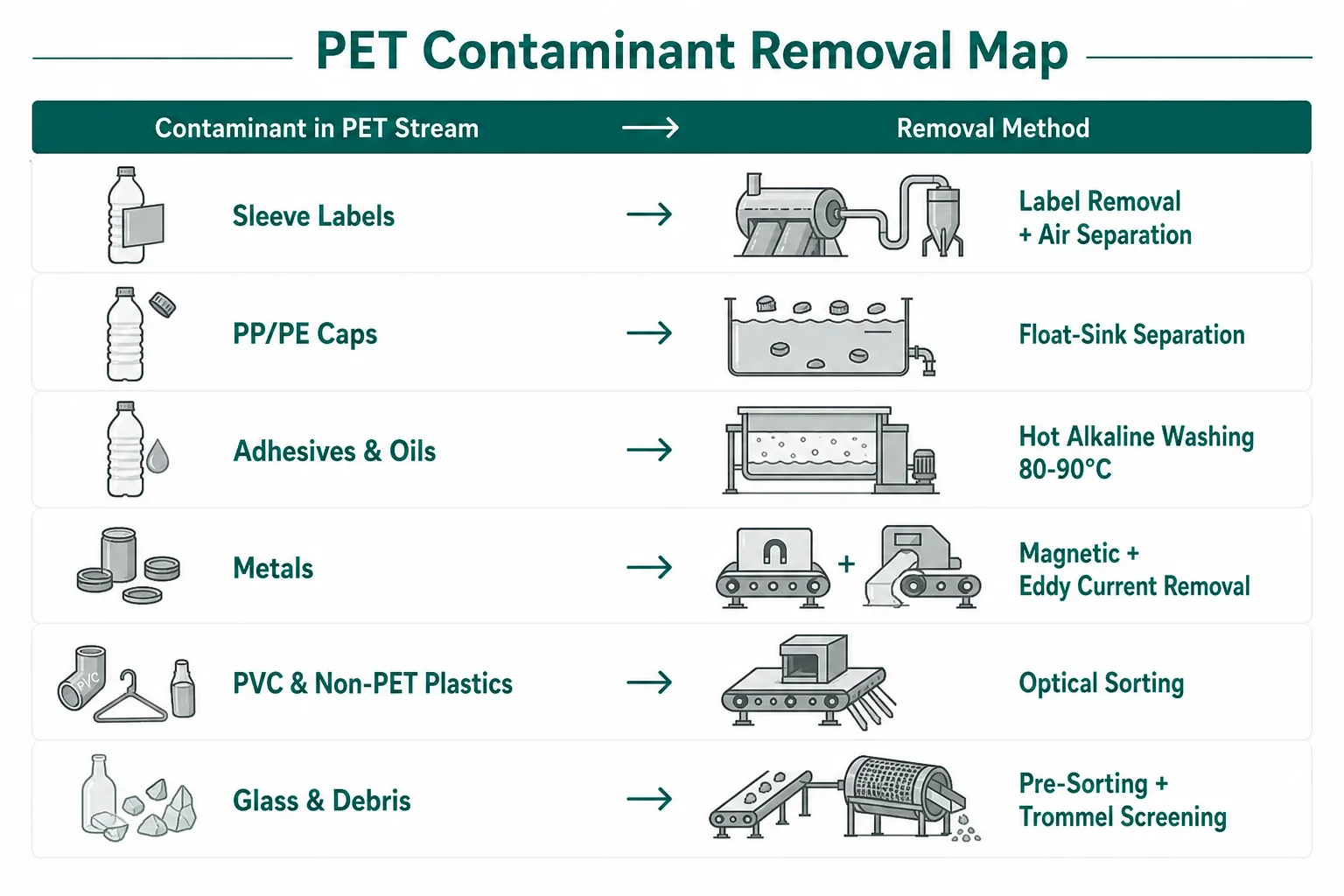
The PET bottle washing process targets sleeve labels, PP/PE caps, adhesives, metals, PVC, glass, and other non-PET contaminants through different removal stages.
| Parameter | PET500 | PET1000 | PET2000 | PET3000 |
|---|---|---|---|---|
| Input Capacity (kg/h) | 500 | 1,000 | 2,000 | 3,000 |
| Installation Power (kW) | 220 | 395 | 430 | 590 |
| Energy Consumption (kWh) | 110 | 170 | 340 | 460 |
| Steam Consumption (kg/h) | 500 | 600 | 1,000 | 1,200 |
| Chemical Consumption (kg/h) | 10 | 14 | 18 | 28 |
| Water Consumption (ton/h) | 0.7 | 1.5 | 3 | 4.5 |
| Required Space (m²) | 700 | 800 | 1,200 | 1,500 |
| Operators Required (per shift) | 6 | 8 | 10 | 12 |
| Final Moisture Content | < 1% (after thermal drying) | |||
| Frame Material | SUS304 Stainless Steel | |||
| Certifications | CE, ISO9001:2008, QS, GMP | |||
Exact configuration depends on feedstock contamination level, facility layout, and downstream application. Contact SUHUI for a customized technical proposal.
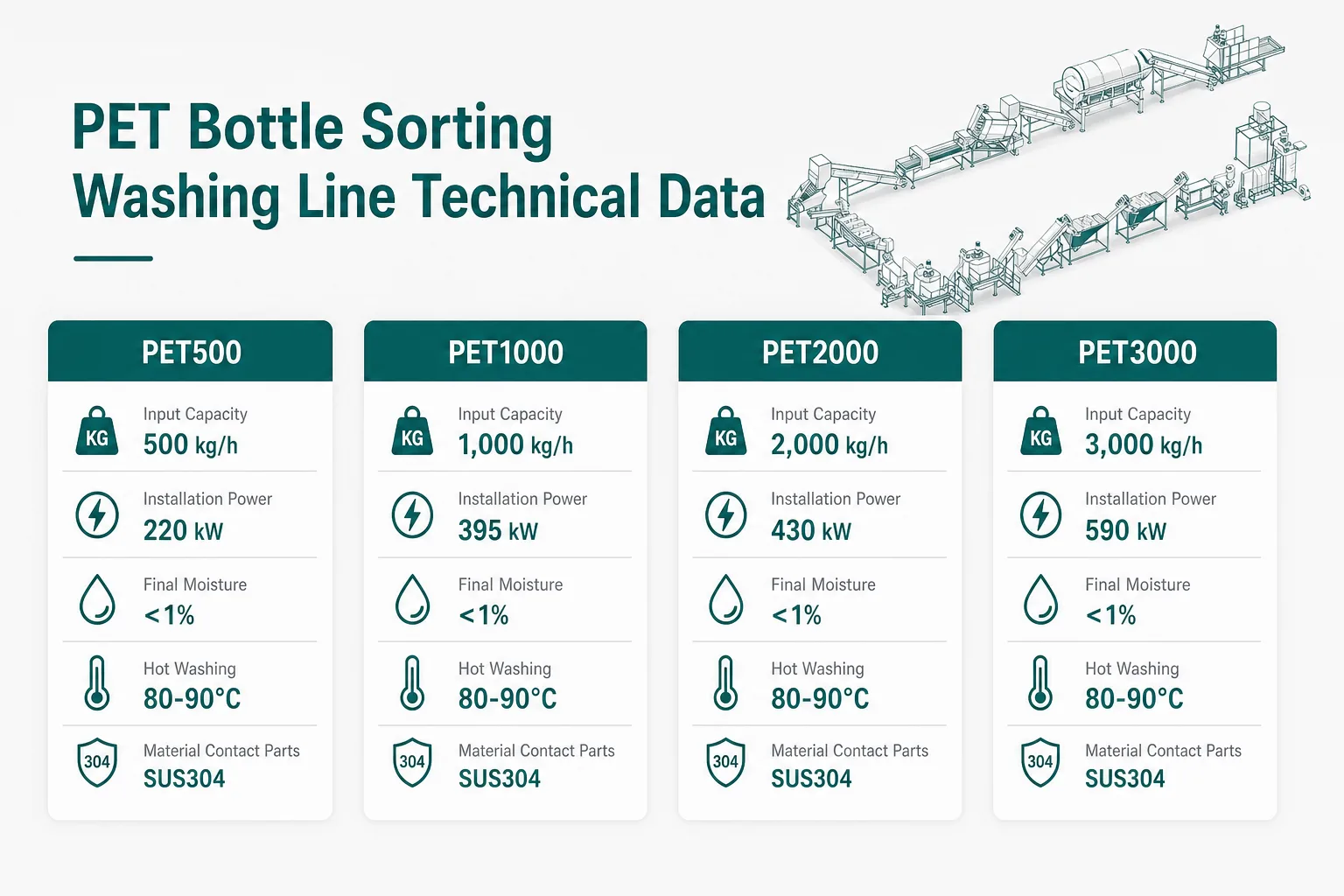
Standard PET bottle sorting washing line configurations support 500 to 3,000 kg/h input capacity with final moisture below 1% after thermal drying.
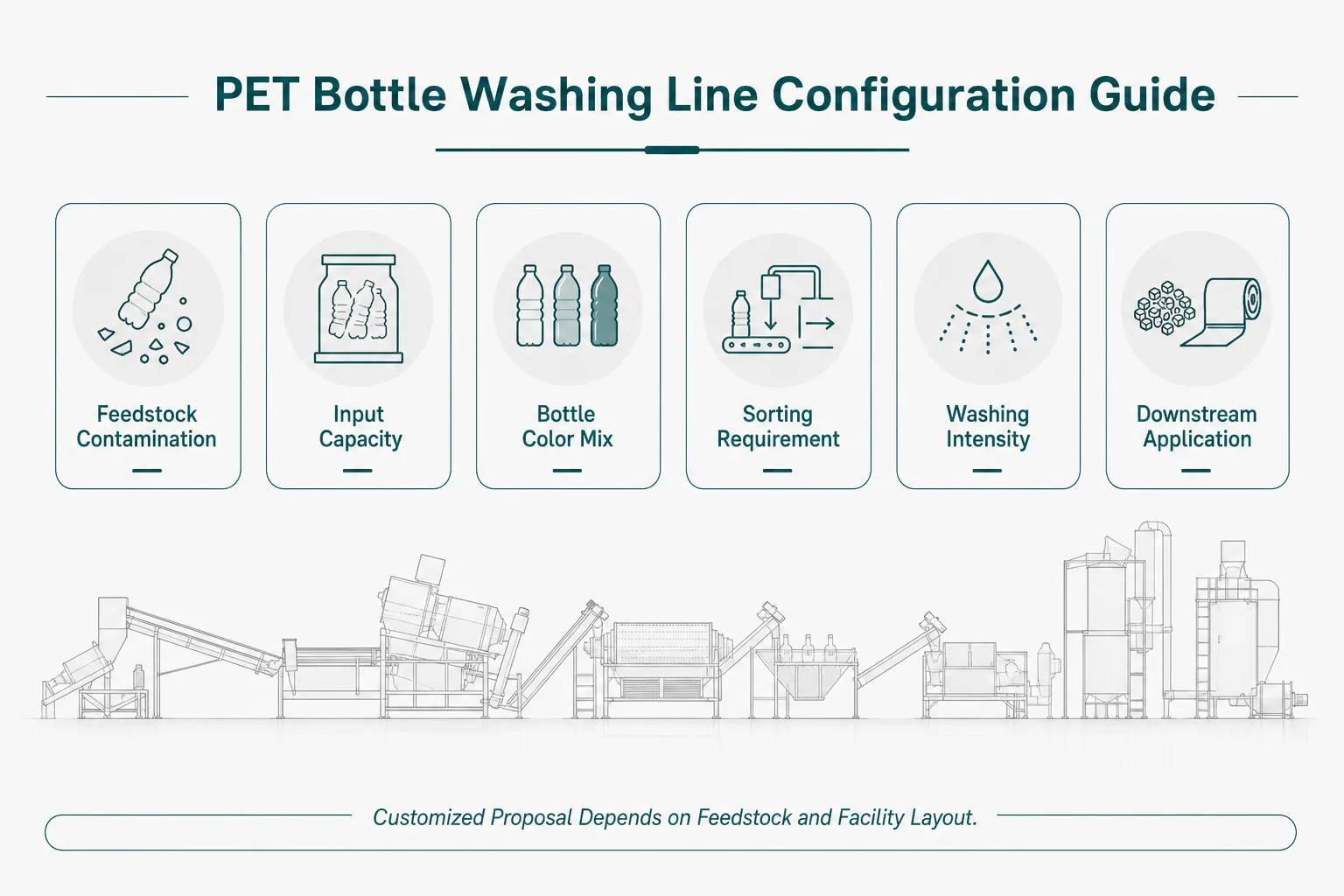
Final line configuration should be matched to feedstock contamination, input capacity, bottle color mix, sorting requirement, washing intensity, and downstream application.
After sorting, washing, drying, and optical color separation, clean PET flakes can be used in food-grade packaging, polyester fiber, textile applications, and bottle-to-bottle recycling projects when the required downstream decontamination and quality standards are met. For how a complete bottle recycling plant is configured stage by stage, see our PET bottle recycling machine guide.
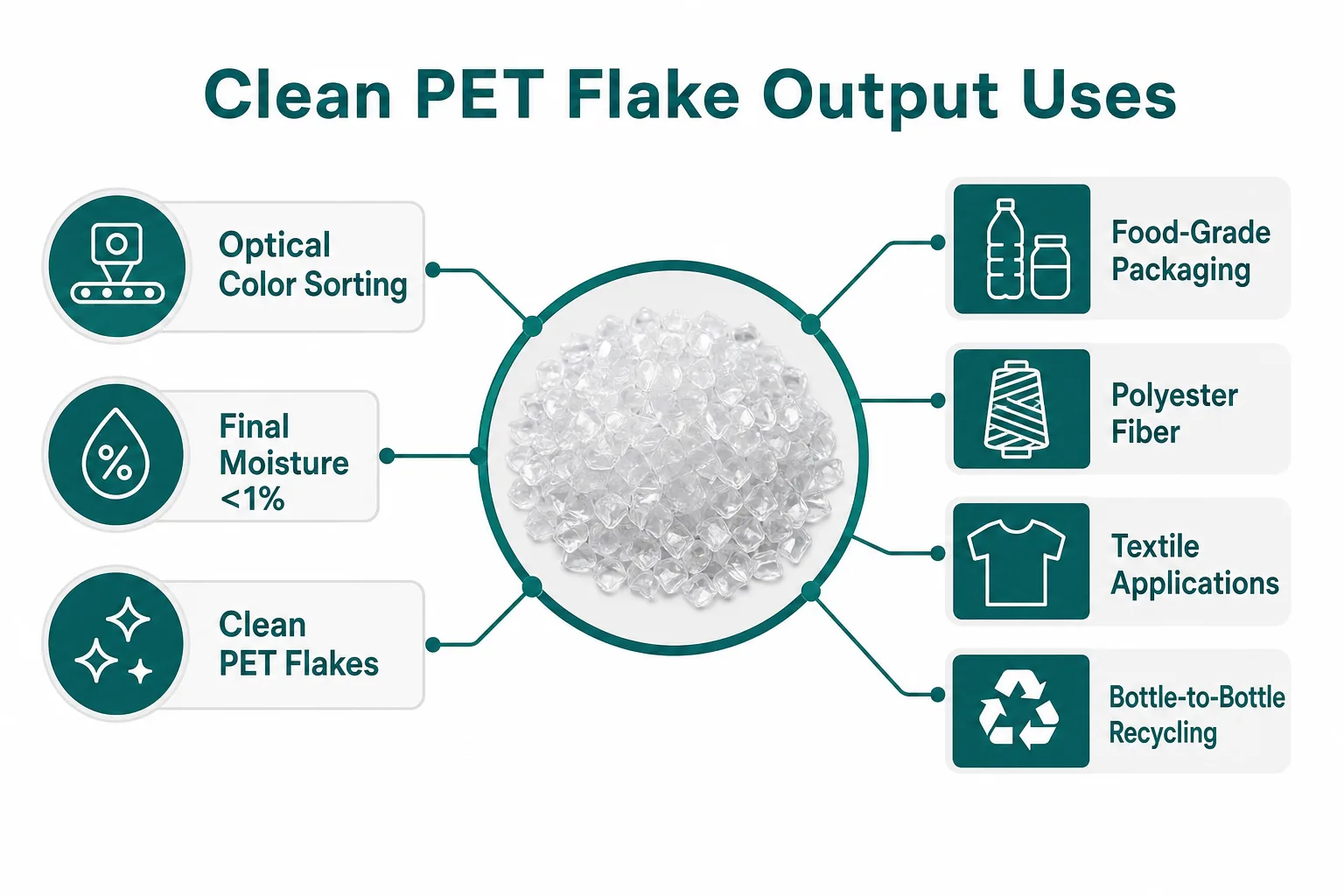
Clean PET flakes can serve multiple downstream markets, including packaging, fiber, textiles, and bottle-to-bottle recycling projects.
The PET bottle washing line integrates water filtration and recirculation across pre-washing, hot alkaline washing, friction washing, and rinsing. This helps reduce fresh water consumption and wastewater output while keeping the washing process stable for contaminated PET bottle feedstock.
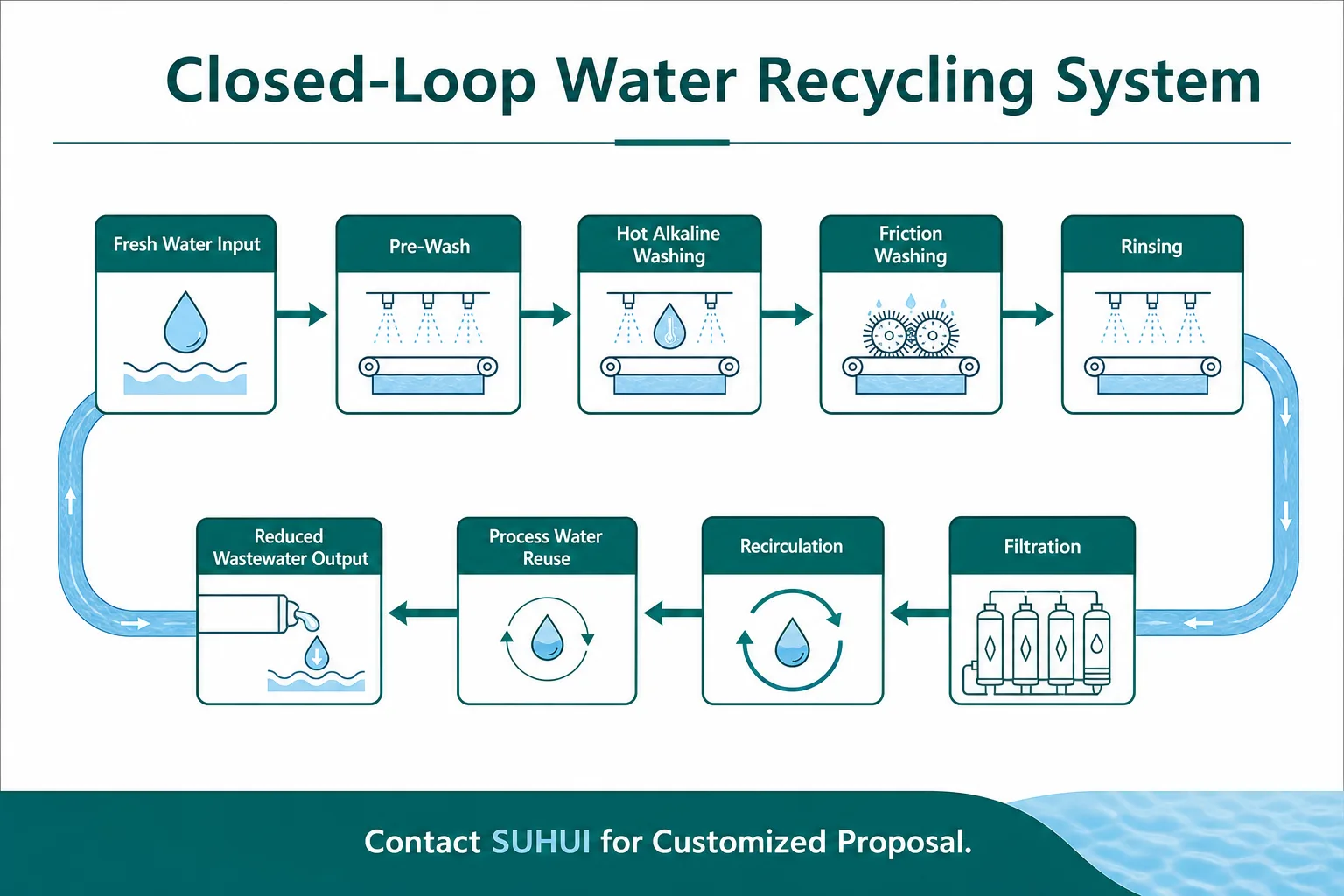
Closed-loop water recycling reuses process water across the washing stages and reduces wastewater output.
The line is designed to process post-consumer PET bottle bales containing mixed colors, sleeve labels, PP/PE caps, adhesive residues, organic contamination, and non-PET contaminants including PVC bottles, metal fragments, and glass. The sorting and washing system eliminates these contaminants through automated pre-sorting, mechanical label removal, multi-stage hot washing, and optical color sorting.
The SUHUI PET bottle sorting washing line is designed to produce recycled PET flakes for applications that require FDA and EU food-contact recycled material standards. Multi-stage hot alkaline washing, friction scrubbing, optical sorting, and final moisture control below 1% support output flakes for packaging, polyester fiber, textile, and bottle-to-bottle applications.
The line uses two independent optical sorting stages. The first sorts whole bottles before crushing to remove PVC bottles and non-PET plastics. The second sorts flakes after thermal drying, separating clear, light blue, and green PET flakes while ejecting remaining colored or opaque contaminants.
The PET bottle sorting washing line is available in four standard configurations: PET500 at 500 kg/h, PET1000 at 1,000 kg/h, PET2000 at 2,000 kg/h, and PET3000 at 3,000 kg/h. Required space ranges from 700 m² to 1,500 m², with installation power from 220 kW to 590 kW.
Bottles first pass through a high-speed label removal unit that mechanically strips sleeve and foil labels before shredding. After crushing, friction washers dislodge residual adhesive and cap fragments. Float-sink separation then separates PET flakes, which sink, from lighter PP/PE label and cap fragments, which float.
Yes. The line integrates a closed-loop water filtration and recirculation system that treats and reuses process water throughout pre-washing, hot alkaline washing, friction washing, and rinsing. This minimizes fresh water consumption and reduces wastewater discharge volume. Water treatment is one module in a larger chain; our overview of the plastic recycling process shows how sorting, washing, drying, and pelletizing connect end to end.
Tell us your material type, condition, required capacity and target output. Photos or videos help.
SUHUI reviews the feeding method, process route and machine configuration for your material.
You receive an equipment list and quotation, with capacity, layout, voltage and automation matched to the project.
Production, testing, export packing and installation guidance through to commissioning.
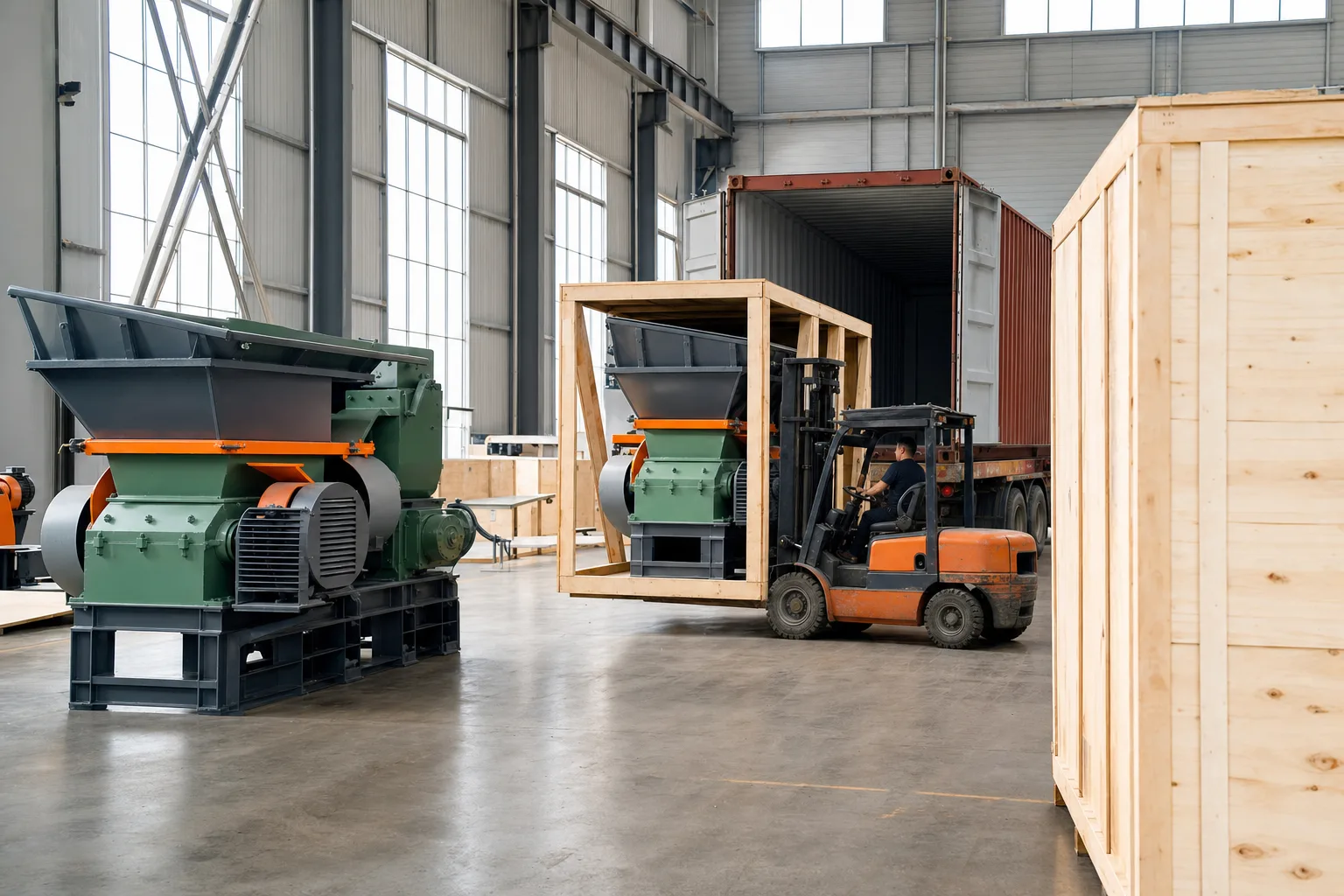
To receive a more accurate recommendation, please include your material type, material condition, required capacity, target output, plant space, local voltage and destination country in the message. Photos or videos of your raw material are also helpful.
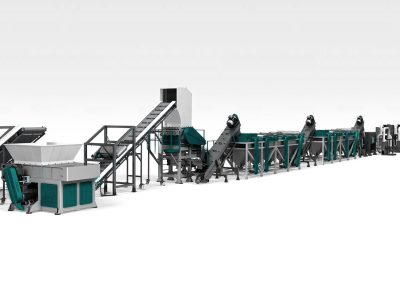
The SUHUI PP jumbo bag recycling washing line is a specialized system designed to recycle used polypropylene (PP) bulk bags, FIBCs (Flexible Intermediate Bulk Containers), and ton bags into clean, reusable PP flakes or pellets. These woven PP bags accumulate heavy contamination from bulk material transport — including embedded sand, soil, chemical powders, and moisture — requiring more intensive processing than standard plastic film recycling.
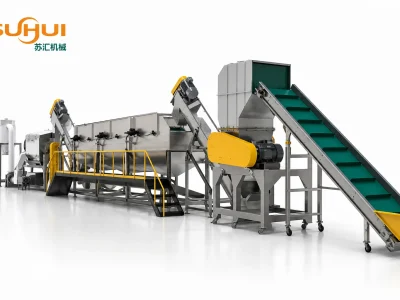
The SUHUI PP PE soft film recycling washing line turns contaminated PP and PE film waste — agricultural mulch film, greenhouse covers, stretch wrap, LDPE/LLDPE packaging film — into clean, dry flakes ready for pelletizing or direct sale. Anti-tangle shredding, multi-stage washing, float-sink density separation and two-stage dewatering bring final moisture below 5%. Five standard configurations cover 300–2,000 kg/h, built in S.S 304 stainless steel with closed-loop water recycling. Factory-direct from SUHUI with export and after-sales support.
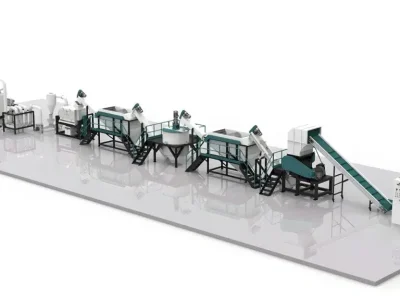
The SUHUI HDPE rigid milk bottle recycling washing line processes post-consumer HDPE dairy packaging into clean HDPE flakes or optional recycled pellets through label and cap removal, shredding, hot alkaline washing, friction scrubbing, float-sink separation, drying and closed-loop water recycling. Standard configurations support 300-2,500 kg/h input capacity.