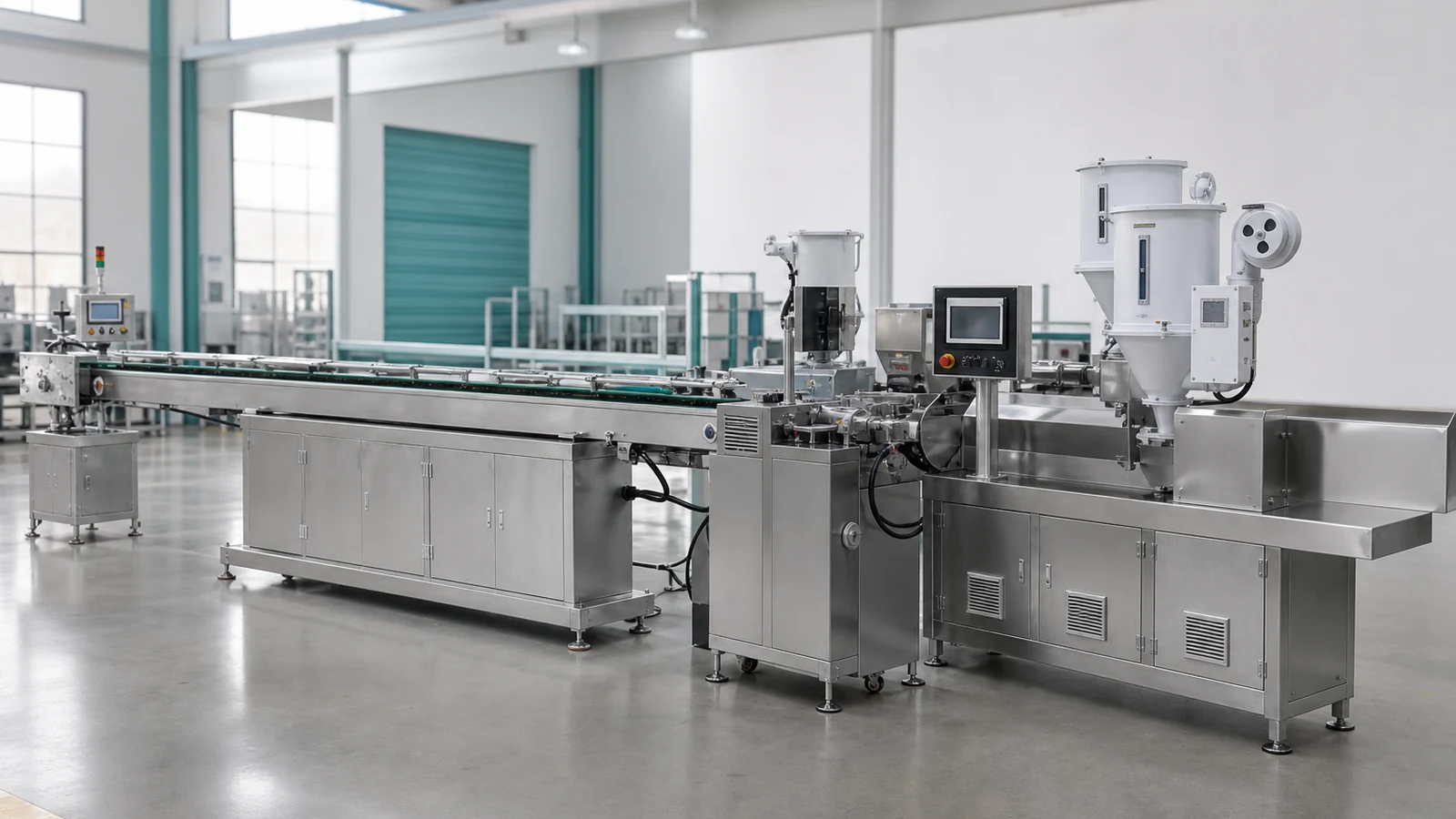
A PP drinking straw making machine extrudes, cools, hauls off and cuts PP, PE or PLA material into plastic drinking straws with customizable diameter and length.
Almost every straw enquiry now starts with a regulation rather than a capacity figure. Single-use bans have pushed buyers toward paper and PLA, and an extrusion line is not a paper straw making machine. That decision comes first; diameter, length and output follow from it. SUHUI builds extrusion straw making machines for PP, PE and PLA in three frame sizes, covering φ1–14 mm diameter and 3–1,000 mm length at up to 45 kg/h. Model specifications are on the plastic straw making machine page, and the buyer guide walks through the extrusion process step by step.
Machine Range
SUHUI plastic straw making machine is an automated PP, PE and PLA straw extrusion line with φ1–14 mm diameter range, 3–1000 mm cutting length, 8-zone temperature control and high-speed output...
Read MoreSelection Guide
| Material / project situation | Recommended machine | Why it fits |
|---|---|---|
| PP or PE drinking straws, standard and bubble-tea diameters | JH01 series extrusion line | The core configuration: extruder, die head, cooling trough, haul-off and cutter. Diameter is set by tooling, so one machine covers the whole φ1–14 mm range with a die change. |
| PLA compostable straws | JH01 series with PLA temperature profile | Same mechanical line, narrower processing window. PLA needs resin drying and a lower barrel profile. Say so at the enquiry stage rather than after commissioning. |
| Flexible or bendable straws | JH01 series plus corrugating module | The bellows section is formed after extrusion by a separate unit. An add-on module rather than a different extruder, but it has to be planned into the layout from the start. |
| Paper straws | Not an extrusion machine | A paper straw making machine spiral-winds and glues pre-printed reels. Different machine class, no shared parts. We build extrusion lines and will say so rather than sell you the wrong equipment. |
Machine and line configuration is decided by these project factors. Confirming them early makes the recommendation faster and more accurate.
Send your project factorsQuick answer
A straw making machine extrudes molten PP, PE or PLA through a die head, cools the tube in a water trough, pulls it with a synchronised haul-off and cuts it to length. SUHUI supplies three frame sizes producing φ1–14 mm straws at 3–1,000 mm length, with output from 25 to 45 kg/h and line speeds above 250 m/min.
Paper straws are not made this way. They are spiral-wound and glued from paper reels on an entirely different machine, so the material decision has to be made before any equipment is specified.
Three routes, three different machines. This is the decision that determines everything downstream, and it is usually made by regulation rather than by preference.
Route
Machine class
PP / PEExtrusion line. What SUHUI builds.
PLASame extrusion line, different temperature profile and resin drying.
PaperSpiral winding and gluing. A separate machine class with no shared parts.
Regulatory position
PP / PEBanned for single use across the EU and a growing list of other markets. Still viable for reusable and medical straws.
PLAAccepted in most markets as compostable, but only where industrial composting exists. Some jurisdictions treat it as plastic regardless.
PaperBroadly accepted. The default replacement in food service.
Processing difficulty
PP / PEForgiving. Wide temperature window, stable output, easy start-up.
PLANarrow window. Moisture-sensitive, degrades if overheated, needs drying before extrusion.
PaperNot an extrusion problem at all. Glue selection and curing drive quality.
Product behaviour
PP / PEHolds shape indefinitely in liquid. The benchmark every alternative is judged against.
PLABehaves like plastic in cold drinks. Softens in hot liquid, which rules it out for coffee.
PaperSoftens over time in any liquid. Wall count and coating decide how long it lasts.
Confirm what your destination market permits before you specify anything. A PP line delivered into a market that has banned single-use plastic straws is unusable equipment, and the ban usually arrives faster than the payback period.
Three frame sizes. The difference is screw diameter and motor, which set output; the product range they can make is identical.
| Specification | JH01-245 | JH01-250 | JH01-255 |
|---|---|---|---|
| Screw diameter | φ50 mm | φ55 mm | φ65 mm |
| L/D ratio | 30:1 | 30:1 | 30:1 |
| Output | >25 kg/h | >35 kg/h | >45 kg/h |
| Main motor | 5.5 kW inverter | 7.5 kW inverter | 11 kW inverter |
| Heater capacity | 10 kW | 11 kW | 12 kW |
| Straw diameter | φ1–14 mm across all three models | ||
| Straw length | 3–1,000 mm across all three models | ||
| Line speed | Max. >250 m/min | ||
| Temperature zones | 8 zones | ||
| Colour | 1 colour + 1 stripe | ||
Size from straws per minute, not from kg/h. A thin 6 mm straw and a 12 mm bubble-tea straw at the same kg/h are wildly different piece counts, and piece count is what your order book is written in. Send target pieces per day and the straw dimensions, and we will name the model.
Before You Ask
To receive a more accurate recommendation, send your material type, material form, contamination level, required capacity, target output, plant space, local voltage and destination country. Material photos or videos are also helpful.
Tell us your material and target output. We reply with practical recommendations, not generic sales replies.
Send SUHUI your material type, target capacity, final output, plant space, voltage and destination country. Material photos or videos help our team recommend a suitable machine or complete line configuration.