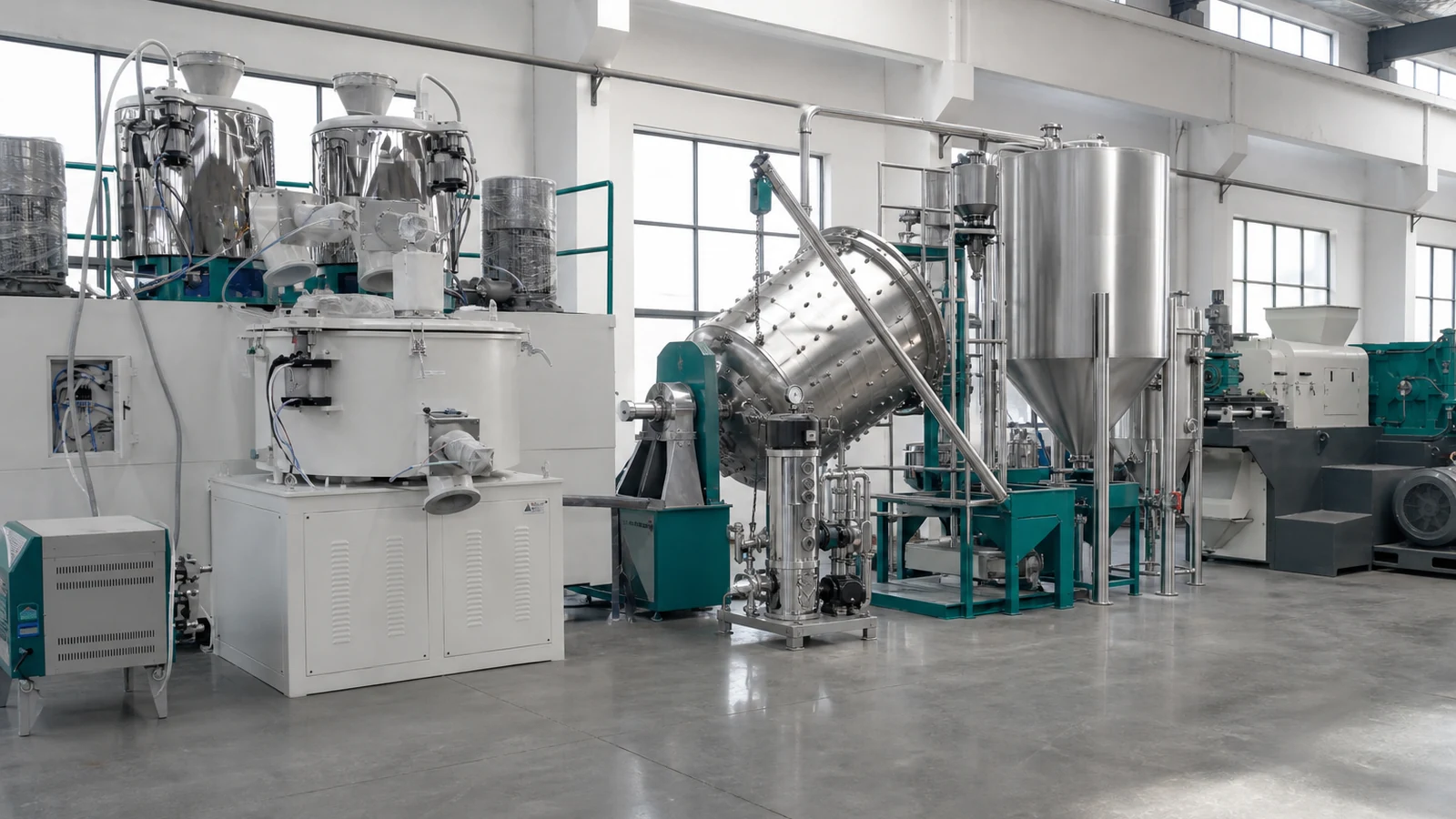
Plastic recycling auxiliary machines support washing, pelletizing and extrusion lines through mixing, drying, squeezing, feeding, material handling and material upgrading.
Nobody sets out to buy an auxiliary machine. The question is always whether the line already being specified needs one, and the honest answer is often no. Plastic auxiliary equipment earns its place when a specific problem exists upstream or downstream, not because a complete line is supposed to have it. SUHUI supplies three units in this category: a high speed mixer for compounding and pre-drying ahead of extrusion, a film squeezer granulating machine that sits at the dewatering end of a PP PE film washing line, and a PET solid state polymerization system for raising intrinsic viscosity. Each one attaches to a particular main line, so tell us the line first and the auxiliary list follows from it.
Machine Range
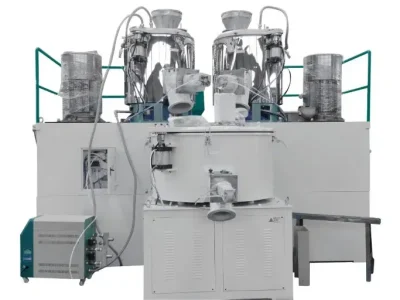
The SUHUI high speed mixer is an industrial hot mixer or hot/cold mixer combination system for PVC dry blend, PP, PE, ABS, WPC premix, masterbatch, filler blending and plastic compounding....
Read More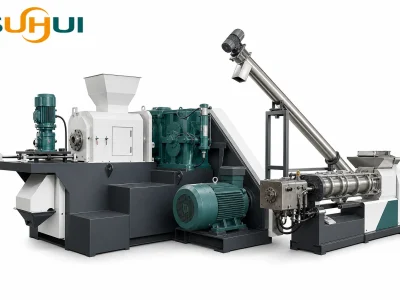
SUHUI plastic film squeezer granulating machine processes wet PP/PE film directly after washing, combining squeezing, dewatering, melting, and pelletizing in one compact unit. Capacity range: 300-750 kg/h.
Read More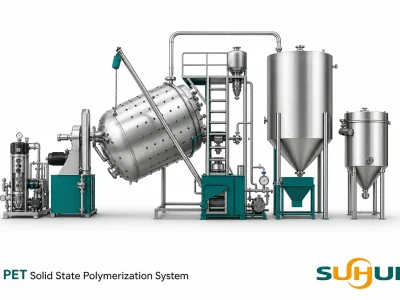
The SUHUI PET Solid State Polymerization (SSP) System upgrades low-IV PET chips, PCR PET flakes and virgin PET material into higher-IV resin for bottle-grade, fiber-grade and engineering plastic applications. The...
Read MoreSelection Guide
| Material / project situation | Recommended machine | Why it fits |
|---|---|---|
| Compounding, pre-heating or drying before extrusion | Higher Speed Mixer | Blends resin with filler, masterbatch and additives while friction heat drives off surface moisture. Needed where you compound your own formulation; unnecessary if you buy ready-mixed pellets. |
| Washed film carrying too much water for the pelletizer | Plastic Film Squeezer Granulating Machine | Squeezes and densifies washed film in one pass, taking it to a moisture level and bulk density the extruder can feed. The most commonly needed unit in this category, because film out of a washing line is rarely dry enough on its own. |
| Recycled PET that has to reach bottle or sheet grade | PET Solid State Polymerization System | Raises intrinsic viscosity after pelletizing so rPET can re-enter higher-value applications. A significant capital item, and only worth it if your buyer actually pays for the higher grade. |
| You are not sure any of these apply | Send the line layout instead | Auxiliary equipment is the easiest place to overspend, because it is quoted as a list of add-ons rather than judged against a problem. Describe the line and the symptom you are trying to fix and we will say which of the three, if any, is warranted. |
Machine and line configuration is decided by these project factors. Confirming them early makes the recommendation faster and more accurate.
Send your project factorsEach unit answers a different problem and attaches to a different main line. Read down the column for the machine you are considering, and pay most attention to the row that says when to skip it.
Question
Attaches to
MixerAhead of an extrusion line, most often PVC profile or pipe.
SqueezerBetween a film washing line and a pelletizing line.
SSPAfter a PET pelletizing line, as a final upgrading stage.
Problem it solves
MixerFiller and additives will not disperse evenly by hand, and cold resin feeds inconsistently.
SqueezerWashed film holds too much water and too little bulk density for the extruder to feed steadily.
SSPRecycled PET pellet has an intrinsic viscosity too low for bottle or sheet applications.
Skip it when
MixerYou buy ready-compounded pellets, or run unfilled PP and PE where there is nothing to blend.
SqueezerYou are selling washed flake rather than pelletizing, or running rigid material that dewaters easily.
SSPYour rPET goes into fibre, strapping or non-food sheet. Those grades do not pay for the extra viscosity.
What happens without it
MixerColour streaks and inconsistent filler loading show up in the finished profile.
SqueezerThe pelletizer surges and vents steam, output falls well below rating and pellet quality drifts.
SSPThe pellet still sells, just into a lower-value market. This is a commercial loss, not a technical failure.
Common mistake
MixerTreating it as a dryer. It removes surface moisture only, not moisture absorbed into the resin.
SqueezerUndersizing it to match the washing line rather than the pelletizer it has to feed.
SSPBuying it before securing a customer who pays a premium for bottle-grade rPET.
Film squeezer
$28,000–40,000
Published reference range. Mixer and SSP are quoted per project, since both are sized from formulation and throughput rather than from a model list.
Worth stating plainly, because buyers arrive at this page looking for equipment we do not build. Knowing that in the first minute is more useful than a quotation that arrives a week later.
If a supplier quotes you every auxiliary on the list without asking what your line does, the list is a price sheet rather than a recommendation. Send the main line specification and the symptom you are trying to fix, and expect to be told which items you can leave out.
Before You Ask
To receive a more accurate recommendation, send your material type, material form, contamination level, required capacity, target output, plant space, local voltage and destination country. Material photos or videos are also helpful.
Tell us your material and target output. We reply with practical recommendations, not generic sales replies.
Send SUHUI your material type, target capacity, final output, plant space, voltage and destination country. Material photos or videos help our team recommend a suitable machine or complete line configuration.