rPET is recycled PET. That expansion is where most explanations stop, and it tells a buyer almost nothing useful. Two lots both correctly described as rPET can differ more from each other in intrinsic viscosity, colour and permitted end use than either differs from virgin resin.
This article treats rPET the way a resin buyer and a line engineer treat it, as a graded material with a specification and a route attached. It covers what sets the grade, why intrinsic viscosity is the number everything else hangs off, what the three main outlets demand, and which stage of a plastic recycling machine line produces which grade.
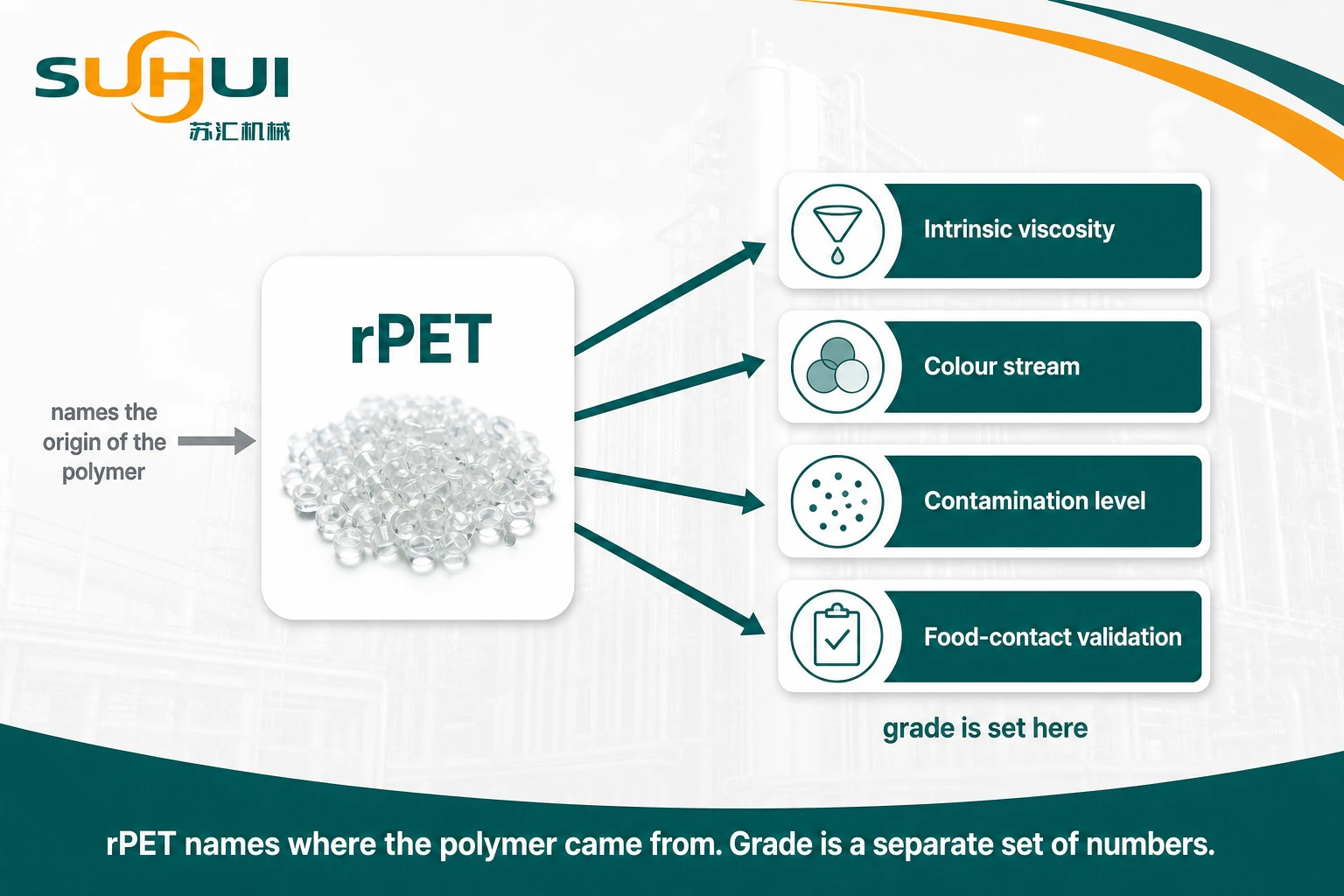
rPET names where the polymer came from. Grade is a separate set of numbers.
What rPET Is as a Resin Grade Rather Than a Material Name
rPET is polyethylene terephthalate recovered from used PET and reprocessed into resin that can be melted and formed again. The name identifies the origin of the polymer, not its quality. Grade is set separately, by intrinsic viscosity, colour stream, contamination level, and whether food-contact decontamination has been validated for that specific process.
The distinction matters commercially because rPET is sold on specification, not on the label. A converter buying rPET for thermoformed trays and a spinner buying rPET for staple fibre are buying the same three letters and two genuinely different products. Neither can substitute the other without changing the process.
It also matters technically. PET is not a polymer that survives reprocessing unchanged. Every heat cycle shortens the average molecular chain, and chain length is what mechanical performance and melt behaviour depend on. A grade statement for rPET is therefore a statement about how much chain length is left and what was done to protect or restore it.
Where rPET Sits Between Washed Flake and a Finished Product
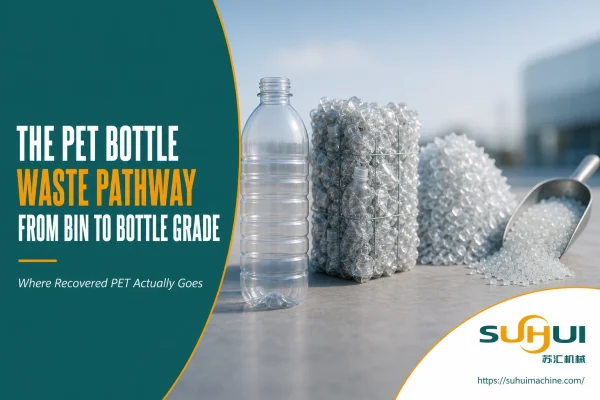
rPET begins where flake ends. Washed PET flake is a cleaned, sorted solid that has never been melted, sold by the tonne against a flake specification. rPET is what exists after that flake has been through an extruder and become resin again, with a viscosity figure and a process history attached to it.
That handover is the single most useful boundary to hold in mind, because the two are priced, tested and specified differently. Flake is judged on what is physically in the bag, so its specification is about purity, moisture, particle size and colour. rPET is judged on how the polymer behaves in a melt, so its specification is about viscosity, thermal stability and consistency between lots.
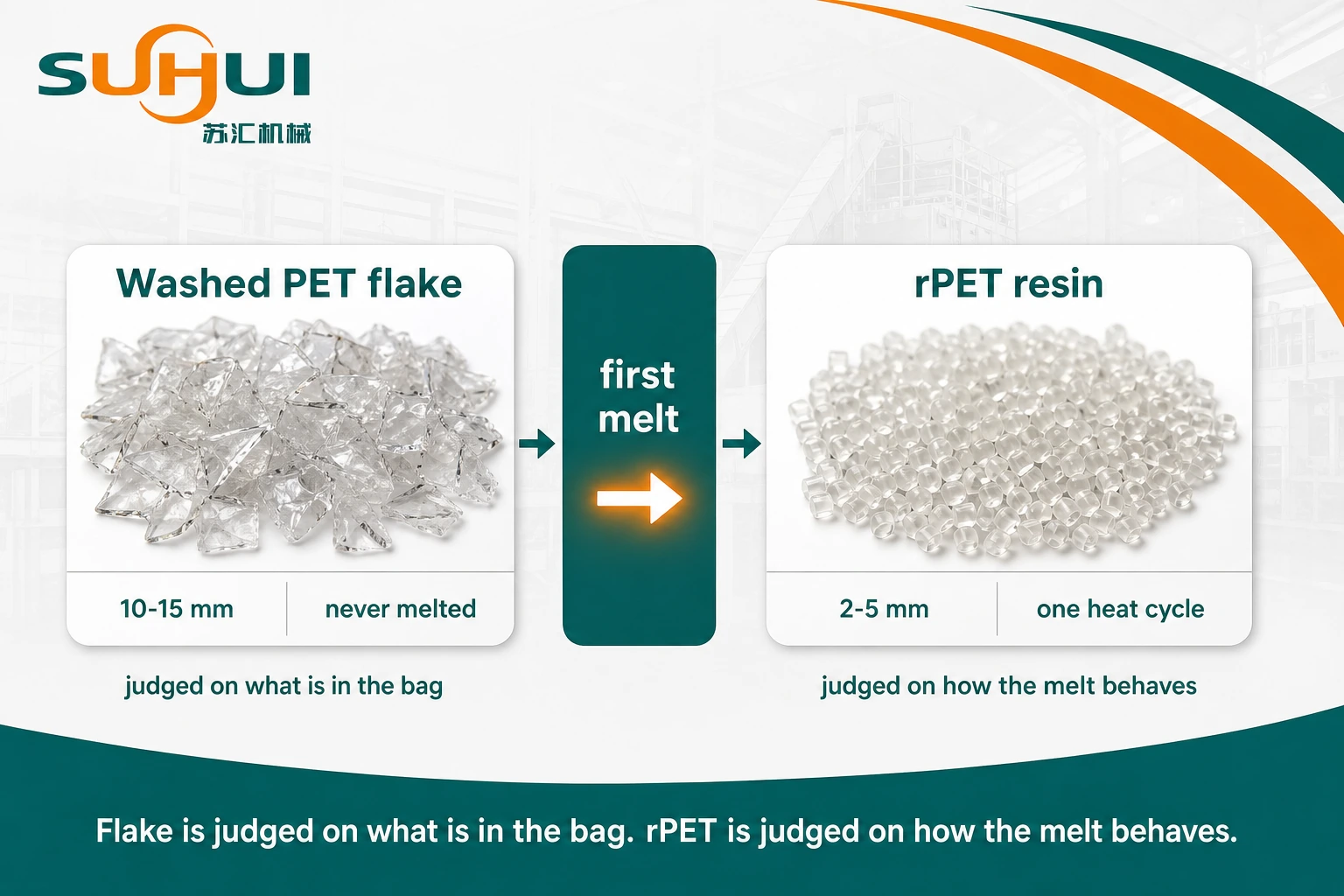
Flake is judged on what is in the bag. rPET is judged on how the melt behaves.
Between them sits one irreversible event. The first melt is where the polymer takes its first real hit, and it is also where the material becomes homogeneous enough to be sold as a resin grade rather than as a mixed solid. Everything on an rPET specification is a consequence of that melt having happened.
| Property | Washed PET flake | rPET resin |
|---|---|---|
| Physical form | Irregular washed fragments, typically 10–15 mm | Regular pellets, typically 2–5 mm |
| Heat history | None beyond hot washing at 80–90°C | At least one full melt cycle |
| Headline number on the spec | Purity, moisture and colour | Intrinsic viscosity |
| Moisture requirement | Below 1% as shipped from a washing line | Below 0.02% immediately before it is melted again |
| What a buyer is really assessing | Whether the washing line did its job | Whether the polymer still has enough chain length for the job |
Both descriptions are legitimate products and both are traded. The confusion in the market comes from suppliers using rPET loosely to cover both, which is why a purchase order that says rPET without a viscosity figure is not a specification at all. For the flake side of the handover in detail, see What Are PET Flakes and How Are They Graded.
Intrinsic Viscosity Is the Number the Grade Hangs Off
Intrinsic viscosity is a measurement of average polymer chain length in PET, reported as IV. It is the number that decides what an rPET lot can be made into, because chain length governs melt strength, mechanical toughness and how the material behaves under stretch. Every other property on an rPET specification is secondary to it.
The practical consequence is that end uses sort themselves along an IV scale rather than choosing freely. Applications that stretch the melt hard, such as blowing a bottle preform, need long chains and therefore high IV. Applications that only need the melt to fill a shape and cool, such as staple fibre or a filler compound, tolerate much shorter chains.
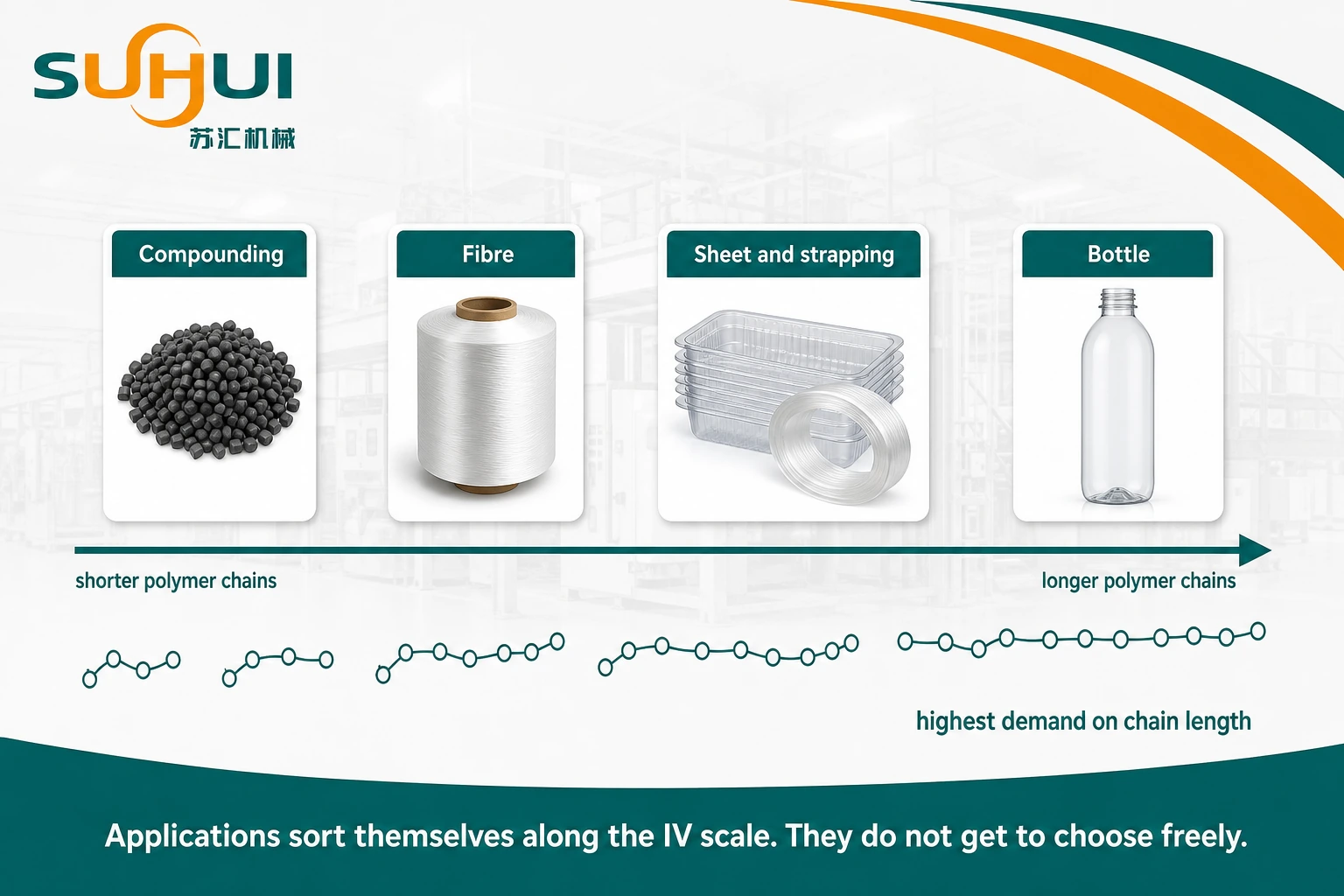
Applications sort themselves along the IV scale. They do not get to choose freely.
IV also falls in a predictable direction. Melting PET breaks chains, and if any moisture is present the breakage accelerates sharply because water attacks the ester bond directly. This is why PET is dried far harder than most polymers before extrusion, and why an rPET producer who skips drying does not just get surface defects, they get a lower grade of resin out of the same feedstock.
SUHUI does not publish target IV figures, and buyers should be sceptical of suppliers who publish them as a general specification. The starting IV of the feedstock, the number of prior heat cycles, drying discipline and residence time all move the result. The number belongs on a certificate of analysis for a specific lot, not in a marketing table.
The Three Routes rPET Takes and What Each One Demands
Almost all rPET goes down one of three routes, and they are not interchangeable. Bottle-to-bottle returns the material to packaging, bottle-to-fibre sends it to polyester spinning, and bottle-to-sheet sends it to thermoformed trays and strapping. Each route sets its own floor for viscosity, colour and decontamination evidence.
| Route | What it demands of the resin | Why the requirement exists | Typical constraint that blocks a lot |
|---|---|---|---|
| Bottle to bottle | Highest IV, clear colour stream, validated food-contact decontamination | Preform injection followed by stretch blow moulding puts the highest mechanical demand on chain length of any PET process | IV lost during washing and the first melt, plus the certification burden |
| Bottle to fibre | Moderate IV, consistent colour within the batch, tight lot-to-lot consistency | Spinning tolerates shorter chains but is unforgiving of variation, because a viscosity shift breaks filaments at the spinneret | Mixed colour and inconsistent viscosity between lots rather than absolute IV |
| Bottle to sheet and strapping | Mid to high IV, colour acceptable to the end product, low gel and particle count | Sheet needs enough melt strength to hold a web, and strapping is a load-bearing product | Contamination showing as specks in a transparent product |
| Compounding and engineering plastics | Lowest IV floor, colour usually irrelevant, reinforcement added | Glass fibre or mineral filler carries the mechanical load, so the matrix does not have to | Rarely blocked on viscosity; blocked on contamination that damages the compound |
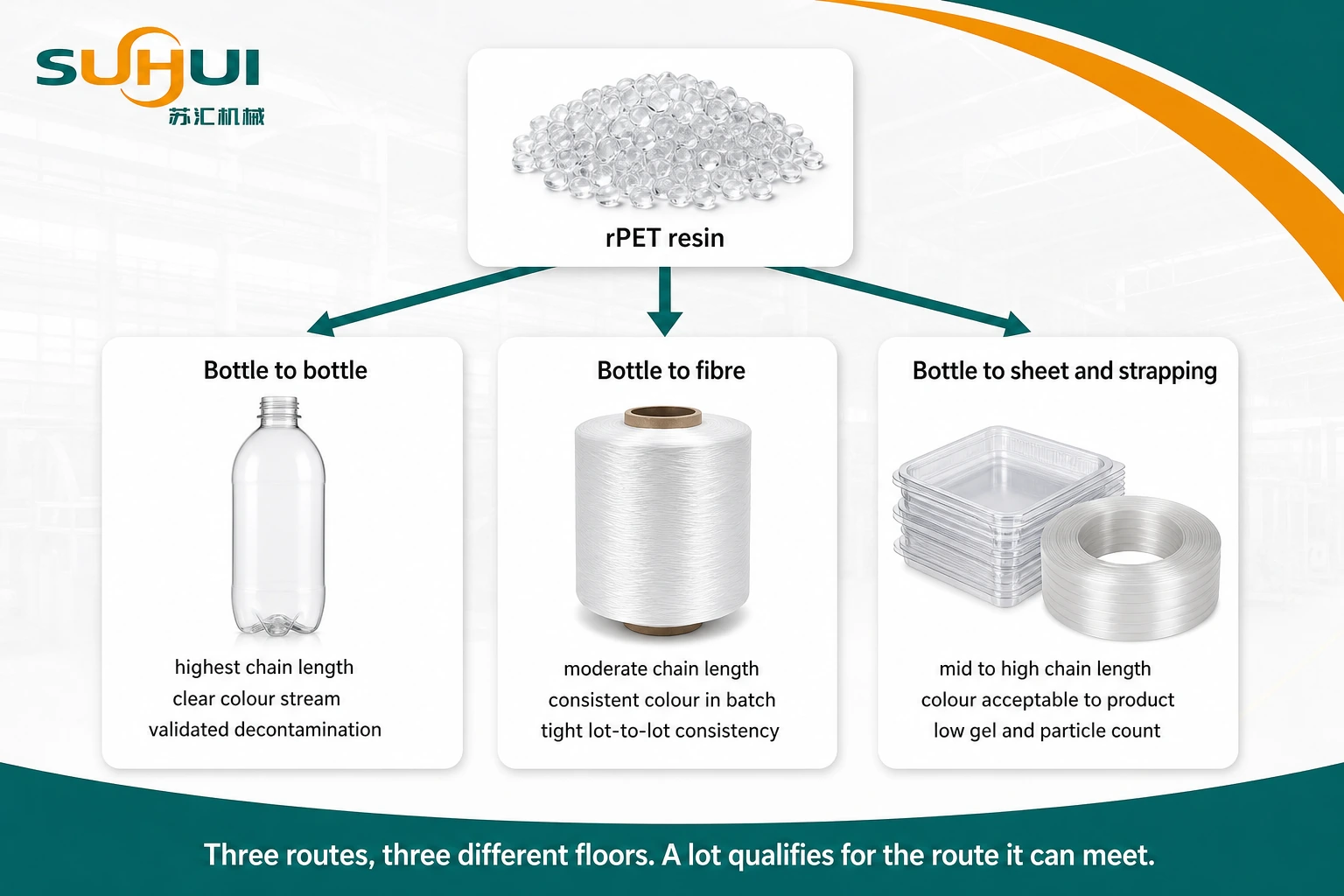
Three routes, three different floors. A lot qualifies for the route it can meet, not the one you want.
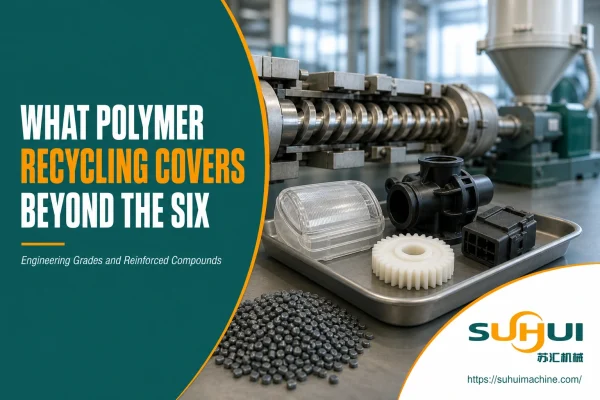
The fourth line in that table is where reinforcement changes the economics. A PET flakes glass fibre twin screw pelletizing line compounds recycled PET flake with 10–40% glass fibre, dosed by loss-in-weight feeders to within 0.5%, and produces pellets for structural housings, brackets and electronics enclosures. Once fibre carries the load, an IV that would fail a bottle specification stops being the limiting factor.
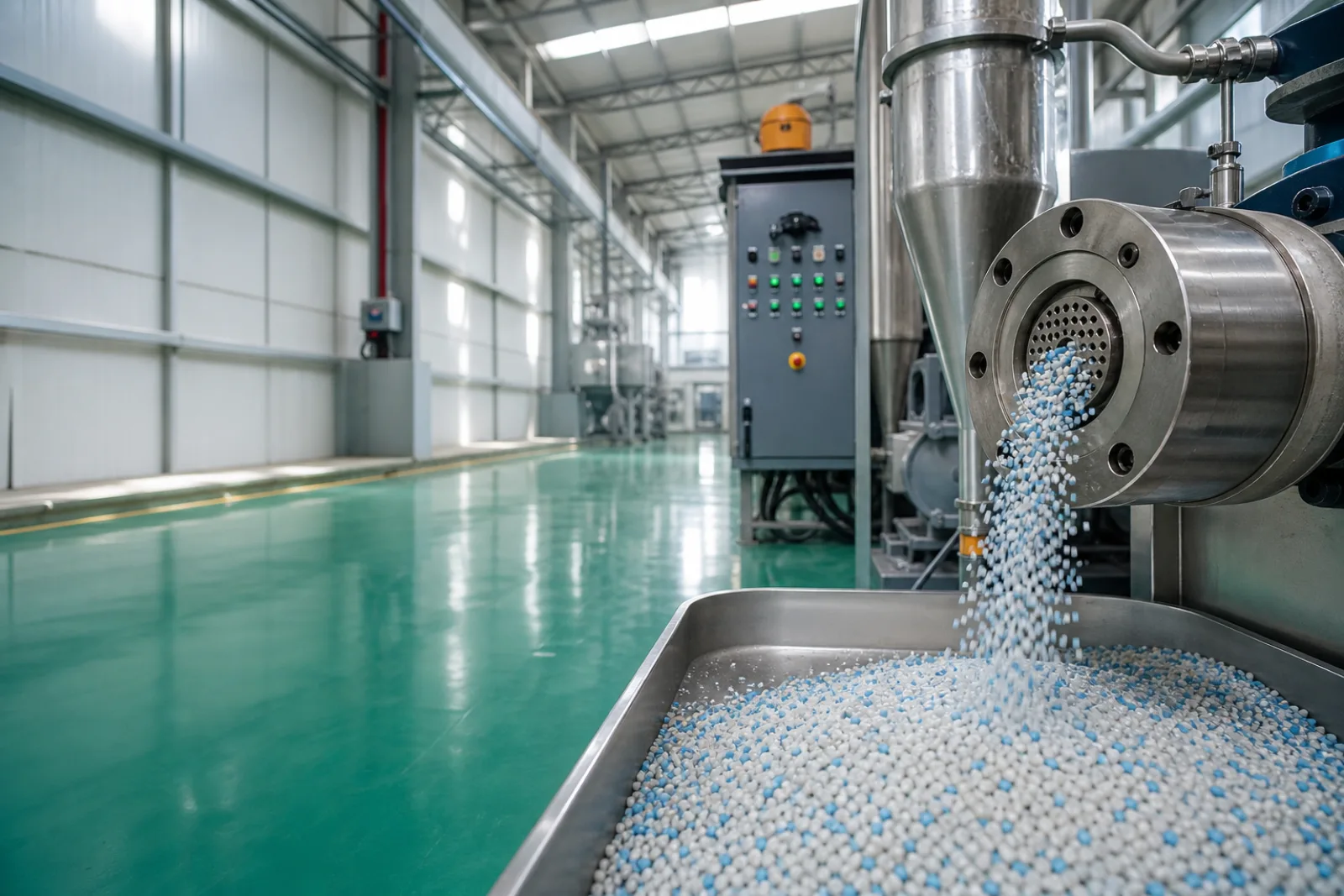
That line also shows how hard the moisture rule is enforced in practice. It dries flake below 0.02% before compounding, specifically to prevent hydrolytic chain scission and IV loss, and it runs a mid-barrel vacuum vent to strip residual moisture, acetaldehyde and other volatiles out of the melt.
Food Grade and Non Food Grade Are Separate Streams Not Separate Qualities
Food grade is not a higher tier of the same material. It is a separate stream with its own chain of evidence, running from the collection source through sorting, washing, decontamination and certification. A very clean non-food rPET can be physically better than a marginal food-grade lot and still be unusable for packaging.
What separates them is traceability and validated decontamination rather than any single measurable property. The question a food-contact approval answers is whether the process reliably removes substances that might have been introduced during the material’s first life, and whether that removal has been demonstrated rather than assumed. The FDA guidance on recycled plastics in food packaging sets out that reasoning from the regulator’s side.
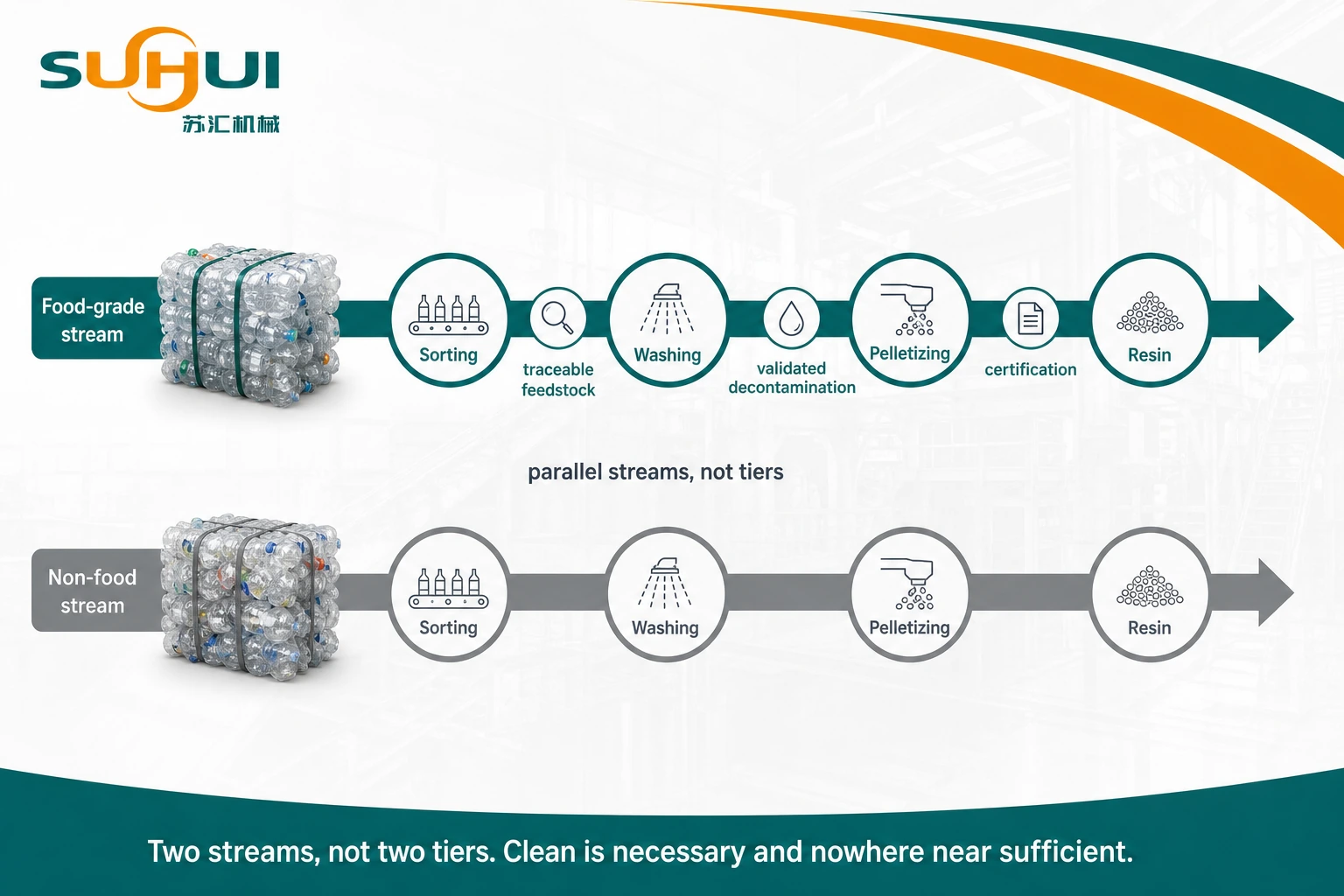
Two streams, not two tiers. Clean is necessary and nowhere near sufficient.
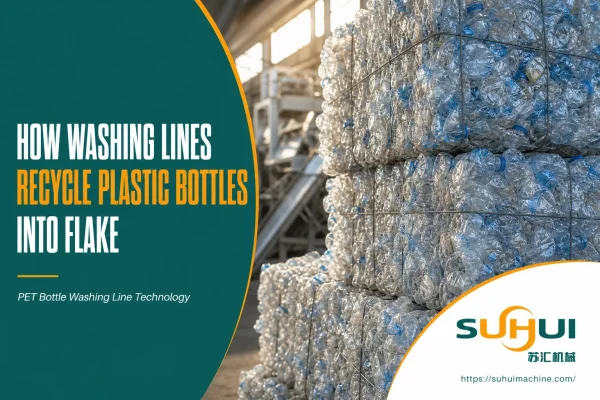
On the equipment side the requirement shows up as design decisions rather than an extra stage bolted on the end. SUHUI’s PET bottle sorting washing line is built around it: dual-stage optical sorting that rejects PVC and coloured bottles before crushing and then separates clear, light blue and green flake after drying, magnetic and eddy current metal removal, dual hot alkaline washing at 80–90°C, and stainless contact surfaces throughout.
Two things follow for a buyer. First, colour segregation is an upstream decision, not something a resin producer can undo later, which is why clear stream rPET commands the price it does. Second, no equipment supplier can grant food-contact status; the line has to be capable of it and the process then has to be validated and certified for the destination market.
How Solid State Polymerization Rebuilds IV for the Bottle Route
Solid state polymerization is the process that makes bottle-to-bottle economically possible. It raises the intrinsic viscosity of PET after recycling has lowered it, by holding the material below its melting point in circulating nitrogen so molecular chains extend rather than break. Without it, most washed and pelletized rPET could not meet bottle requirements.
The mechanism is worth understanding because it explains why the step exists at all. Melting PET breaks chains and produces small molecules such as water, acetaldehyde and ethylene glycol. Those by-products sit in equilibrium with the reaction. Sweeping them continuously out of the reactor with nitrogen pushes the equilibrium the other way, and chain extension proceeds in the solid phase where the polymer is not being sheared.
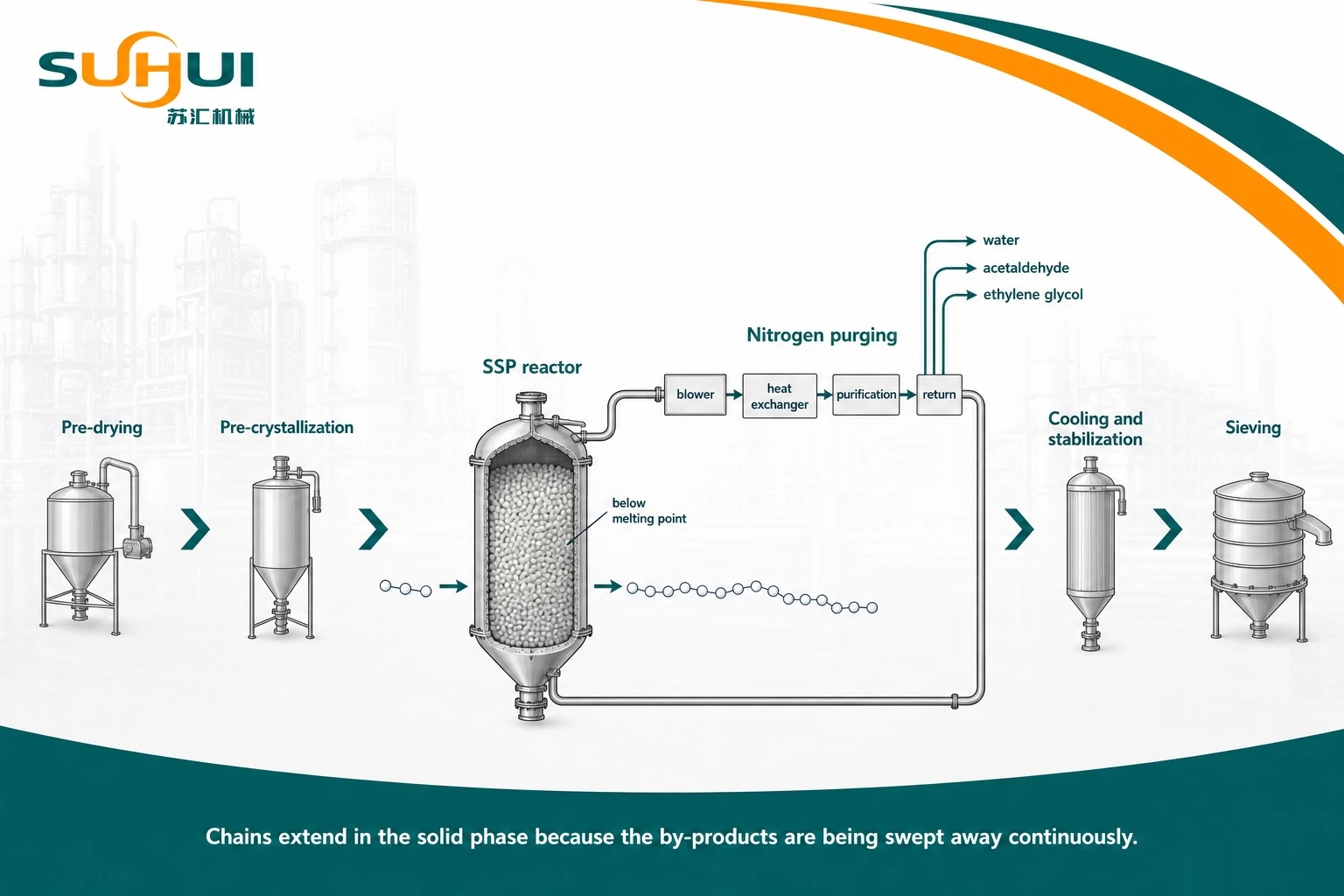
Chains extend in the solid phase because the by-products are being swept away continuously.
SUHUI’s PET solid state polymerization system runs the sequence as pre-drying, pre-crystallization, reactor residence under controlled temperature, nitrogen purging, cooling and stabilization, then sieving. Pre-crystallization is there for a mechanical reason rather than a chemical one, because uncrystallized PET sticks to itself at reactor temperature and blocks the bed.
The nitrogen loop carries the process. Its job is to hold an oxygen-free atmosphere so the material does not oxidise or yellow, and to carry reaction by-products away. A typical loop runs a blower, heat exchanger, purification section, the reactor connection and a return line, with the configuration following capacity, reactor type and material condition.
What SUHUI will not state, and what buyers should treat carefully when others do, is how many IV points a system recovers. The product documentation is explicit that the achievable increase depends on starting IV, material quality, temperature, residence time, nitrogen circulation and the target application. A single headline recovery figure quoted without a feedstock behind it is a marketing number.
What Actually Limits an rPET Grade on a Production Line
Four things cap the grade of rPET that a given feedstock can reach, and only one of them is fixable downstream. Chain length lost to heat and moisture, colour already present in the flake, contamination that survived washing, and the consistency of the incoming stream between deliveries all set a ceiling before the extruder starts.
| Limit | How it shows up in the resin | Where it is decided | Can it be recovered later |
|---|---|---|---|
| Chain length lost to heat and hydrolysis | IV below the target band, weak melt strength | Drying discipline and residence time at every melt | Partly, by solid state polymerization |
| Colour carried in the flake | Off-white or grey pellets, visible tint in clear products | Collection stream and optical sorting before crushing | No |
| Residual PVC in the feed | Yellowing and dark specks, because PVC decomposes at PET processing temperature | Bottle-level optical sorting and float-sink separation | No |
| Lot-to-lot variation in the incoming stream | Viscosity that drifts between deliveries, forcing constant process adjustment | Feedstock supply contracts and incoming inspection | Only by blending and testing, never eliminated |
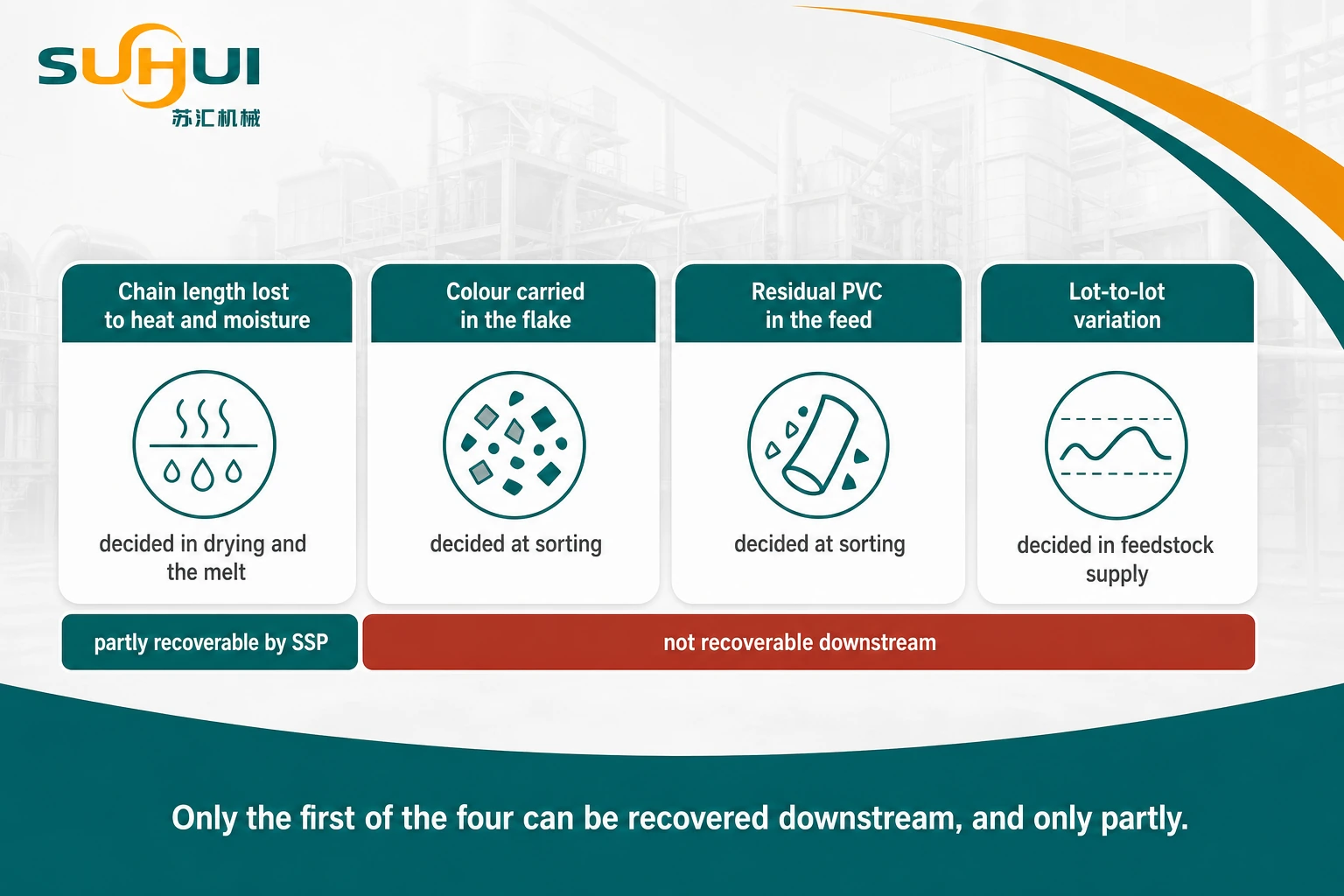
Only the first of the four can be recovered downstream, and only partly.
Reading that table in order gives the honest summary of the technology. Grade is mostly decided before the resin exists. A recycler who wants a higher rPET grade generally has to change what arrives at the gate or change how it is sorted, not buy a bigger extruder.
Which Line Produces Which rPET Grade
Equipment maps onto the grade ladder fairly directly. Sorting and washing set the colour stream and the contamination floor, pelletizing turns graded flake into a graded resin, solid state polymerization lifts viscosity for the demanding routes, and compounding takes the material that cannot reach any of those and gives it a different job.
| Stage | What it decides about the grade | SUHUI line |
|---|---|---|
| Bottle sorting and washing | Colour stream, PVC and metal removal, organic residue, moisture below 1% | PET bottle sorting washing line, 500–3,000 kg/h |
| Pelletizing | Converts flake to a homogeneous resin with a single measurable viscosity | Plastic recycling pelletizing line range |
| Solid state polymerization | Raises IV and strips residual acetaldehyde for the bottle and high-end fibre routes | PET solid state polymerization system |
| Glass fibre compounding | Bypasses the IV ceiling by letting reinforcement carry the mechanical load | PET flakes glass fibre twin screw pelletizing line, 10–40% fibre |
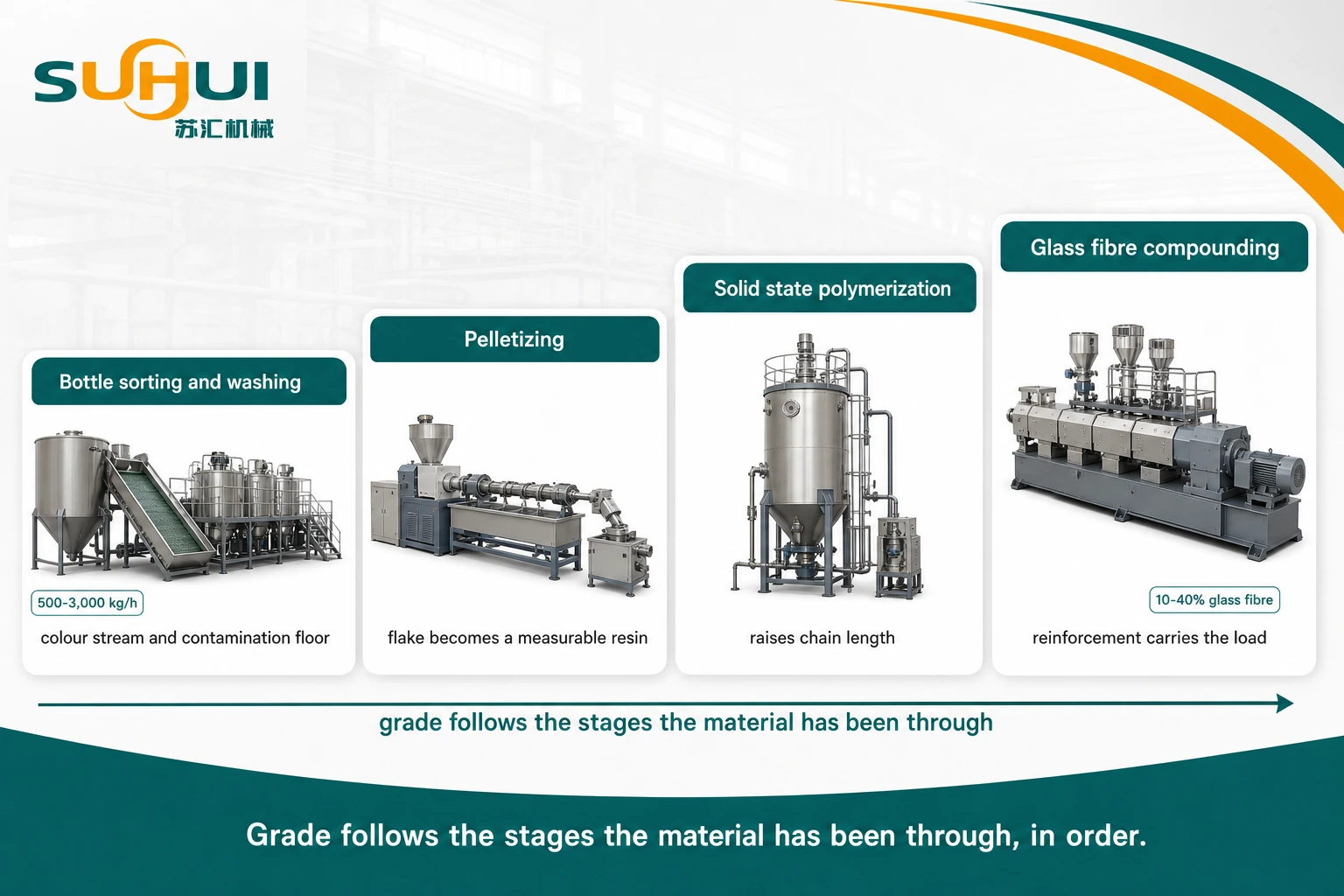
Grade follows the stages the material has been through, in order.
The practical reading of that map is that rPET grade is a project decision made at the front of a plant, not a setting on a machine. Deciding to serve the bottle route commits a plant to optical sorting discipline, tight drying and a solid state stage. Deciding to serve fibre and compounding removes most of that and changes the capital requirement substantially.
Frequently Asked Questions
What is rPET made of?
The same polymer as virgin PET, polyethylene terephthalate, recovered from used PET articles rather than made from new feedstock. Most rPET originates from post-consumer beverage bottles, which are the cleanest and most consistently collected PET stream. Post-industrial PET offcuts and off-spec production material also feed into it.
What does 100% rPET mean?
That the PET portion of the article is entirely recycled resin with no virgin PET blended in. It is a content claim, not a quality claim. It says nothing about intrinsic viscosity, colour or food-contact status, and it usually excludes caps, labels, colourants and additives, which are counted separately or not at all.
What is the difference between rPET and virgin PET?
Chemically the same polymer; practically, a different heat history. rPET has been through at least one full melt cycle, so its average chain length is shorter and its viscosity distribution is wider. It also carries whatever colour and trace contamination survived sorting and washing, which virgin resin does not.
What are the disadvantages of rPET?
Three that matter on a production line. Intrinsic viscosity falls with each thermal cycle, so mechanical performance has a ceiling. Colour accumulates and cannot be removed downstream. And lot-to-lot variation is wider than virgin resin, which forces incoming testing and more frequent process adjustment on the converter.
What makes rPET food grade?
Not cleanliness alone. It requires a traceable feedstock stream, a decontamination process validated to remove substances that may have entered the material during its first life, and certification for the destination market. Equipment can be built capable of it, but food-contact status is granted to a validated process, not to a machine.
Is rPET the same as recycled polyester?
Effectively yes when the polyester in question is PET. Recycled polyester fibre and filament are spun from recycled PET, so a textile described as recycled polyester and a resin described as rPET share the same polymer and often the same bottle feedstock. The difference is the form the material is sold in.
Can rPET be recycled again?
Yes, and it routinely is, but each cycle costs intrinsic viscosity. That loss is why the material tends to move down the route ladder over successive lives, from bottle towards fibre and compounding. Solid state polymerization is the process that interrupts that slide by rebuilding chain length between cycles.
Tracing an rPET Grade Back to Its Plant
- PET Bottle Recycling Machine Process Guide — the ten bale-to-flake stages that fix colour and PVC content upstream
- PET Solid State Polymerization System — the capital decision that separates the bottle route from fibre and sheet
- What Is PET Plastic — the virgin polymer behind the grade, and where PETG and rPET differ
- Plastic Recycling Machine Range — the full stage list a bottle-route plant has to commit to
Tem um material que precisa processar?
Envie o polímero, em que forma ele chega e a produção desejada. Retornamos com uma configuração de linha e uma faixa de orçamento realista.