Moinhos e trituradores reduzem resíduo plástico volumoso, tubos, embalagens, filmes, sacos e refugo rígido a pedaços menores, para lavagem, peletização, extrusão ou redução de volume.
O triturador de plástico é a primeira etapa de quase toda linha de reciclagem. Ele reduz o resíduo volumoso — tambores, tubos de parede grossa, fardos de filme, sacos tecidos, blocos de purga e embalagens rígidas — a um tamanho que a máquina seguinte consiga de fato aceitar. A SUHUI constrói esta etapa como trituradores de eixo simples e duplo de alto torque, máquinas dedicadas para tubos e big bags, e moinhos de alta rotação, especificados pelo tamanho do material, pela dureza e pela produção pretendida, e não apenas pela capacidade de placa. A redução de tamanho é uma etapa, não o trabalho inteiro. Filme enfardado ou contaminado segue para uma linha de lavagem de filme PP PE; moído rígido limpo e aparas de PVC podem alimentar diretamente uma linha de peletização, e o material que só precisa ficar menor vai direto para um moinho de plástico. Errar nesta etapa aparece lá na frente como telas cegas, alimentação irregular e lavagens que nunca limpam o material por completo. Como fabricante direta, cotamos o triturador em relação à linha que ele alimenta, e não isoladamente. Transportadores, detecção de metais e exaustão de pó são especificados a partir do que vem depois da máquina, porque é justamente aí que um triturador subdimensionado ou mal configurado custa dinheiro.
Machine Range
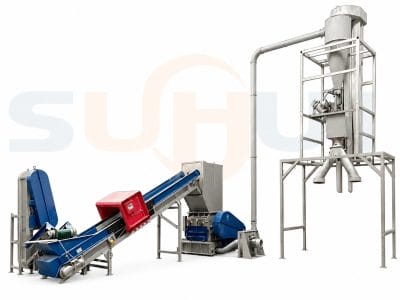
O moinho de plástico da SUHUI é uma máquina robusta, projetada para reduzir resíduo plástico a pedaços uniformes prontos para reutilização direta na produção. Processa com eficiência uma ampla gama...
Leia Mais
O triturador de tubos HDPE da SUHUI foi projetado para refugo de tubos rígidos e de parede grossa vindos de redes de água, distribuição de gás, drenagem e fabricação de...
Leia Mais
O triturador de eixo duplo da SUHUI reduz tambores plásticos volumosos, contêineres industriais, tubos de HDPE e PP, big bags, perfis, chapas, fardos de filme e resíduo rígido misto a...
Leia Mais
O triturador de eixo único da SUHUI reduz filmes plásticos, tubos, perfis, embalagens rígidas, resíduo de embalagem e refugo industrial misto a fragmentos controlados por tela, prontos para granuladores, linhas...
Leia Mais
O triturador de big bags da SUHUI processa big bags FIBC, sacos a granel, sacos de uma tonelada, sacaria tecida de PP, sacos de ráfia e embalagens com resíduo, transformando-os...
Leia MaisGuia de Seleção
| Material / project situation | Recommended machine | Why it fits |
|---|---|---|
| Filme, flocos e peças de parede fina já em tamanho manejável | Moinho de Plástico | Um rotor de alta rotação corta contra facas fixas e o produto atravessa uma tela, de modo que o moído sai pequeno e uniforme. É a máquina vendida na maioria dos mercados como plastic granulator machine ou plastic grinder machine — um princípio de corte, três nomes. Alimente-a com material já dimensionado; ela vai travar com tambores ou tubos de parede grossa. |
| Tubos HDPE de grande diâmetro e refugo rígido de parede grossa | Triturador de Tubos de HDPE | Uma geometria de alimentação reforçada mantém as seções longas de tubo contra o rotor, em vez de deixá-las deslizar por cima. É o torque, e não a velocidade, que faz o trabalho — razão pela qual um moinho de uso geral trava com o mesmo material. |
| Resíduo volumoso, não classificado ou com metal, que não alimenta nada | Triturador de Eixo Duplo | Dois eixos contrarrotativos puxam o material e o rasgam, de modo que tambores, blocos e refugo misto são reduzidos sem classificação prévia. O produto sai grosso e normalmente precisa de uma segunda passagem antes da lavagem, então já preveja no orçamento a máquina seguinte. |
| Resíduo misto em que a etapa seguinte exige tamanho de partícula definido | Triturador de Eixo Único | Um empurrador hidráulico pressiona o material contra o rotor e uma tela intercambiável define o tamanho de saída, o que torna o resultado repetível de lote a lote. Troque a tela e o tamanho da partícula muda sem trocar de máquina. |
| Big bags de PP, FIBC, sacos tecidos e outras embalagens fibrosas | Triturador de Big Bags | O PP tecido se enrola em um rotor comum em vez de ser cortado por ele. Aqui a geometria das facas e o controle de alimentação são feitos para material fibroso, e o produto sai em tiras que uma linha de lavagem consegue transportar, e não em emaranhados. |
| Refugo pós-consumo úmido, pegajoso ou muito contaminado | Duas máquinas, não uma | As telas cegam com alimentação úmida ou pegajosa, então uma máquina com tela sozinha é a resposta errada. Pré-triture grosso, lave e depois moa o material seco. Areia e grãos nesse tipo de refugo também encurtam a vida das facas, o que é custo de operação, não de compra. |
A configuração da máquina e da linha é decidida por estes fatores do projeto. Confirmá-los cedo torna a recomendação mais rápida e mais precisa.
Envie os dados do seu projetoOs compradores procuram pelas três palavras e muitas vezes se referem à mesma máquina. Os nomes descrevem como o material é cortado, não o quanto a máquina é boa.
| Classe de máquina | Como corta | Alimentação típica | Característica do produto |
|---|---|---|---|
| Triturador | Baixa rotação, alto torque. Um eixo giratório com discos de corte rasga o material. | Refugo volumoso, de parede grossa, enfardado ou misto, que não cabe em uma máquina menor | Pedaços grossos, dimensionados por tela ou pela geometria do eixo |
| Moinho (também vendido como plastic granulator machine ou plastic grinder machine) | Alta rotação. As facas do rotor cortam contra facas fixas e o produto atravessa uma tela. | Material já dimensionado: filme, flocos, peças de parede fina, material pré-triturado | Moído menor e mais uniforme, pronto para lavagem ou peletização |
| Peletizadora | Funde e extruda, depois corta em espaguete ou na face da matriz. | Moído limpo e seco | Pellets — outro processo, não redução de tamanho |
Se uma cotação disser granulator, confirme qual máquina está sendo oferecida antes de comparar preços. Na maioria dos mercados de língua inglesa a palavra designa o moinho de alta rotação que produz flocos; em anúncios de equipamentos vindos da Ásia, às vezes designa a linha de peletização que produz pellets. As duas diferem em uma ordem de grandeza de custo.
Para uma comparação mais longa dos três princípios de corte, veja granulador, triturador ou moinho. Para escolher entre as classes de máquina a partir do seu material, a tabela de seleção acima é o caminho mais rápido.
O número de eixos é a principal decisão de engenharia dentro da classe dos trituradores. Ele é definido pelo que o material faz ao encontrar o rotor, e não apenas pela produção pretendida.
Configuração
Como corta

Eixo simplesUm rotor, um empurrador hidráulico que pressiona o material contra as facas e uma tela que define o tamanho de saída.

Eixo duploDois eixos contrarrotativos com facas intercaladas puxam o material e o rasgam. Normalmente sem tela.
Ideal para
Eixo simplesFilme, sacos, seções de tubo e blocos de purga — tudo o que vai alimentar uma linha de lavagem ou peletização.
Eixo duploPré-triturar resíduo volumoso ou não classificado: tambores, blocos de parede grossa, refugo misto com metal.
Controle de saída
Eixo simplesDefinido por tela e repetível de lote a lote; o tamanho da partícula muda com a tela.
Eixo duploDefinido pela largura e pelo espaçamento das facas. Mais grosso e menos uniforme.
Torque
Eixo simplesModerado. O corte vem da rotação do rotor contra as facas fixas.
Eixo duploAlto por unidade de potência, vindo de dois eixos acionados e de um redutor mais robusto.
Atenção a
Eixo simplesAs telas cegam com alimentação úmida ou pegajosa; refugo contaminado desgasta as facas mais rápido.
Eixo duploO produto normalmente ainda precisa passar por um moinho ou por um eixo simples antes da lavagem.
Na prática a divisão é simples. Se o material já é manejável e a etapa seguinte precisa de um tamanho definido, especifique um triturador de eixo simples. Se o problema é que o material está grande demais, duro demais ou misturado demais para alimentar qualquer coisa, coloque um triturador de eixo duplo na frente.
Tubos de parede grossa e big bags FIBC aparecem com frequência suficiente para terem configurações próprias. O triturador de tubos HDPE e o triturador de big bags são máquinas de eixo simples, com geometria de alimentação e rotores ajustados a esses dois materiais.
Dois números delimitam o orçamento. Onde um projeto cai entre eles depende de uma lista curta de escolhas — e há um custo recorrente que nunca aparece na cotação.
Orçamento de referência
US$ 10.000–30.000
Produção
200–1.000 kg/h
FOB, apenas a máquina. Transportadores, detecção de metais e exaustão de pó são cotados à parte.
As facas são um consumível, e sua durabilidade depende quase inteiramente do que passa por elas. Purga limpa de produção interna é suave; refugo pós-consumo com areia, grãos ou um parafuso ocasional não é. As facas geralmente podem ser giradas para uma aresta nova e depois retificadas antes da troca, então vale fazer três perguntas junto com o preço da máquina.
Pergunta 01
Quantas arestas de corte?Uma faca que pode ser girada várias vezes antes de retificar dura muito mais que uma que não pode.Pergunta 02
Pode ser retificada localmente?Retificar no seu próprio mercado evita mandar facas de ida e volta a cada intervalo de serviço.Pergunta 03
Quanto custa um jogo reserva?Ao longo de alguns anos isso pesa mais que a diferença entre dois preços de máquina.As faixas de preço das demais categorias, para lavagem, peletização e linhas completas, estão na visão geral de máquinas de reciclagem. Os valores exatos dependem do material e da produção e são confirmados na cotação.
Before You Ask
Para receber uma recomendação mais precisa, envie o seu tipo de material, em que forma ele chega, o nível de contaminação, a capacidade necessária, o produto final pretendido, o espaço da planta, a tensão elétrica local e o país de destino. Fotos ou vídeos do material também ajudam muito.
Informe seu material e o produto desejado. Respondemos com recomendações práticas, não com respostas comerciais genéricas.
Envie à SUHUI o seu tipo de material, a capacidade alvo, o produto final, o espaço disponível na planta, a tensão elétrica e o país de destino. Fotos ou vídeos do material ajudam nossa equipe a recomendar a máquina ou a configuração de linha completa mais adequada.


