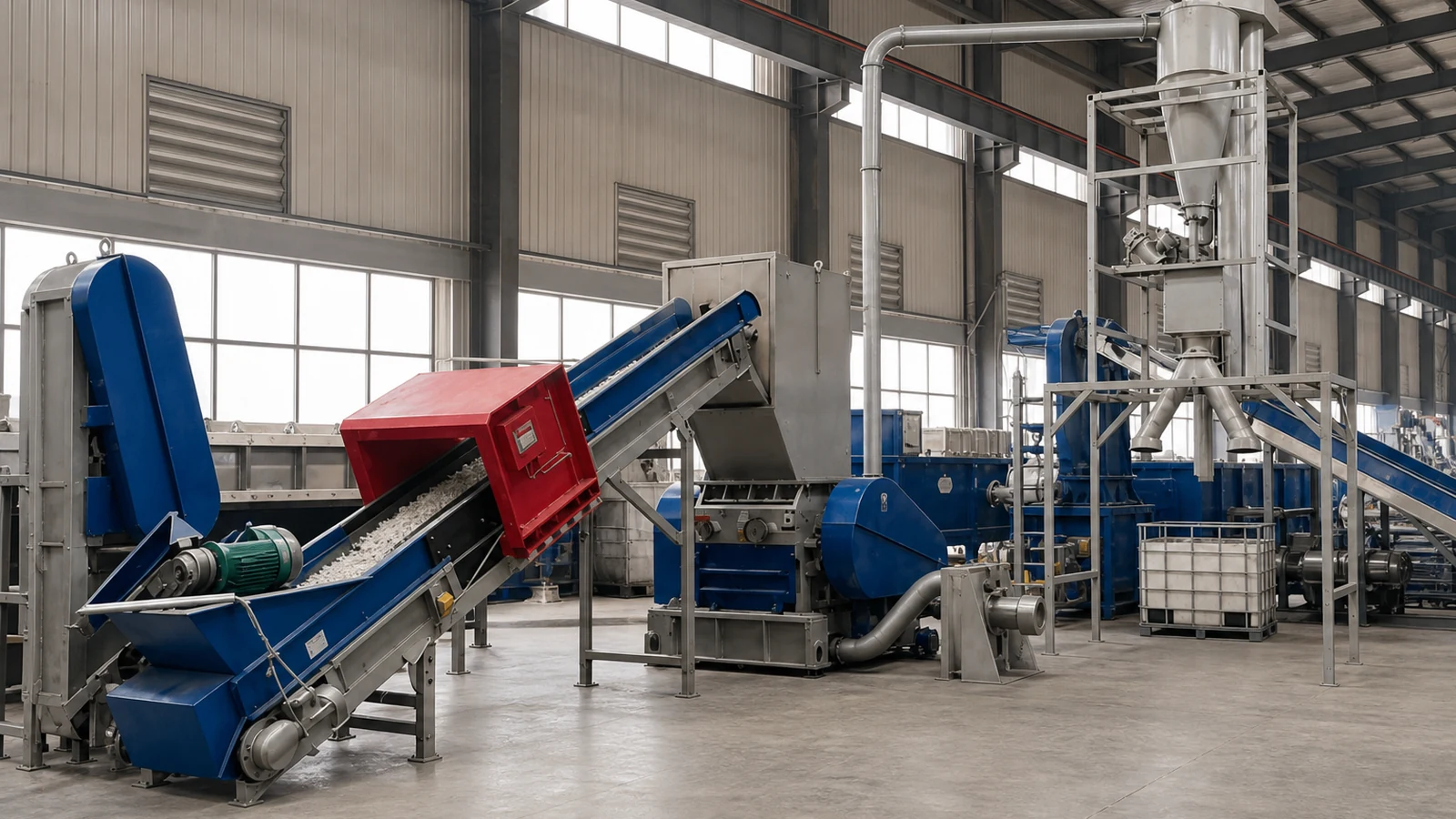
Plastic crushers and shredders reduce bulky plastic waste, pipes, containers, films, bags and rigid scrap into smaller pieces for washing, pelletizing, extrusion or volume reduction.
A plastic shredder machine is the first stage of almost every recycling line. It reduces bulky waste — drums, thick-wall pipe, film bales, woven sacks, purge lumps and rigid containers — to a size the next machine can actually accept. SUHUI builds this stage as high-torque single and double shaft shredders, dedicated pipe and jumbo bag machines, and high-speed crushers, specified by material size, hardness and target output rather than by nameplate capacity alone. Size reduction is a stage, not the whole job. Baled or contaminated film goes on to a PP PE film washing line; clean rigid regrind and PVC offcuts can feed a pelletizing line directly, and material that only needs to be smaller goes straight to a plastic crusher. Getting this stage wrong surfaces downstream as blinded screens, uneven feeding and washing stages that never fully clean the material. As a factory-direct manufacturer we quote the shredder against the line it feeds, not in isolation. Conveyors, metal detection and dust extraction are specified from what runs after the machine, because that is where an undersized or wrongly configured plastic shredder actually costs money.
Machine Range
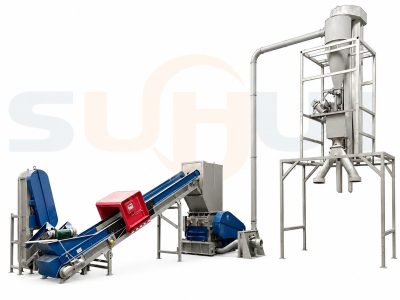
The SUHUI plastic crusher is a robust machine designed to reduce plastic waste into uniform pieces for direct reuse in manufacturing. It efficiently processes a wide range of plastic materials...
Read More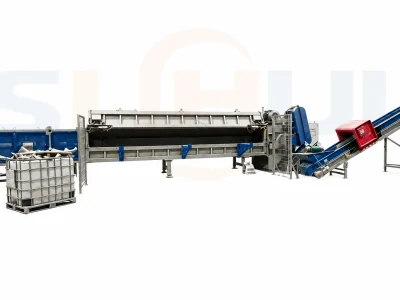
The SUHUI HDPE pipe shredder is designed for large, rigid and thick-walled HDPE pipe scrap from water supply, gas distribution, drainage and pipe manufacturing applications. It uses a reinforced feed...
Read More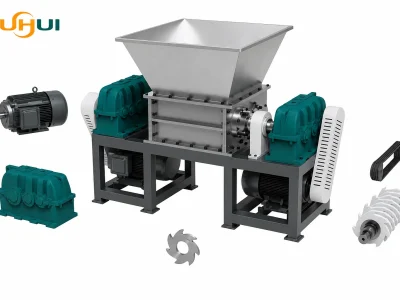
The SUHUI double shaft shredder reduces bulky plastic drums, industrial containers, HDPE and PP pipes, jumbo bags, profiles, sheets, film bales and mixed rigid plastic waste into manageable first-stage fragments...
Read More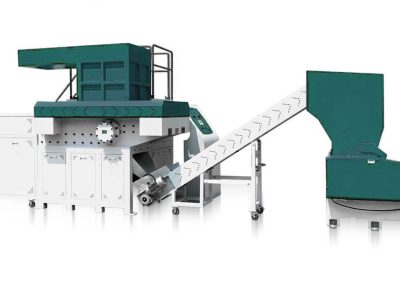
The SUHUI single shaft shredder reduces plastic films, pipes, profiles, rigid containers, packaging waste and mixed industrial scrap into screen-controlled fragments for granulators, washing lines, pelletizing lines or direct reprocessing....
Read More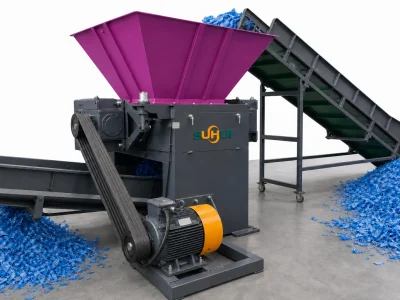
The SUHUI jumbo bag shredder machine processes FIBC jumbo bags, bulk bags, ton bags, woven PP bags, PP raffia sacks and residue-contaminated bags into screen-controlled PP strips and flakes for...
Read MoreSelection Guide
| Material / project situation | Recommended machine | Why it fits |
|---|---|---|
| Film, flakes and thin-walled parts already down to a handleable size | Plastic Crusher | A high-speed rotor cuts against fixed bed knives and the output passes a screen, so the regrind comes out small and uniform. This is the machine sold in most markets as a plastic granulator machine or plastic grinder machine — one cutting principle, three names. Feed it pre-sized material; it will stall on drums or thick-wall pipe. |
| Large-diameter HDPE pipe and thick-wall rigid pipe scrap | HDPE Pipe Shredder | Reinforced feed geometry holds long pipe sections against the rotor instead of letting them ride on top of it. Torque rather than speed does the work, which is why a general-purpose plastic crusher machine stalls on the same material. |
| Bulky, unsorted or metal-contaminated waste that will not feed anything | Double Shaft Shredder | Two counter-rotating shafts pull material in and tear it, so drums, lumps and mixed scrap are reduced without pre-sorting. Output is coarse and normally needs a second pass before washing, so budget for the machine that follows it. |
| Mixed plastic waste where the next stage needs a defined particle size | Single Shaft Shredder | A hydraulic pusher holds material against the rotor and an interchangeable screen decides output size, which makes results repeatable batch to batch. Change the screen and the particle size changes without changing machines. |
| PP jumbo bags, FIBC, woven sacks and other fibrous packaging | Jumbo Bag Shredder | Woven PP wraps around a standard rotor instead of being cut by it. Blade geometry and feed control here are built for fibrous material, and the output is strips a washing line can carry rather than tangled bundles. |
| Wet, sticky or heavily contaminated post-consumer scrap | Two machines, not one | Screens blind on wet or sticky feed, so a screened machine on its own is the wrong answer. Pre-shred coarse, wash, then crush the dried material. Sand and grit in this kind of scrap also shorten knife life, which is a running cost rather than a purchase cost. |
Machine and line configuration is decided by these project factors. Confirming them early makes the recommendation faster and more accurate.
Send your project factorsBuyers search for all three words and often mean the same machine. The names describe how the material is cut, not how good the machine is.
| Machine class | How it cuts | Typical feed | Output character |
|---|---|---|---|
| Shredder | Low speed, high torque. Rotating shaft with cutting discs tears the material apart. | Bulky, thick-wall, baled or mixed scrap that will not fit a smaller machine | Coarse pieces, sized by screen or by shaft geometry |
| Crusher (also sold as a plastic granulator machine or plastic grinder machine) | High speed. Rotor knives cut against fixed bed knives, output passes a screen. | Pre-sized material: film, flakes, thin-wall parts, shredded pieces | Smaller, more uniform regrind ready for washing or pelletizing |
| Pelletizer | Melts and extrudes, then cuts strands or die face. | Clean, dry regrind | Pellets — a different process, not size reduction |
If a quotation says granulator, confirm which machine you are being offered before comparing prices. In most English-speaking markets the word means the high-speed crusher that makes flakes; in equipment listings from Asia it sometimes means the pelletizing line that makes pellets. The two differ by an order of magnitude in cost.
For a longer side-by-side of the three cutting principles, see the plastic granulator vs shredder vs crusher comparison. To choose between machine classes for your own material, the selection table above is the faster route.
Shaft count is the main engineering decision inside the shredder class. It is set by what the material does when it meets the rotor, not by target output alone.
Configuration
How it cuts
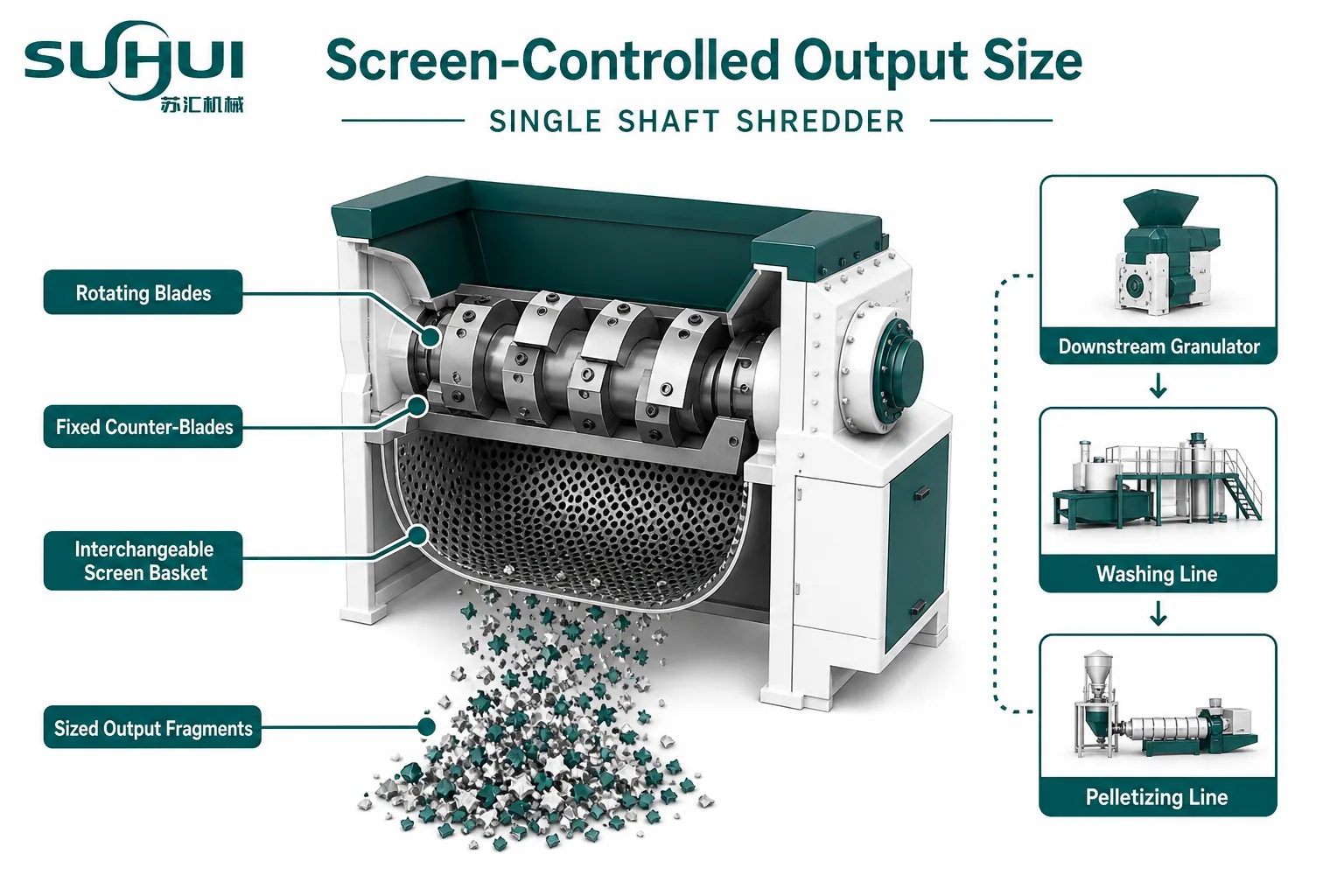
Single-shaftOne rotor, a hydraulic pusher holding material against the knives, and a screen that decides output size.
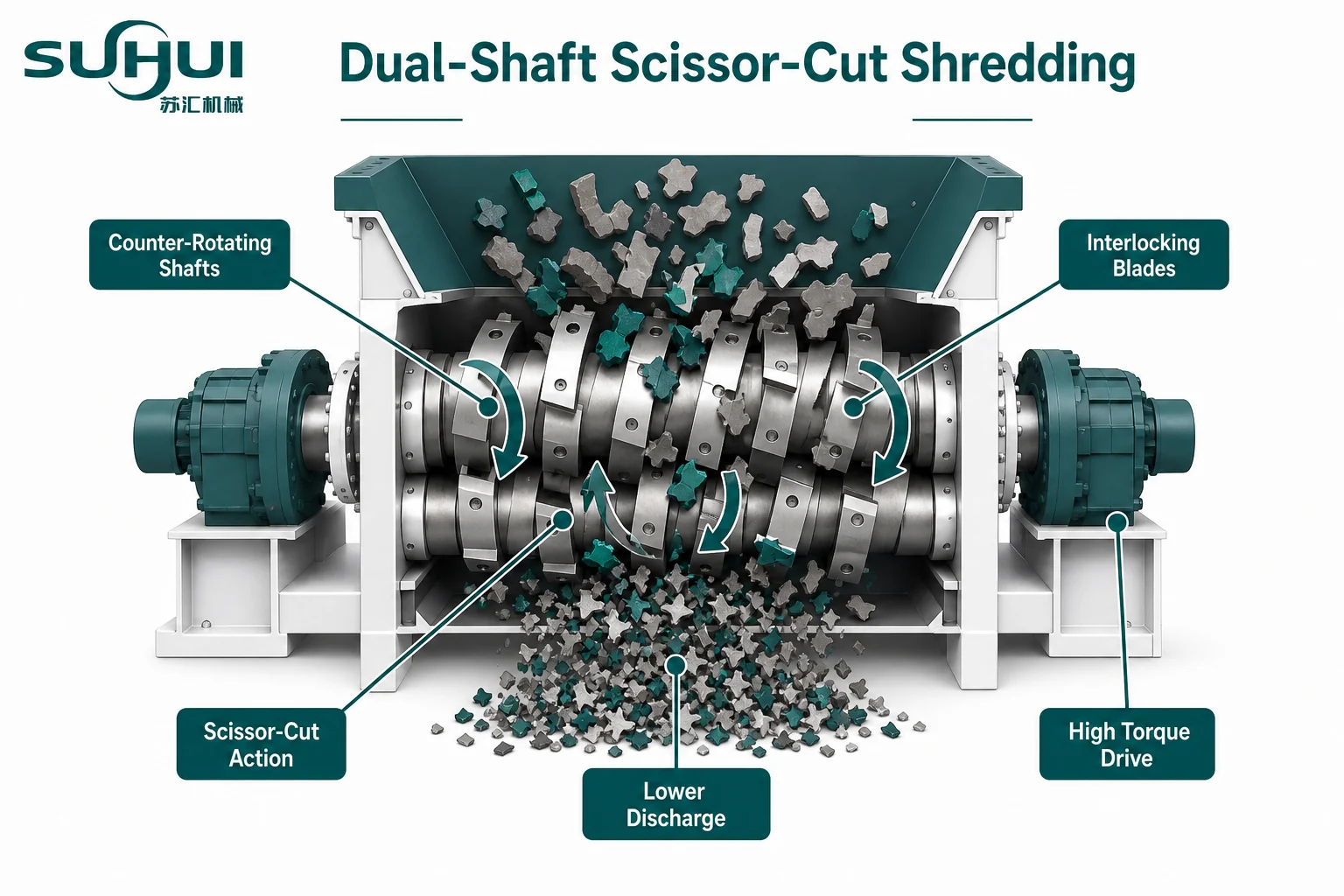
Twin-shaftTwo counter-rotating shafts with interleaved cutters pull material in and tear it. Normally no screen.
Best for
Single-shaftFilm, bags, pipe sections and purge lumps — anything feeding a washing or pelletizing line.
Twin-shaftPre-shredding bulky or unsorted waste: drums, thick-wall lumps, metal-contaminated mixed scrap.
Output control
Single-shaftScreen-defined and repeatable batch to batch; particle size changes with the screen.
Twin-shaftSet by cutter width and spacing. Coarser and less uniform.
Torque
Single-shaftModerate. Cutting comes from rotor speed against fixed knives.
Twin-shaftHigh per unit of motor power, from two driven shafts and a heavier gearbox.
Watch for
Single-shaftScreens blind on wet or sticky feed; contaminated scrap wears knives faster.
Twin-shaftOutput usually still needs a crusher or single-shaft pass before washing.
The split is simple in practice. If the material is already handleable and the next stage needs a defined size, specify a single shaft shredder. If the problem is that the material is too big, too tough or too mixed to feed anything, put a double shaft shredder in front of it.
Thick-wall pipe and FIBC bags come up often enough to have their own configurations. The HDPE pipe shredder and the jumbo bag shredder are single-shaft machines with feed geometry and rotors matched to those two materials.
Two numbers frame the budget. Where a project lands between them is decided by a short list of choices, and one recurring cost never appears on the quotation at all.
Reference budget
$10,000–30,000
Throughput
200–1,000 kg/h
FOB, machine only. Conveyors, metal detection and dust extraction are quoted separately.
Knives are a consumable, and how long they last depends almost entirely on what goes through them. Clean in-house purge is gentle; post-consumer scrap carrying sand, grit or the occasional bolt is not. Blades can usually be rotated to a fresh edge and later reground before replacement, so three questions are worth asking alongside the machine price.
Ask 01
How many cutting edges?A blade that can be rotated several times before regrinding lasts far longer than one that cannot.
Ask 02
Can it be resharpened locally?Regrinding in your own market avoids shipping blades back and forth every service interval.
Ask 03
What does a spare set cost?Over a few years this matters more than the difference between two machine prices.
Cross-category price ranges for washing, pelletizing and complete lines are on the plastic recycling machine overview. Exact figures depend on material and output and are confirmed with the quotation.
Before You Ask
To receive a more accurate recommendation, send your material type, material form, contamination level, required capacity, target output, plant space, local voltage and destination country. Material photos or videos are also helpful.
Tell us your material and target output. We reply with practical recommendations, not generic sales replies.
Send SUHUI your material type, target capacity, final output, plant space, voltage and destination country. Material photos or videos help our team recommend a suitable machine or complete line configuration.