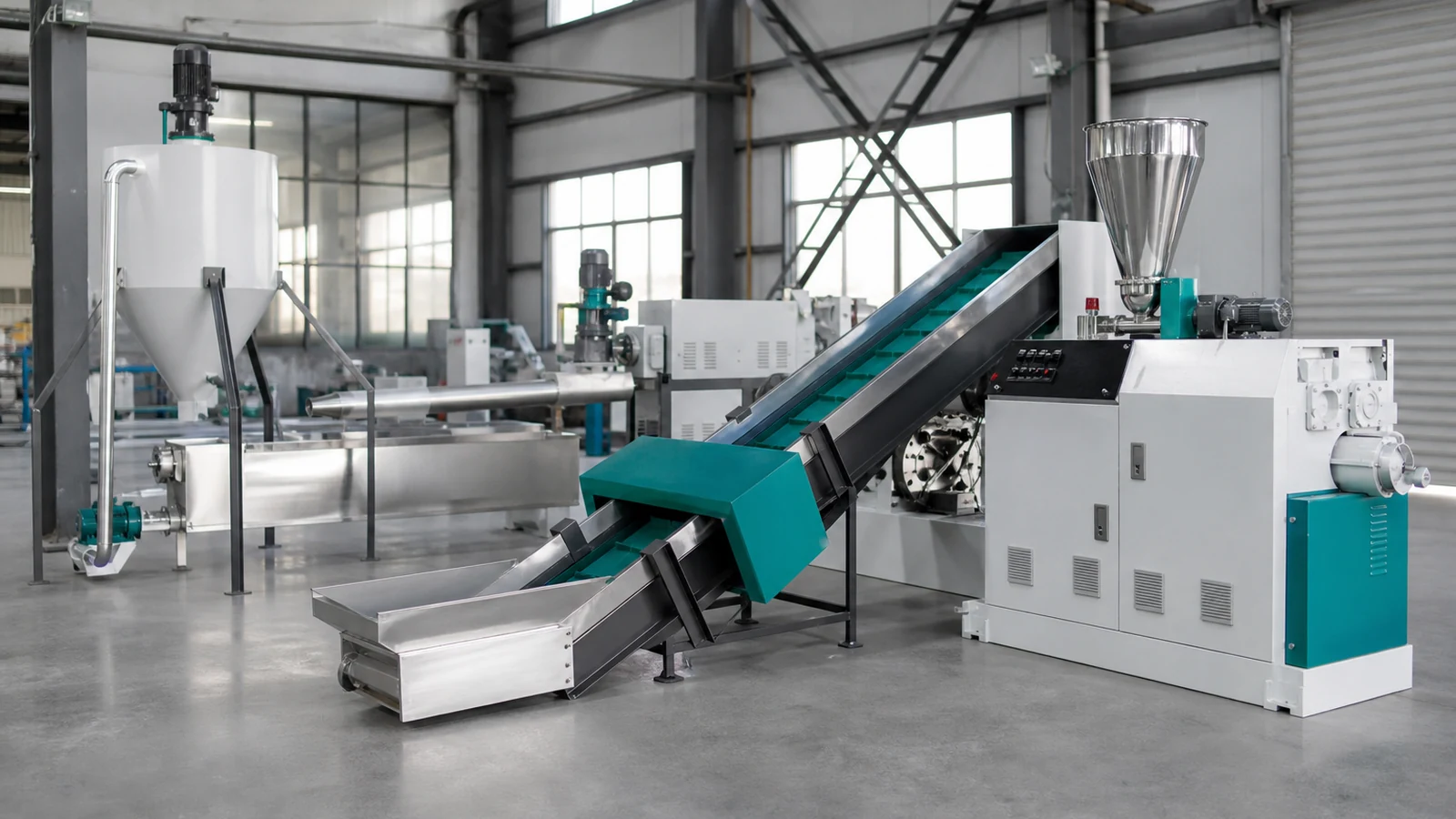
A PET flakes and glass fiber twin screw pelletizing line compounds washed PET flakes with glass fiber into reinforced pellets through twin screw extrusion, filtration and pelletizing.
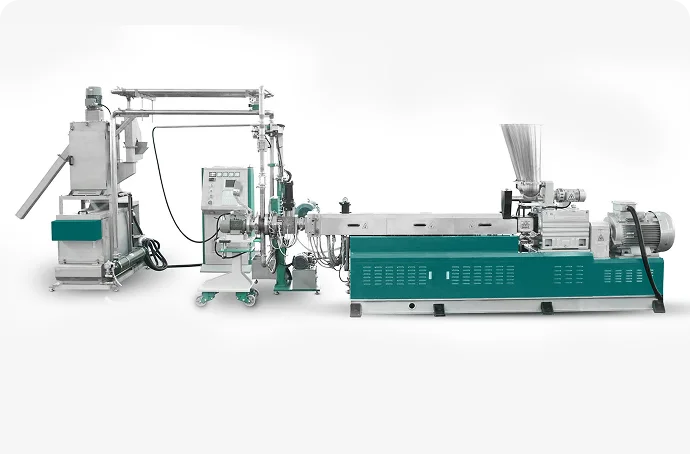
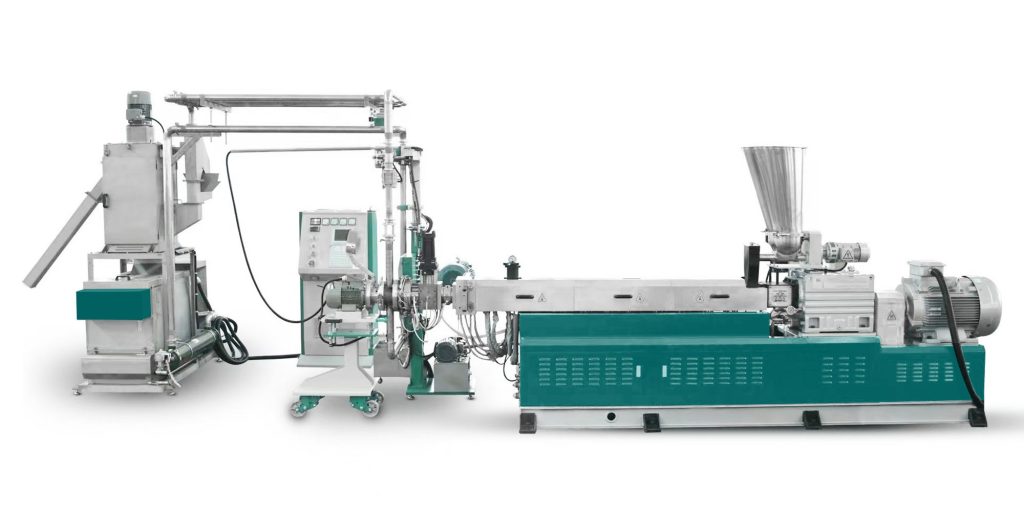
The SUHUI PET flakes glass fiber twin screw pelletizing line produces high-performance engineering plastic pellets by compounding recycled PET flakes with glass fiber reinforcement (10–40% loading). The resulting composite pellets deliver significantly enhanced tensile strength, flexural modulus, thermal stability, and dimensional rigidity compared to unreinforced recycled PET.
The SUHUI PET flakes glass fiber twin screw pelletizing line produces high-performance engineering plastic pellets by compounding recycled PET flakes with glass fiber reinforcement (10–40% loading). The resulting composite pellets deliver significantly enhanced tensile strength, flexural modulus, thermal stability, and dimensional rigidity compared to unreinforced recycled PET.
Designed for the demanding requirements of automotive, electronics, and industrial component manufacturing, these glass fiber reinforced PET pellets replace virgin engineering plastics in applications including structural housings, gears, brackets, and load-bearing components. The twin-screw compounding process ensures precise, uniform glass fiber dispersion throughout the PET matrix with minimal fiber breakage and polymer degradation.
By repurposing post-consumer PET bottle flakes as the base matrix material, the SUHUI line supports sustainable, cost-effective production of high-value engineering plastic compounds that would otherwise require virgin PET resin.
The SUHUI PET flakes glass fiber twin screw pelletizing line supports glass fiber loadings from 10% to 40% by weight, controlled with ±0.5% accuracy using loss-in-weight gravimetric feeders. The target fiber content can be adjusted in real time via the PLC control system to meet specific mechanical property requirements for different end applications.
PET is highly hygroscopic and will undergo hydrolytic degradation at processing temperatures if moisture content exceeds 0.02%. Pre-drying in a dehumidifying dryer reduces moisture to below this threshold, preventing chain scission, IV value loss, and surface defects in the final glass fiber reinforced pellets.
Glass fiber reinforced recycled PET pellets produced by this line are used in automotive structural components including housings, brackets, and load-bearing parts; electronics enclosures and connectors; and industrial components requiring high stiffness, dimensional stability, and thermal resistance. They serve as a cost-effective, sustainable replacement for virgin engineering plastics.
The co-rotating twin-screw extruder uses controlled kneading and distributive mixing elements that progressively incorporate glass fibers into the polymer matrix without excessive mechanical shear. Screw geometry and processing parameters are optimized to balance thorough fiber dispersion with minimal fiber length reduction, preserving the reinforcement efficiency of the glass fibers in the final compound.
The strand pelletizing unit produces uniform 2–5 mm cylindrical pellets with consistent length and low fines generation. Pellets pass through a vibratory screening stage to remove undersized fines and oversized pieces before packaging, ensuring consistent pellet geometry for downstream injection molding and extrusion processes.
The line is primarily configured for glass fiber reinforcement of PET. With appropriate screw configuration adjustments and wear-resistant component upgrades, it can also process carbon fiber or mineral filler compounds. SUHUI engineers assess feedstock compatibility and recommend the appropriate configuration based on fiber type, loading percentage, and target compound properties.
Tell us your material type, condition, required capacity and target output. Photos or videos help.
SUHUI reviews the feeding method, process route and machine configuration for your material.
You receive an equipment list and quotation, with capacity, layout, voltage and automation matched to the project.
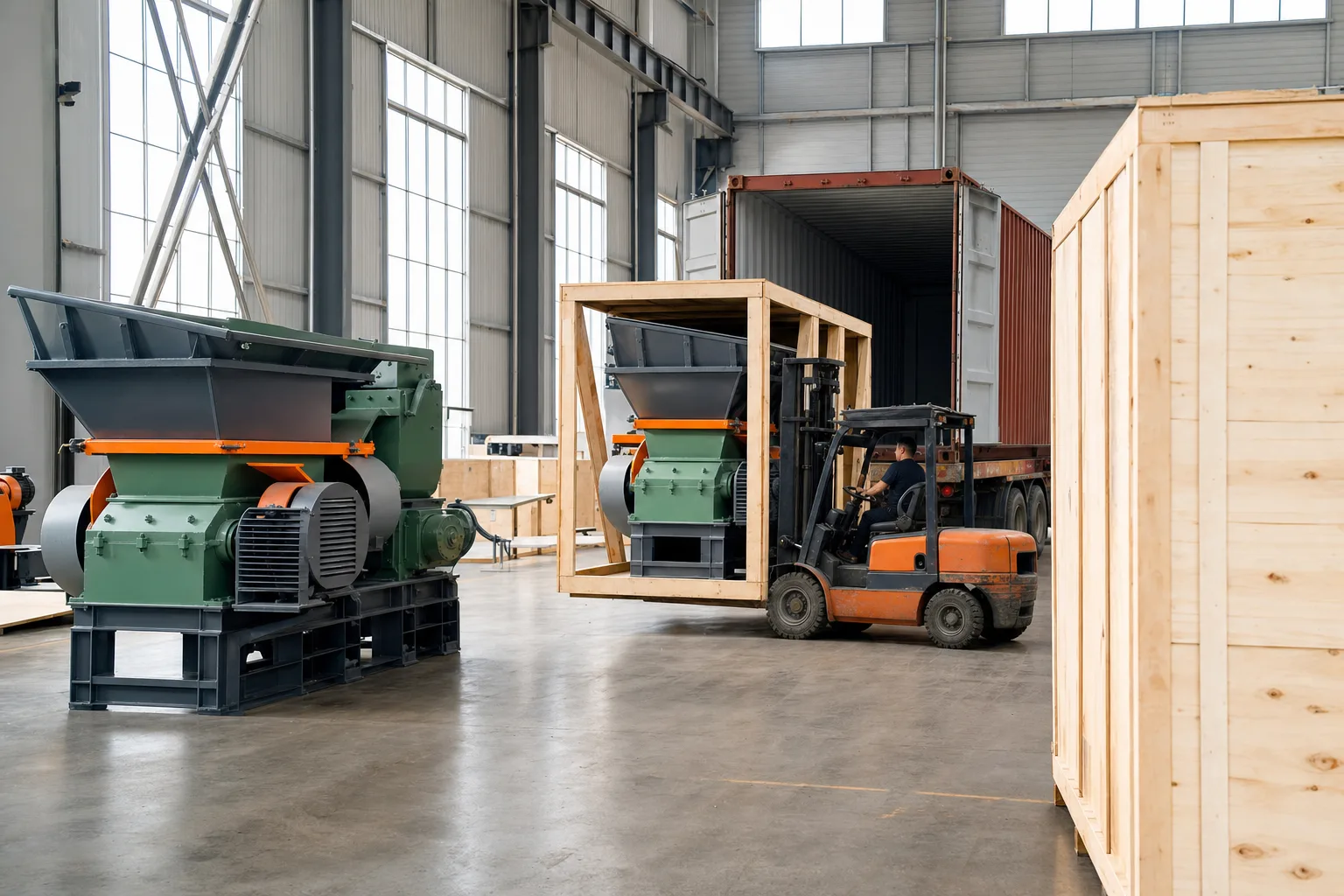
Production, testing, export packing and installation guidance through to commissioning.
To receive a more accurate recommendation, please include your material type, material condition, required capacity, target output, plant space, local voltage and destination country in the message. Photos or videos of your raw material are also helpful.
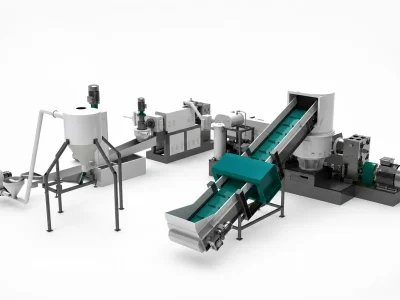
The SUHUI PP PE film compacting pelletizing line transforms post-industrial and post-consumer polypropylene (PP) and polyethylene (PE) film waste into high-quality recycled pellets. It processes a wide range of plastic film types including agricultural mulch film, greenhouse covers, LDPE packaging film, HDPE bags, and stretch wrap — removing contaminants such as dirt, sand, inks, and adhesives to produce clean, uniform output.
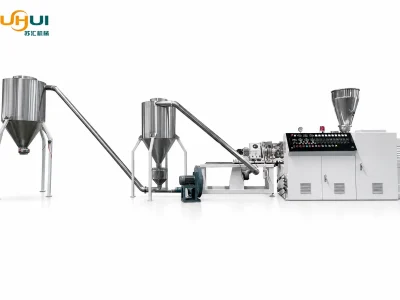
The SUHUI PVC granulating pelletizing line converts rigid uPVC and flexible PVC scrap — offcuts, cable insulation, window profiles and post-consumer PVC — into uniform 2–4 mm recycled PVC pellets. Multi-zone temperature control in the stable 160–200°C window, corrosion-resistant twin-screw extrusion, in-line stabilizer dosing and integrated fume extraction protect PVC from degradation, while air-cooled die-face hot cut pelletizing delivers dry, uniform pellets for pipe, profile, cable and fitting production.
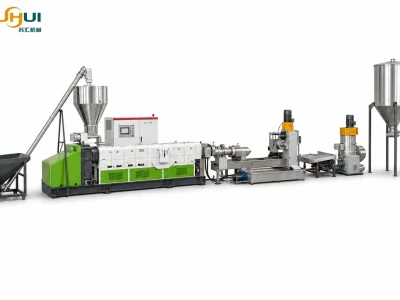
The SUHUI rigid plastic granulating pelletizing line processes HDPE, PP, PS, ABS and mixed rigid plastic waste into uniform 2–5 mm recycled pellets. Heavy-duty granulating, high-torque twin-screw extrusion, multi-stage melt filtration and precision pelletizing handle industrial scrap, post-consumer rigid packaging and moulding offcuts at 300–3,000 kg/h, producing clean raw material for injection moulding, blow moulding and extrusion.