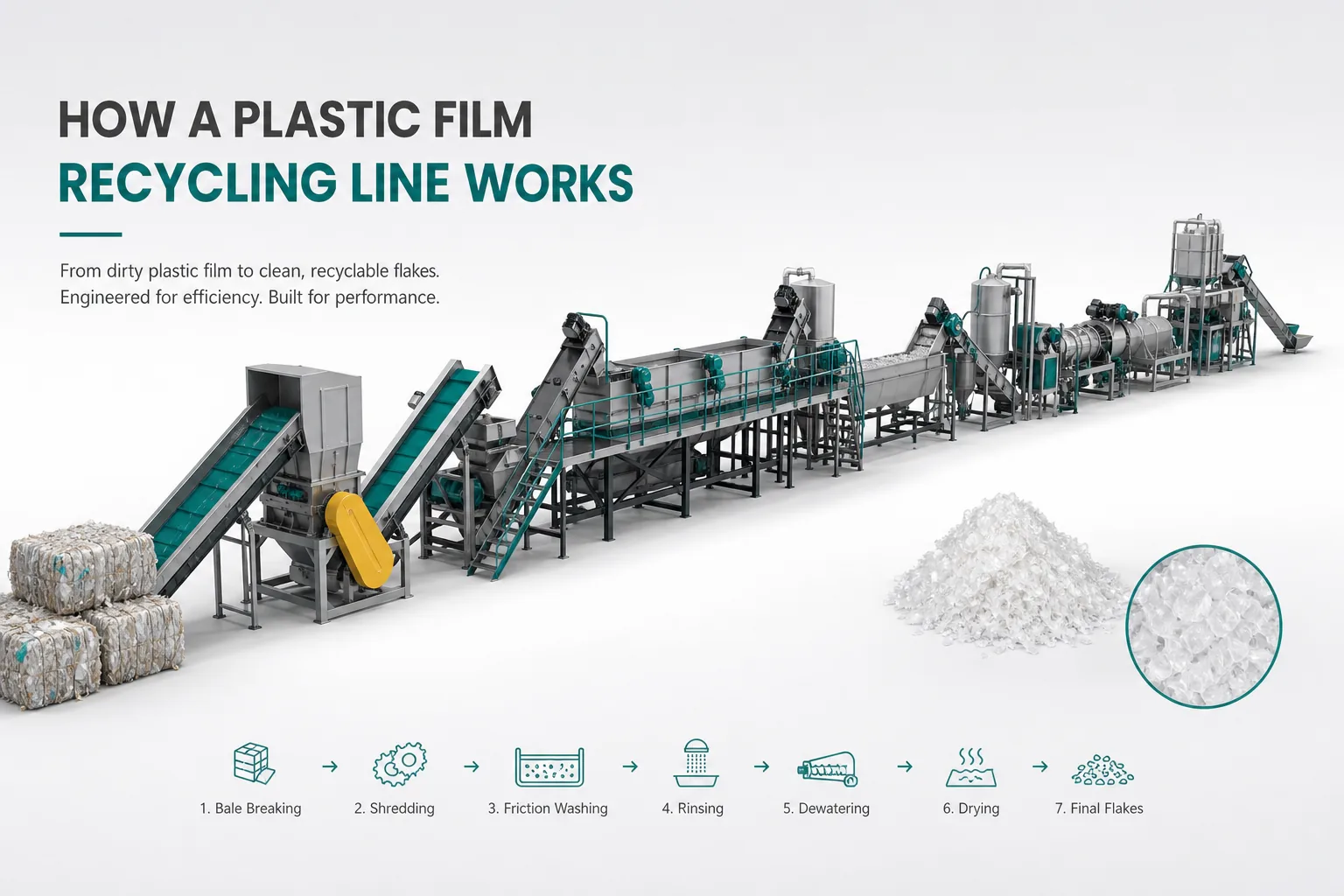
Plastic film waste is difficult to recycle because it is lightweight, flexible, and often contaminated with soil, labels, water, adhesive, or organic residue. Agricultural film, stretch wrap, shrink film, woven bags, and post-consumer soft plastic bales cannot usually be processed well on a rigid plastic washing line. They need a dedicated plastic film recycling line designed for soft, low-density material.
This guide explains how a plastic film recycling line works, what each processing stage does, which equipment is involved, and how to choose the right system for your operation.
 A plastic film recycling line cleans and dries PP, PE, and LDPE film waste into reusable flakes for sale or downstream pelletizing.
What Is a Plastic Film Recycling Line?
A plastic film recycling line is a connected industrial washing system that processes flexible plastic film waste into clean, dry recycled flakes. The line usually includes feeding, size reduction, pre-washing, friction washing, float-sink separation, rinsing, dewatering, drying, and output storage.
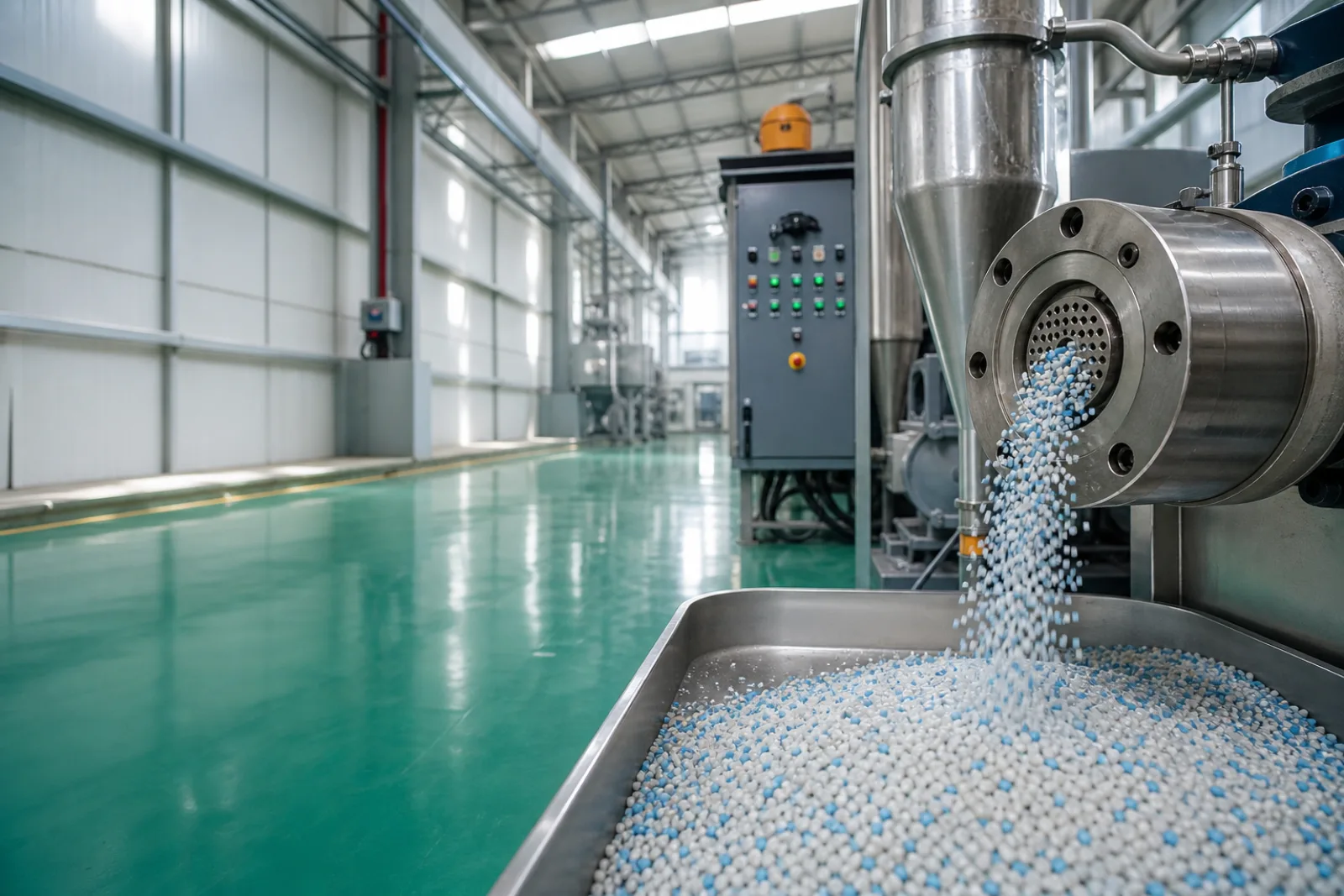
The output flakes can be sold directly, used in extrusion applications, or fed into a PP PE film compacting pelletizing line to produce recycled pellets.
Common input materials include:
- PP film – woven bags, jumbo bags, FIBCs, and strapping.
- PE film – stretch wrap, shrink film, greenhouse film, and agricultural mulch film.
- LDPE film – packaging film, bread bags, bubble wrap, and soft packaging scrap.
- Mixed soft plastics – post-consumer film bales from sorting facilities.
Because film is thin and flexible, it can wrap around rotating shafts, float unevenly in water tanks, and carry high surface moisture after washing. A dedicated film washing line uses controlled crushing, high-friction cleaning, density separation, and stronger dewatering to handle these challenges.
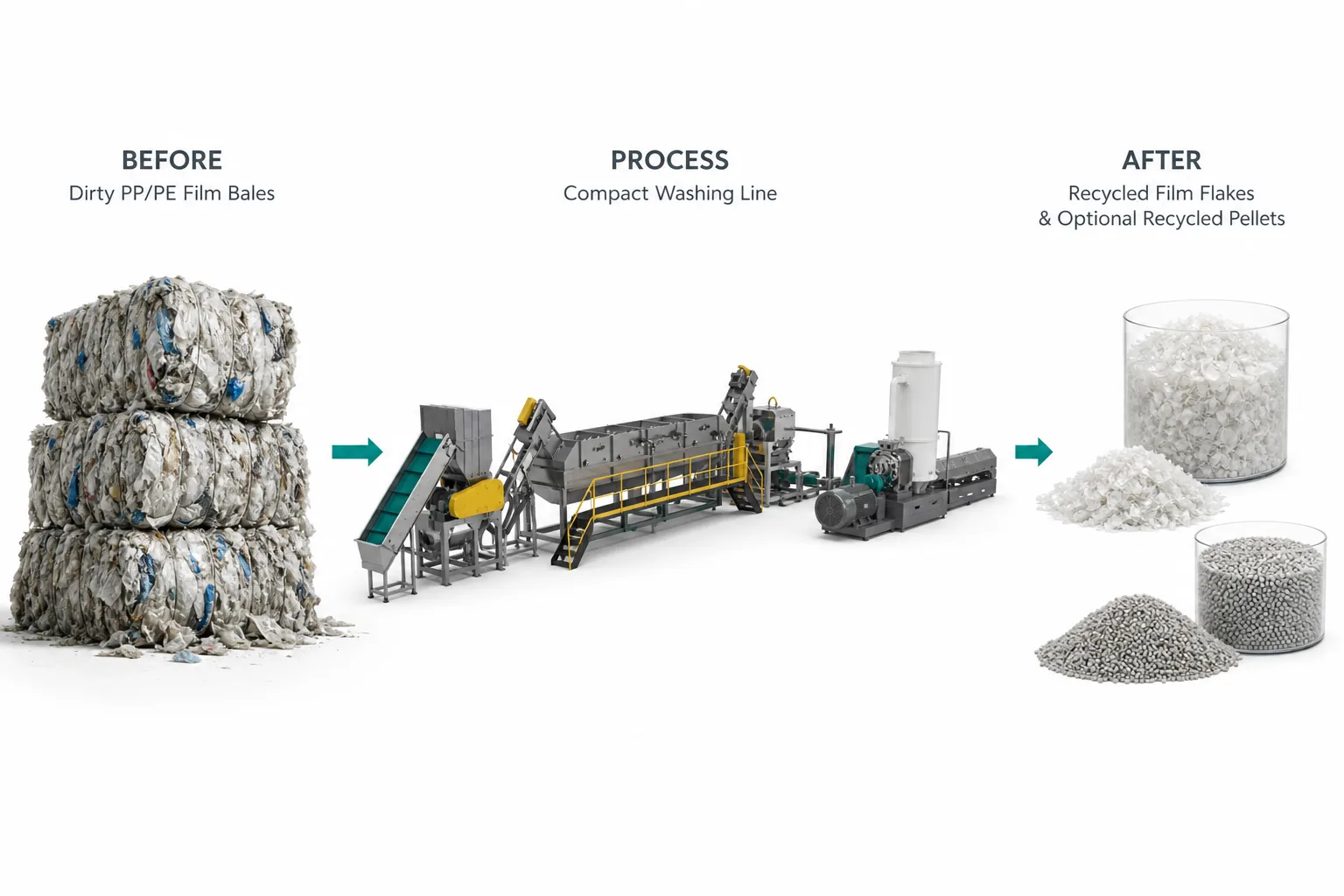 Dirty film bales are reduced, washed, separated, and dried into clean flakes that can be sold or pelletized.
Why Film Recycling Needs a Dedicated Washing Line
A PP PE film washing line is different from a rigid plastic washing line because film behaves differently during feeding, cutting, washing, separation, and drying. The main challenge is not only contamination; it is handling a light, flexible, low-bulk-density material without wrapping, floating loss, or excessive moisture.
| Film Challenge | What Happens in the Line | Equipment Response |
|---|---|---|
| Low bulk density | Film takes up large volume but feeds unevenly into crushers, washers, and pelletizers | Stable bale opening, controlled feeding, and optional densifying before pelletizing |
| Wrapping and tangling | Soft film can wrap around shafts, blades, screws, and conveyors | Film-ready crusher design, friction washers, and anti-wrapping handling points |
| High surface moisture | Washed film carries much more water than rigid flakes after rinsing | Mechanical dewatering, plastic film squeezer, and thermal drying work together |
| Heavy soil or organic residue | Agricultural film can bring sand, mud, fertilizer, pesticide residue, and plant matter | Stronger pre-washing, friction washing, water filtration, and wastewater management |
This is why a general-purpose washing system may underperform on plastic film even if it works well for rigid bottles or containers.
How a Plastic Film Recycling Line Works
A complete film recycling washing line normally includes 7 to 10 stages. The exact configuration depends on the material type, contamination level, target output quality, and required capacity.
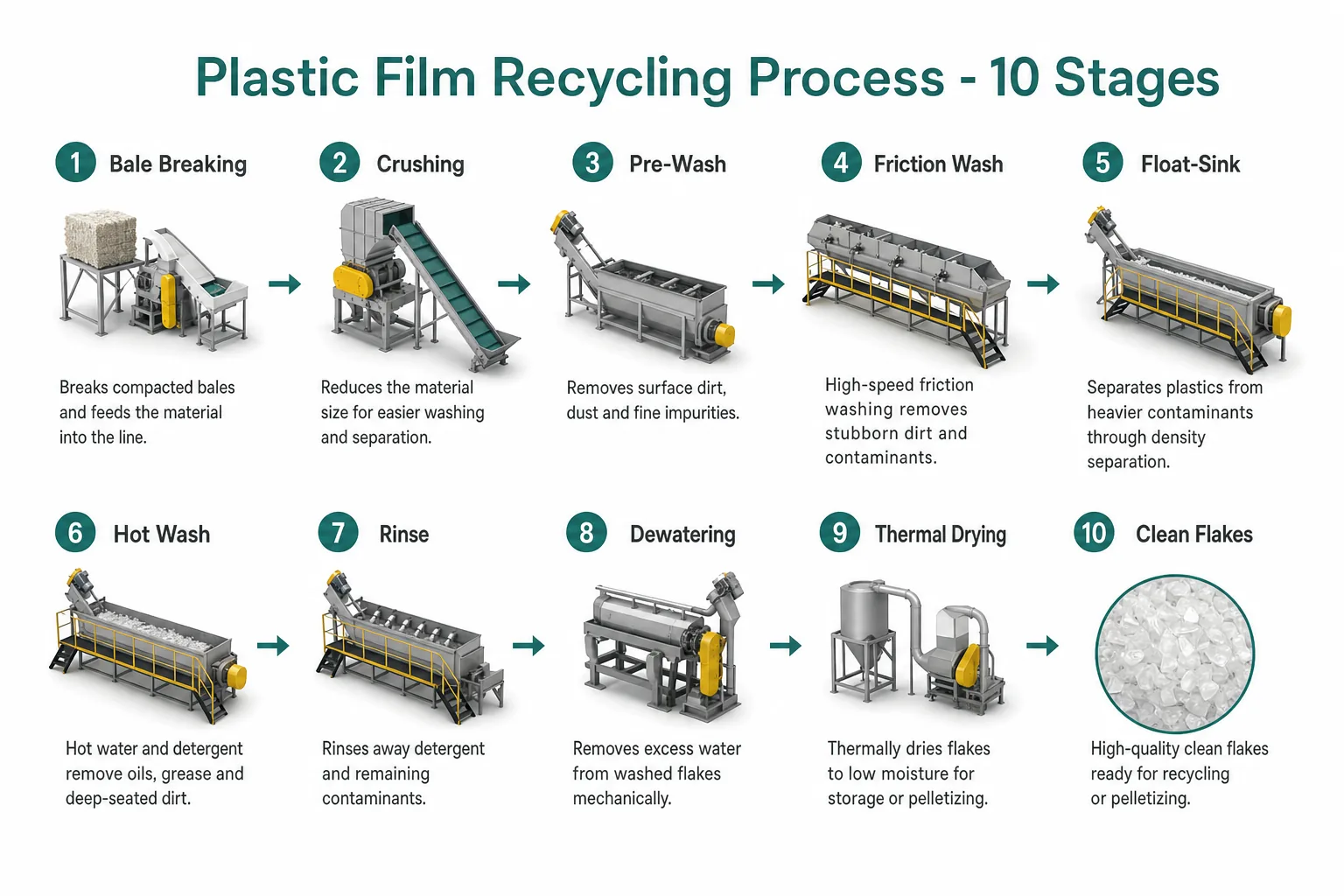 A plastic film recycling line can include bale breaking, crushing, washing, separation, dewatering, thermal drying, and clean flake output.
Stage 1 – Pre-Sorting and Bale Breaking
Incoming film bales are opened and fed onto a conveyor. Operators or automated systems remove obvious contaminants such as metal, glass, textiles, stones, and oversized rigid plastics. This protects downstream equipment and improves final flake quality.
Stage 2 – Crushing or Size Reduction
Film waste is cut into smaller pieces using a plastic crusher or film crusher. Smaller flakes expose more surface area for washing and feed more evenly into water tanks and friction washers. For film, controlled cutting is important because soft plastic can wrap around shafts if the crusher is not designed for flexible materials.
Stage 3 – Pre-Washing
Pre-washing removes loose soil, sand, dust, and organic debris before the material reaches the main friction washing stage. This first cleaning pass reduces wear on later equipment and helps stabilize water quality throughout the system.
Stage 4 – Friction Washing
Film flakes pass through one or more high-speed friction washers. Rotating paddles and water spray create mechanical scrubbing that removes embedded dirt, label adhesive, and surface contamination. This is one of the most important cleaning stages for agricultural film and post-consumer film bales.
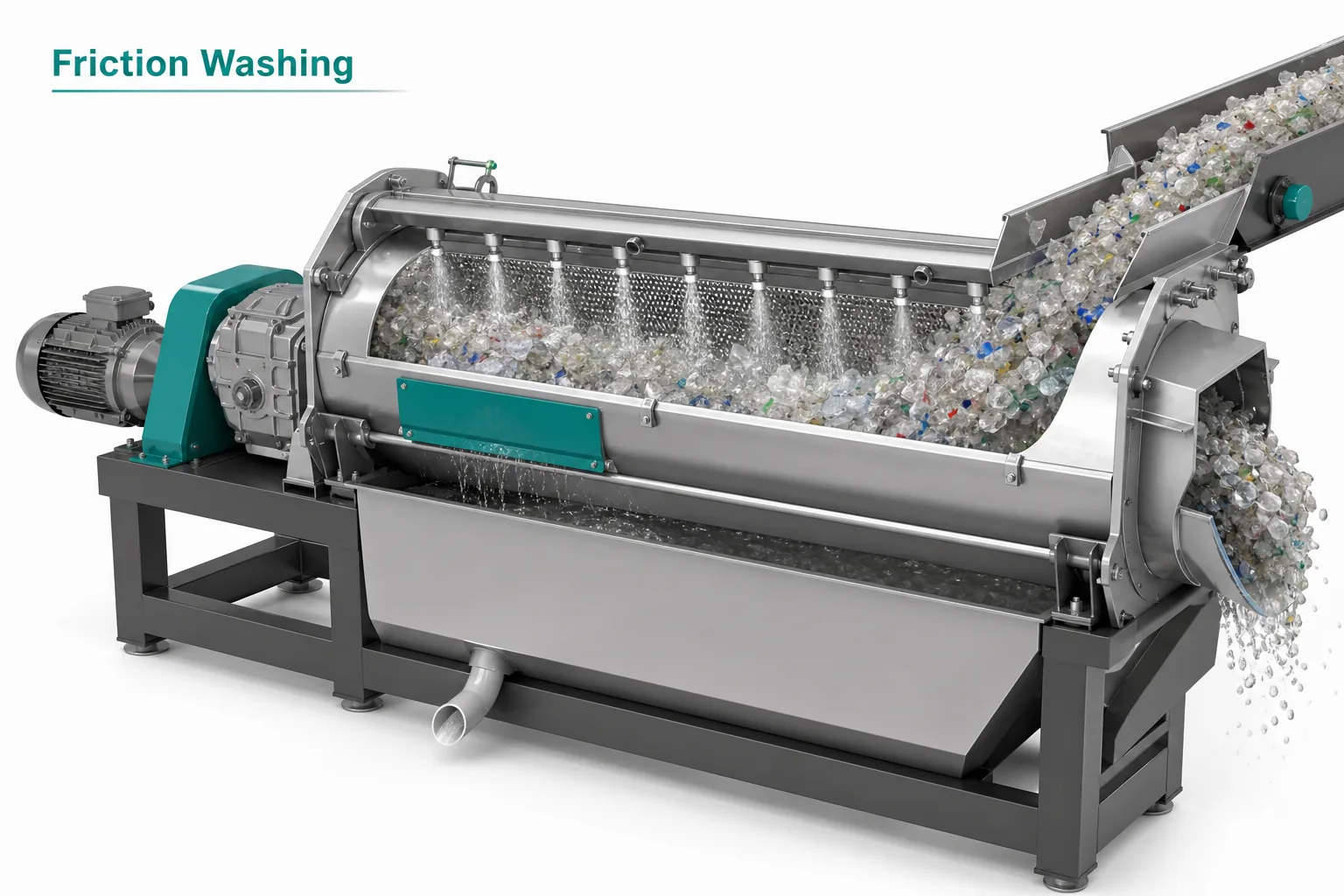 Friction washing uses mechanical scrubbing and water flow to remove dirt, adhesive, and fine contamination from film flakes.
Stage 5 – Float-Sink Separation
A float-sink tank separates materials by density. PP and PE film float on the water surface, while heavier contaminants such as sand, metal particles, PVC fragments, and dense impurities sink to the bottom. This stage helps remove contamination that cannot be removed by friction alone.
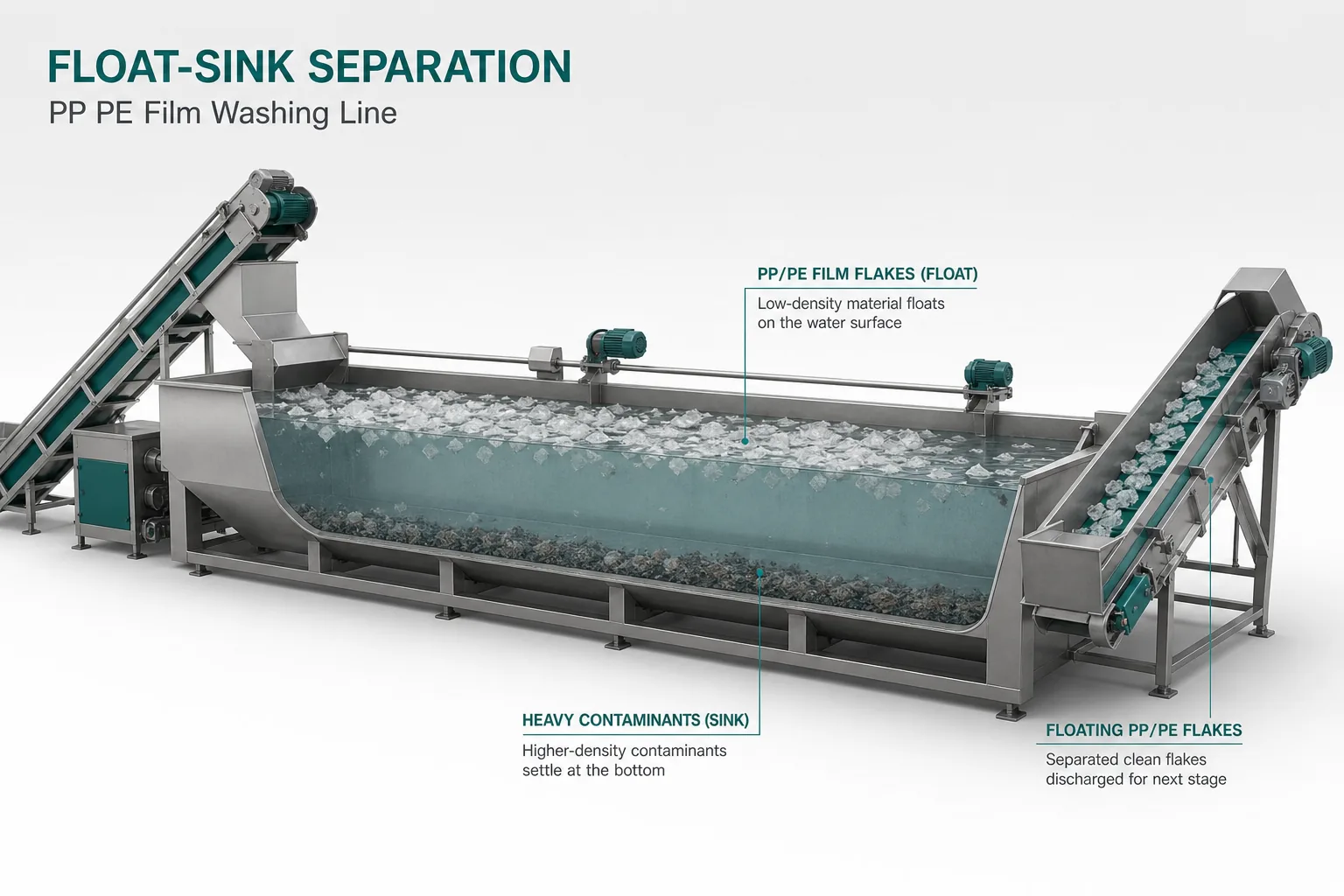 Float-sink separation keeps low-density PP and PE film flakes on the water surface while heavier contaminants settle below.
Stage 6 – Hot Washing or Chemical Washing
For film containing oil, grease, adhesive, pesticide residue, or heavy post-consumer contamination, hot washing can be added. A heated alkaline wash helps dissolve stubborn contamination that cold water cannot remove. Clean post-industrial film may not need this stage.
Stage 7 – Clean Rinsing
After friction washing and optional hot washing, the film flakes are rinsed with clean water to remove detergent residue, alkali solution, and fine particles. A stable rinse stage is important when the output will be pelletized, because residual chemicals and dirt can affect extrusion stability.
Stage 8 – Mechanical Dewatering
Washed film retains a large amount of surface water. A centrifugal dryer, screw press, or plastic film squeezer granulating machine removes most of this moisture before thermal drying. Strong mechanical dewatering lowers energy consumption in the drying stage.
Stage 9 – Thermal Drying
Thermal drying uses hot air to reduce final moisture to a level suitable for bagging, extrusion, or pelletizing. The target moisture level depends on the downstream process, but lower moisture is especially important before feeding film flakes into a pelletizing line.
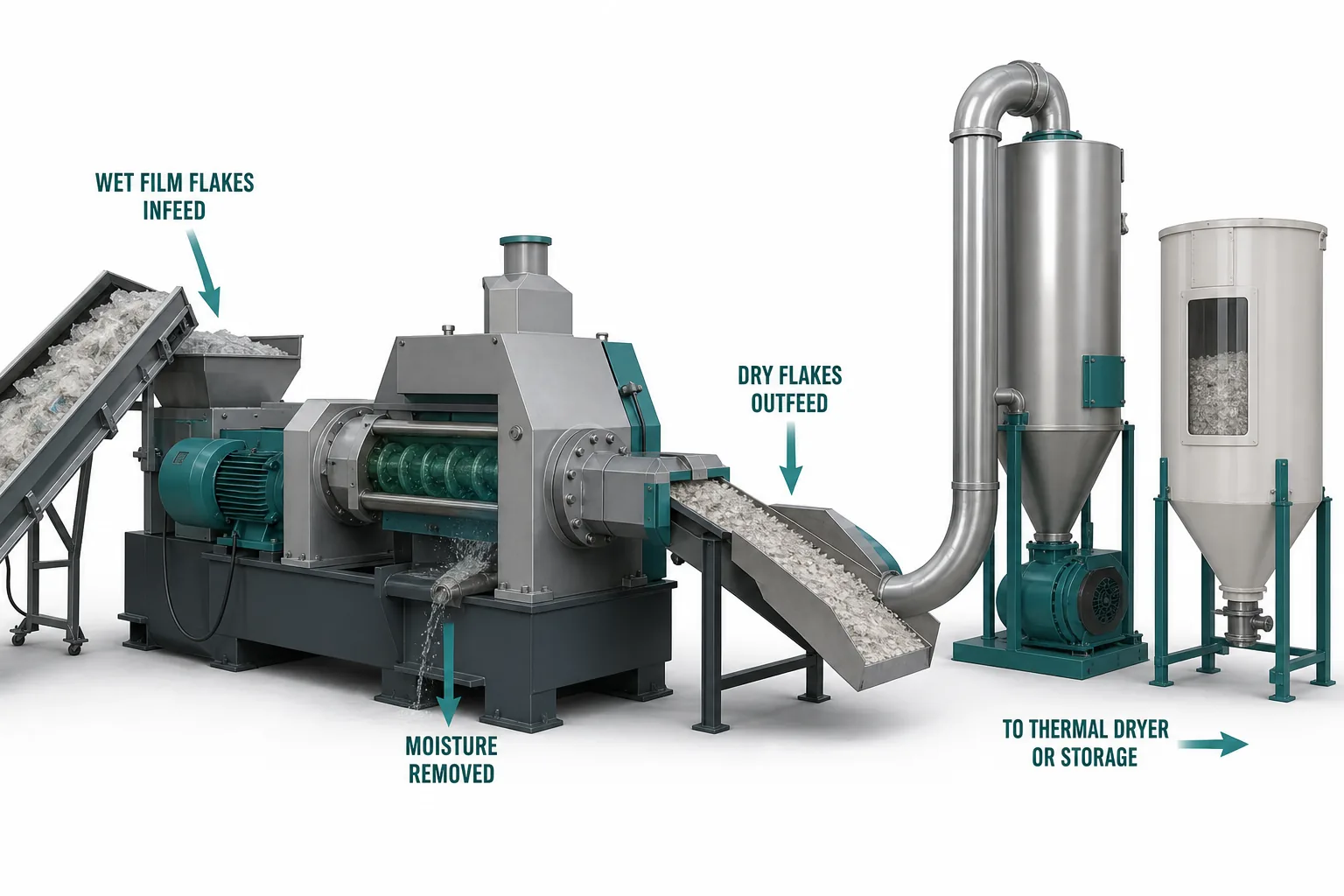 Mechanical squeezing and thermal drying reduce moisture so film flakes can be stored, sold, or pelletized.
Stage 10 – Clean Flake Output and Pelletizing
Clean, dry flakes can be collected in bags or silos. If the recycling plant needs higher-value output, the flakes can be fed into a downstream pelletizing line to produce recycled PP or PE pellets for film blowing, injection molding, pipe extrusion, or other manufacturing uses.
Film Squeezer, Centrifugal Dryer, or Thermal Dryer?
Moisture control is one of the biggest differences between a film washing line and a rigid plastic washing line. Thin film holds water on a large surface area and can carry moisture into pelletizing if the drying section is under-sized.
| Dewatering Method | Main Role | Best Use | Buyer Check |
|---|---|---|---|
| Centrifugal dryer | Spins washed film flakes to remove surface water | General film washing lines and medium-moisture output targets | Check rotor speed, screen design, maintenance access, and moisture after discharge |
| Plastic film squeezer | Compresses film mechanically to remove water and increase bulk density | PP/PE film flakes that will feed a compacting pelletizing line | Check output density, temperature rise, moisture reduction, and downstream feeding stability |
| Thermal dryer | Uses hot air to reduce residual moisture after mechanical dewatering | Final drying before bagging, storage, extrusion, or pelletizing | Check energy consumption, airflow design, and final moisture consistency |
For film flakes going into pelletizing, the goal is not only “dry enough to bag.” The flakes must be dry and dense enough to feed the extruder or compactor steadily. This is why moisture before pelletizing should be confirmed before the line is specified.
PP PE Film Washing Line – Live Demonstration
The following video shows a SUHUI PP PE soft film recycling washing line in operation, demonstrating the washing sequence from size reduction and friction washing through to drying and clean film flake output.
Key Equipment in a Plastic Film Recycling Line
| Equipment | Function | Why It Matters |
|---|---|---|
| Bale breaker / feeding conveyor | Opens compacted bales and feeds material into the line | Creates stable feeding and reduces overload risk |
| Plastic crusher / film crusher | Cuts film into smaller flakes | Improves washing surface area and downstream feeding |
| Pre-wash tank | Removes loose dirt, soil, and coarse contamination | Protects friction washers and improves water stability |
| Friction washer | Scrubs film flakes at high speed | Removes embedded dirt, adhesive, and surface contamination |
| Float-sink tank | Separates PP/PE film from heavier contaminants | Improves output purity by density separation |
| Hot wash tank | Dissolves oil, grease, adhesive, and chemical residue | Recommended for agricultural and post-consumer film |
| Centrifugal dryer / film squeezer | Removes surface moisture mechanically | Reduces thermal drying energy demand |
| Thermal dryer | Uses hot air to reduce final moisture | Prepares flakes for bagging or pelletizing |
| Pelletizing line | Converts clean film flakes into recycled pellets | Optional downstream system for higher-value output |
What Types of Film Waste Can Be Processed?
Film recycling systems can be configured for different input materials. The more contaminated the input, the more washing and dewatering stages are usually required.
Agricultural Film
Agricultural film includes mulch film, greenhouse film, and crop cover film. It often contains soil, sand, fertilizer residue, moisture, and organic matter, so it usually needs stronger pre-washing, friction washing, and dewatering.
PP Woven Bags and Jumbo Bags
PP woven bags and jumbo bags are thicker than thin film but still need washing to remove cement, fertilizer, chemical powder, or bulk material residue. For this stream, SUHUI offers a dedicated PP jumbo bag recycling washing line.
PE Packaging Film and Stretch Wrap
Post-industrial PE stretch wrap and packaging film is usually cleaner than agricultural film. It may need fewer washing stages, but stable crushing, friction washing, and dewatering are still important for consistent output.
Mixed Post-Consumer Film Bales
Mixed post-consumer film bales can contain several polymer types and more non-plastic contamination. These projects require better sorting, stronger washing, and careful water management.
How to Choose a Plastic Film Recycling Line
Choosing the right system depends on input material, output target, space, water management, and downstream use. For a more detailed purchasing checklist, see how to choose a plastic film washing line.
1. Define the Input Material
Start with the exact feedstock: agricultural film, post-consumer film bales, stretch wrap, PP woven bags, or cleaner post-industrial film. Each material has a different contamination level and handling behavior.
2. Confirm the Required Capacity
Capacity should match your real daily input volume, not only the maximum material supply you expect in the future. Oversizing can increase energy use, water consumption, and investment cost without improving output quality.
3. Decide the Output Target
If you plan to sell clean flakes, washing and drying quality are the priority. If you plan to pelletize in-house, final moisture, flake size, and feed stability become even more important.
4. Plan the Water Recycling System
Film washing consumes water, especially when processing dirty agricultural film. A closed-loop filtration and recirculation system helps reduce fresh water use, lower wastewater discharge, and keep operation costs under control.
5. Match Washing and Pelletizing as One System
A washing line and pelletizing line should be designed together when the target output is recycled pellets. Clean flakes must be dry enough and consistent enough for stable extrusion.
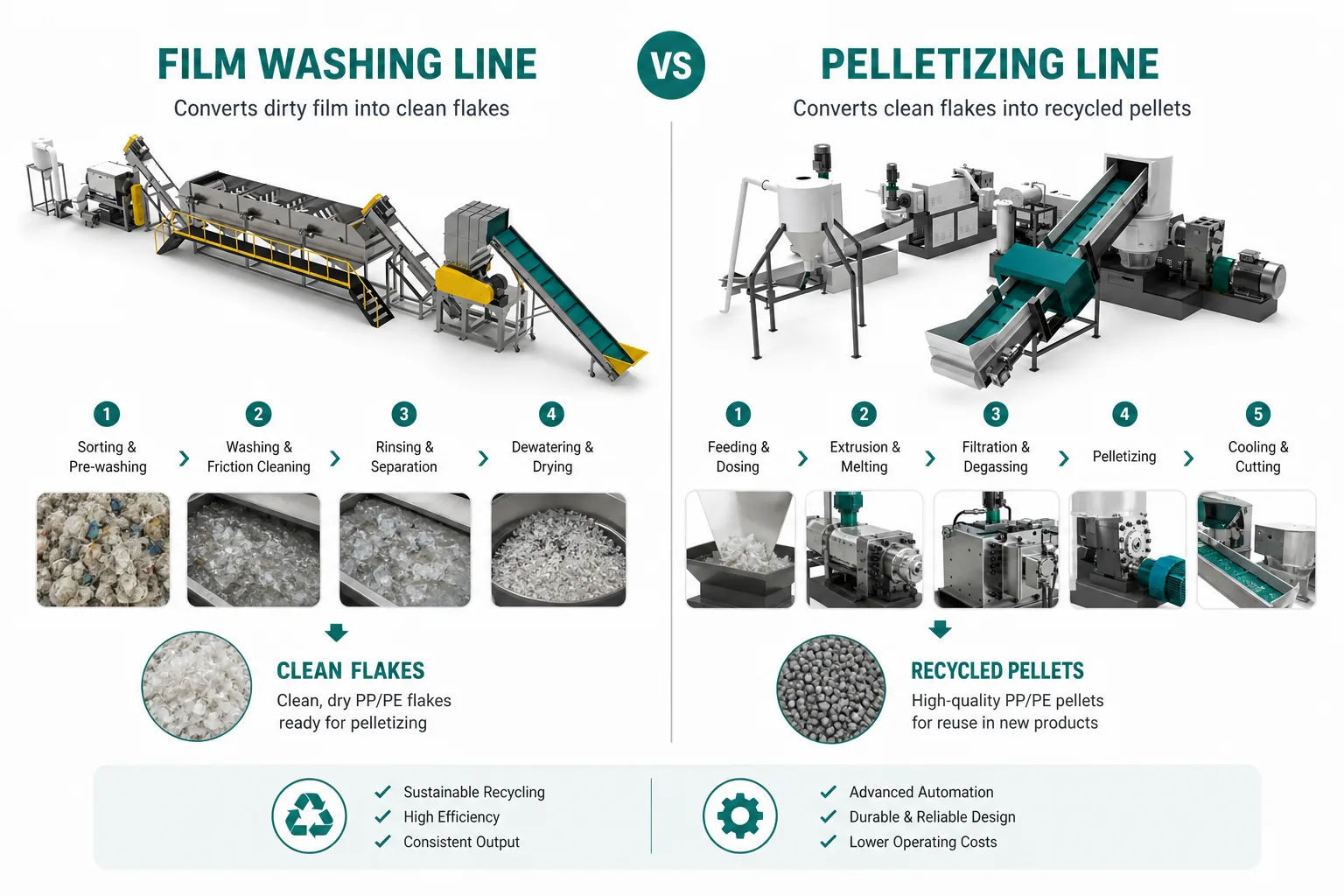 A film washing line produces clean flakes, while a pelletizing line converts those flakes into recycled pellets.
SUHUI Machinery designs complete PP PE soft film recycling washing lines for post-consumer and post-industrial film waste. Systems can be configured with crushing, friction washing, float-sink separation, dewatering, thermal drying, water recycling, and downstream pelletizing based on your material and output requirements.
Contact SUHUI Machinery to discuss your input film type, contamination level, required capacity, plant layout, and target output.
Frequently Asked Questions
Is a plastic film recycling line the same as a PP PE film washing line?
In most recycling projects, yes. A plastic film recycling line usually refers to a PP PE film washing line that processes flexible PP, PE, and LDPE film waste through crushing, washing, separation, dewatering, drying, and optional pelletizing.
Why does plastic film need special washing equipment?
Plastic film is flexible, lightweight, and difficult to dewater. It can wrap around shafts, float unevenly, and retain moisture. Dedicated film washing equipment uses controlled size reduction, friction washing, density separation, squeezing, and stronger drying for soft materials.
When should a film washing line use a plastic film squeezer?
A plastic film squeezer is useful when washed PP/PE film flakes need lower moisture and higher bulk density before storage or pelletizing. It is especially helpful for soft film flakes that are difficult to dry with centrifugal drying alone.
What moisture level is needed before pelletizing film flakes?
The target depends on the pelletizing system, but lower moisture improves feeding stability and extrusion quality. Mechanical squeezing plus thermal drying is commonly used to reduce moisture before film flakes enter a compacting pelletizing line.
What is the difference between a film washing line and a pelletizing line?
A film washing line cleans dirty film waste into clean flakes. A pelletizing line melts, filters, and cuts those flakes into recycled pellets. Many plants use both systems together when they want a higher-value pellet output.
Can agricultural film and stretch wrap use the same line?
They can share some equipment, but agricultural film usually needs stronger pre-washing, friction washing, water filtration, and dewatering because it carries soil, sand, moisture, and organic residue. Cleaner stretch wrap may need fewer washing stages.
How much does a plastic film recycling line cost?
Cost depends on capacity, contamination level, washing stages, automation level, water recycling system, drying requirements, film squeezer configuration, and whether pelletizing is included. Define your input material, target output, and required kg/h capacity before requesting a quotation.
Have a Material You Need to Process?
Send the polymer, its form and your target output. We will come back with a line configuration and a realistic budget range.