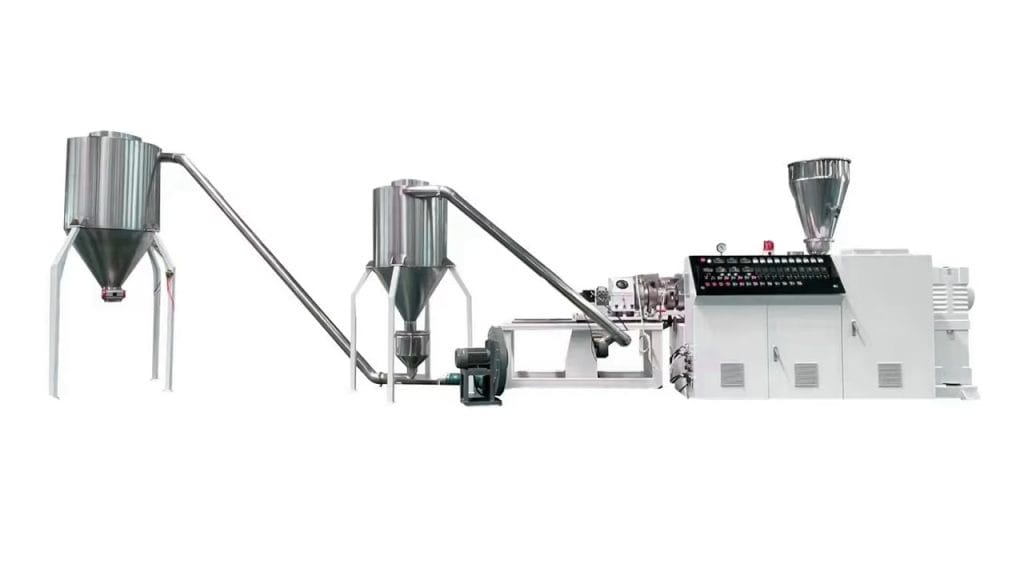
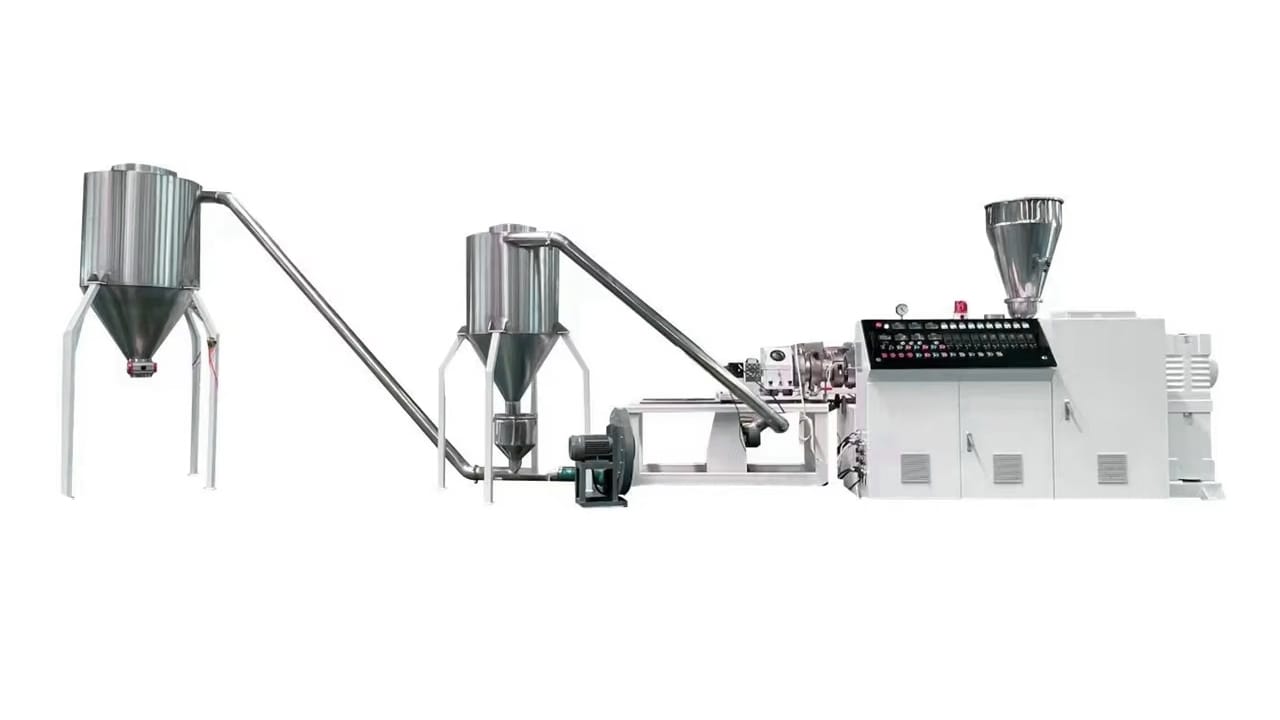
PVC Granulating Pelletizing Line
The SUHUI PVC granulating pelletizing line is a specialized system designed to process rigid and flexible polyvinyl chloride (PVC) waste into high-quality recycled pellets. It handles a wide range of PVC scrap including industrial offcuts, construction waste, cable insulation, window profile scraps, and post-consumer PVC products — transforming them into reusable material for manufacturing pipes, cables, fittings, and profiles.
Product Description
The SUHUI PVC granulating pelletizing line is a specialized system designed to process rigid and flexible polyvinyl chloride (PVC) waste into high-quality recycled pellets. It handles a wide range of PVC scrap including industrial offcuts, construction waste, cable insulation, window profile scraps, and post-consumer PVC products — transforming them into reusable material for manufacturing pipes, cables, fittings, and profiles.
PVC processing presents unique challenges due to the material’s thermal sensitivity — overheating causes degradation and releases corrosive chlorine gas. The SUHUI PVC pelletizing line addresses this with precision multi-zone temperature control, corrosion-resistant extruder components, integrated fume extraction, and in-line additive dosing systems for stabilizers and lubricants that protect material quality throughout the extrusion process.
Supporting both rigid uPVC and flexible plasticized PVC without equipment reconfiguration, this line is ideal for PVC recyclers, pipe manufacturers, and cable compounders pursuing circular economy and sustainable production goals.
Key Features of SUHUI PVC Granulating Pelletizing Line
- Precision Multi-Zone Temperature Control: Independent heating and cooling zones along the barrel and die prevent PVC thermal degradation, maintaining melt quality throughout the extrusion process.
- Rigid & Flexible PVC Compatibility: Handles both rigid uPVC and flexible PVC (with plasticizers) without screw or die reconfiguration, maximizing line versatility.
- Corrosion-Resistant Extruder Components: Hardened, corrosion-resistant barrel, screw, and die materials withstand acidic byproducts generated during PVC processing.
- Twin-Screw Extruder: Conical or parallel twin-screw design ensures thorough mixing, homogenization, and degassing of PVC compound with additives.
- In-Line Additive Integration: Gravimetric dosing systems accurately add stabilizers, lubricants, plasticizers, and colorants directly into the extrusion process.
- Fume Extraction System: Activated carbon filters and forced ventilation capture and neutralize chlorine gas emissions, ensuring operator safety and environmental compliance.
- High-Efficiency Granulator: Pre-processing granulator reduces bulk PVC waste into uniform 3–6 mm particles for consistent, stable feeding into the extruder.
- Precision Pelletizing: Die-face or underwater pelletizing systems produce uniform 2–4 mm PVC pellets with consistent shape and size for reliable downstream processing.
- Energy Recovery System: Heat exchangers capture and reuse excess thermal energy from the extrusion process to reduce overall power consumption.
PVC Granulating Pelletizing Process Workflow
- Sorting & Inspection: Incoming PVC scrap is inspected and sorted to remove non-PVC contaminants including metals (via magnetic separator), rubber, and incompatible plastics.
- Coarse Crushing: Bulk PVC waste such as pipes, profiles, or cable scrap is fed into a primary crusher that reduces material into 20–50 mm chunks.
- Fine Granulation: Crushed material passes through a high-efficiency granulator that produces uniform 3–6 mm granules for consistent extrusion feeding.
- Drying (Optional): If the PVC granules contain moisture, a dehumidifying dryer removes it to prevent steam generation and surface defects during extrusion.
- Additive Blending: PVC granules are accurately blended with heat stabilizers, lubricants, plasticizers, and colorants using a gravimetric dosing and mixing system.
- Twin-Screw Extrusion: The PVC compound is fed into a twin-screw extruder operating at 160–200°C, where it is melted, thoroughly mixed, degassed, and homogenized under precise temperature control.
- Pelletizing: The homogeneous PVC melt is forced through a die head and cut into uniform 2–4 mm pellets using either a water-cooled die-face cutter or an underwater pelletizing system.
- Cooling & Dehumidifying: Freshly cut pellets are cooled in a water bath or air cooler, then dried to below 0.5% moisture content using a centrifugal dryer or vibrating fluid bed.
- Screening: Vibratory sieves remove undersized fines, oversized particles, and irregular pellets to ensure uniform product quality.
- Packaging: Finished recycled PVC pellets are conveyed to storage silos or automatically weighed and bagged for industrial sale or in-house reuse.
Frequently Asked Questions
What types of PVC waste can the SUHUI PVC granulating pelletizing line process?
The line processes a wide range of rigid and flexible PVC scrap, including industrial offcuts, construction waste, cable insulation, window profile scraps, and post-consumer PVC products. Incoming material is sorted to remove non-PVC contaminants such as metals, rubber, and incompatible plastics before entering the granulation and extrusion stages.
Can the line handle both rigid uPVC and flexible PVC without equipment reconfiguration?
Yes. The SUHUI PVC pelletizing line supports both rigid uPVC and flexible plasticized PVC without requiring screw or die reconfiguration. This dual compatibility maximizes line versatility and reduces changeover downtime for recyclers processing mixed PVC feedstock streams.
How does the system prevent PVC thermal degradation during extrusion?
The line uses precision multi-zone temperature control with independent heating and cooling zones along the barrel and die, maintaining melt temperature within the stable processing range of 160–200°C. Corrosion-resistant barrel, screw, and die components withstand acidic byproducts, while in-line gravimetric dosing systems add heat stabilizers and lubricants directly into the extrusion process to further protect material quality.
What pellet size does the line produce, and what pelletizing methods are available?
The line produces uniform 2–4 mm recycled PVC pellets with consistent shape and size. Two pelletizing methods are available: die-face cutting with water cooling, or underwater pelletizing — both suitable for downstream use in pipe manufacturing, cable compounding, and profile extrusion. A vibratory screening stage removes undersized fines and oversized particles to ensure uniform product quality.
Does the line include a fume extraction system for operator safety?
Yes. An integrated fume extraction system with activated carbon filters and forced ventilation captures and neutralizes chlorine gas emissions generated during PVC processing. This ensures operator safety and supports compliance with workplace air quality and environmental regulations.
What additives can be incorporated during the PVC pelletizing process?
The line includes a gravimetric dosing system that accurately adds heat stabilizers, lubricants, plasticizers, and colorants directly into the extrusion process. This in-line additive integration allows precise compound formulation without separate pre-blending equipment, enabling the production of recycled PVC pellets tailored to specific downstream application requirements.
Send Us a Message
Related Products

PP PE Film Crushing Pelletizing Line
The SUHUI PP PE film crushing pelletizing line transforms post-industrial and post-consumer polypropylene (PP) and polyethylene (PE) film waste into high-quality recycled pellets. It processes a wide range of plastic film types including agricultural mulch film, greenhouse covers, LDPE packaging film, HDPE bags, and stretch wrap — removing contaminants such as dirt, sand, inks, and adhesives to produce clean, uniform output.

PET Flakes & Glass Fiber Twin Screw Pelletizing Line
The SUHUI PET flakes glass fiber twin screw pelletizing line produces high-performance engineering plastic pellets by compounding recycled PET flakes with glass fiber reinforcement (10–40% loading). The resulting composite pellets deliver significantly enhanced tensile strength, flexural modulus, thermal stability, and dimensional rigidity compared to unreinforced recycled PET.

Rigid Plastic Granulating Pelletizing Line
The SUHUI rigid plastic granulating pelletizing line processes rigid plastic waste including HDPE, PP, PS, ABS, and mixed rigid plastics into high-quality uniform recycled pellets. Designed for industrial scrap, post-consumer packaging, and manufacturing offcuts, it transforms bulky rigid plastic waste into clean, reusable raw material for injection molding, blow molding, and extrusion applications.